An estimated 800,000 bees, worth tens of thousands of dollars, have been stolen from properties in far north Queensland, in what apiarists in the region describe as the largest theft of its kind in memory.
Tom Bidner, an apiarist from the Atherton Tablelands, west of Cairns, said 44 colonies had been taken from three different beekeepers. He estimated that each hive contained at least 20,000 bees, giving a total of more than 800,000.
The thefts happened on multiple properties in different areas and required specialist equipment and a degree of planning. "This isn't over yet," Bidner said. "We've got so many colonies to get through. We're still getting around and checking all our different sites."
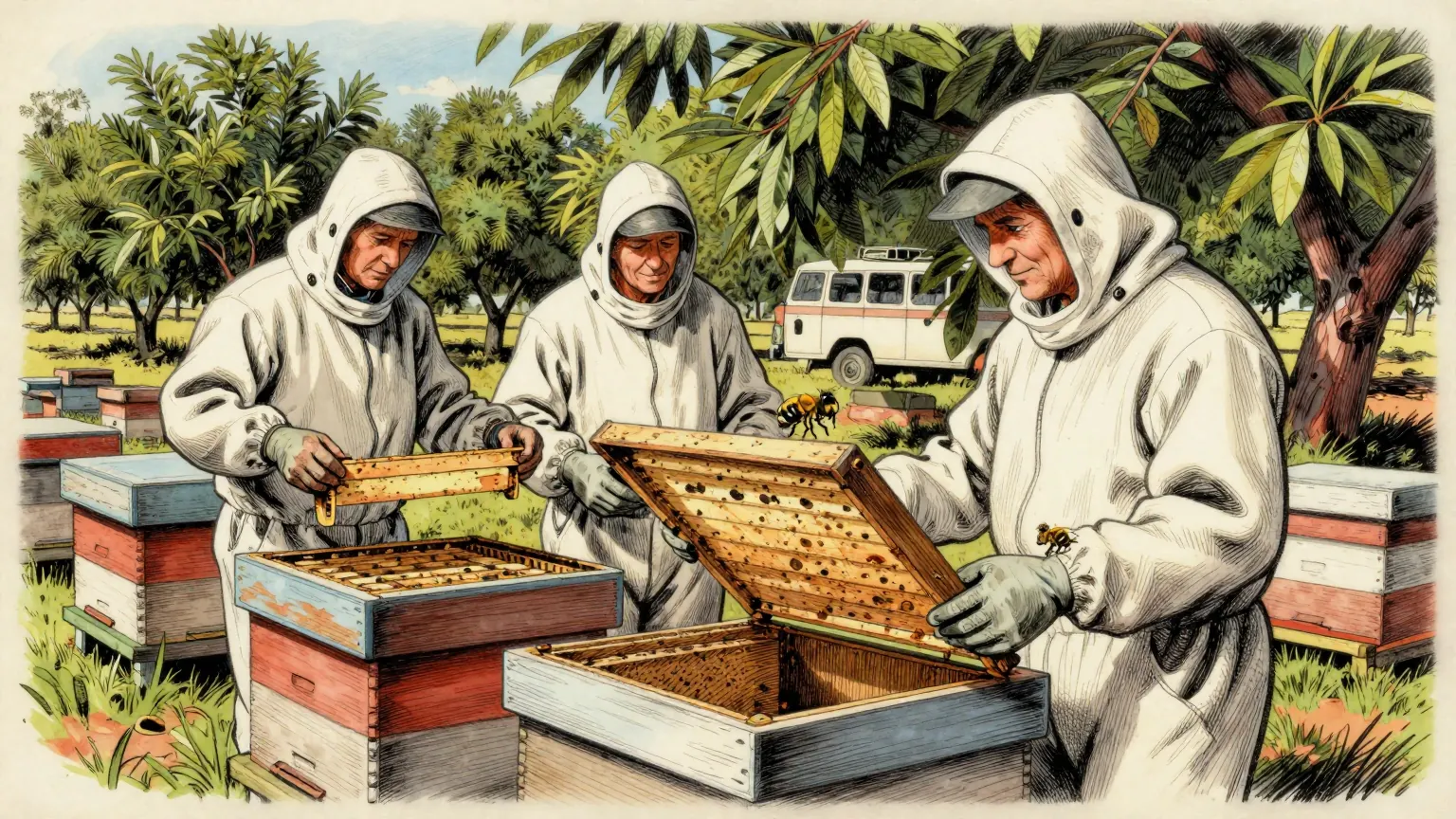
Rather than removing an entire box and risking early detection, whoever was responsible took what is known as the brood box, so that the hive appeared unchanged from a distance.
"They're rocking up with a truckload of gear, basically, and they're transferring our frames into their boxes … and putting our hives back together, so it doesn't sort of alert any of the growers that it looks like someone's been in and done such a thing," Bidner said.
The honey was left on the hive.
Detective Sergeant Ben Cross of the Mareeba rural and stock crime squad told the ABC that he also believed the person responsible to be a commercial farmer rather than a hobbyist. Bidner said he suspected the culprits were probably people from within the industry.
The timing matters. It is the peak of the avocado season in far north Queensland, and hives are deployed at properties across the area on contracted pollination work for local growers. Others are simply left on the side of the highway.
The apiarists will lose not just the stolen insects but the value of the pollination contracts, which can run into the thousands of dollars. The grower will also lose out through lower quality flowering.
"Security wise, in the past, we've let the bees do the majority of the job," Bidner said. "From time to time, it definitely happens you'll have someone try and come and tamper with a hive. They usually get about 30 seconds into the job and they're gone."
The industry in the region is already dealing with the arrival of the varroa mite, first detected south of Cairns a week ago. Megan O'Mara, a professor at the University of Queensland, said more than $100m had been spent preventing the parasite's spread since it reached Newcastle in 2022, but that available treatments were of limited effectiveness. Australia officially gave up eradicating it in 2023, and uncontrolled spread is estimated to cost the industry as much as $1bn over 30 years. Bidner called the thefts and the parasite a "double whammy".
It is worth being precise about what has been removed. The honey is still there. The boxes are still there, reassembled. What has gone is the workforce.
This newspaper notes that 800,000 individual workers were on contract at the time. The pollination agreements were made with the growers, the hives were placed on their land, and the work was, by the beekeepers' own account, being done almost entirely by the bees.
Those contracts will now go unfulfilled. The avocado flowers will be attended by nobody. The parties who were performing the work are no longer on the premises, and they left without notice, in the back of a truck.
Queensland's rural and stock crime squad is investigating, which settles the classification. This is a livestock matter, and 800,000 head is a considerable herd. It was moved off three properties, reloaded, and rehoused in other boxes without anybody noticing, which is a standard of stockmanship worth acknowledging even in these circumstances.
The Department of Unnecessary Research has asked whether a colony transferred frame by frame into another beekeeper's boxes has changed employer or merely changed address. The bees are pollinating something this morning. It is not avocados.