One of America's largest overseas military installations has banned vehicles made by the Chinese electric vehicle manufacturer BYD, the US military in Japan said on Tuesday. The ban took effect this week at Kadena airbase on the southern Japanese island of Okinawa, the biggest US air force base in east Asia.
"These vehicles present an unacceptable and unmitigable risk to our personnel and our mission," said Lieutenant Colonel Alli Stormer, a spokesperson for the US air force's 18th Wing at Kadena, in a statement. The story was reported from Tokyo by Justin McCurry of The Guardian, with Reuters.
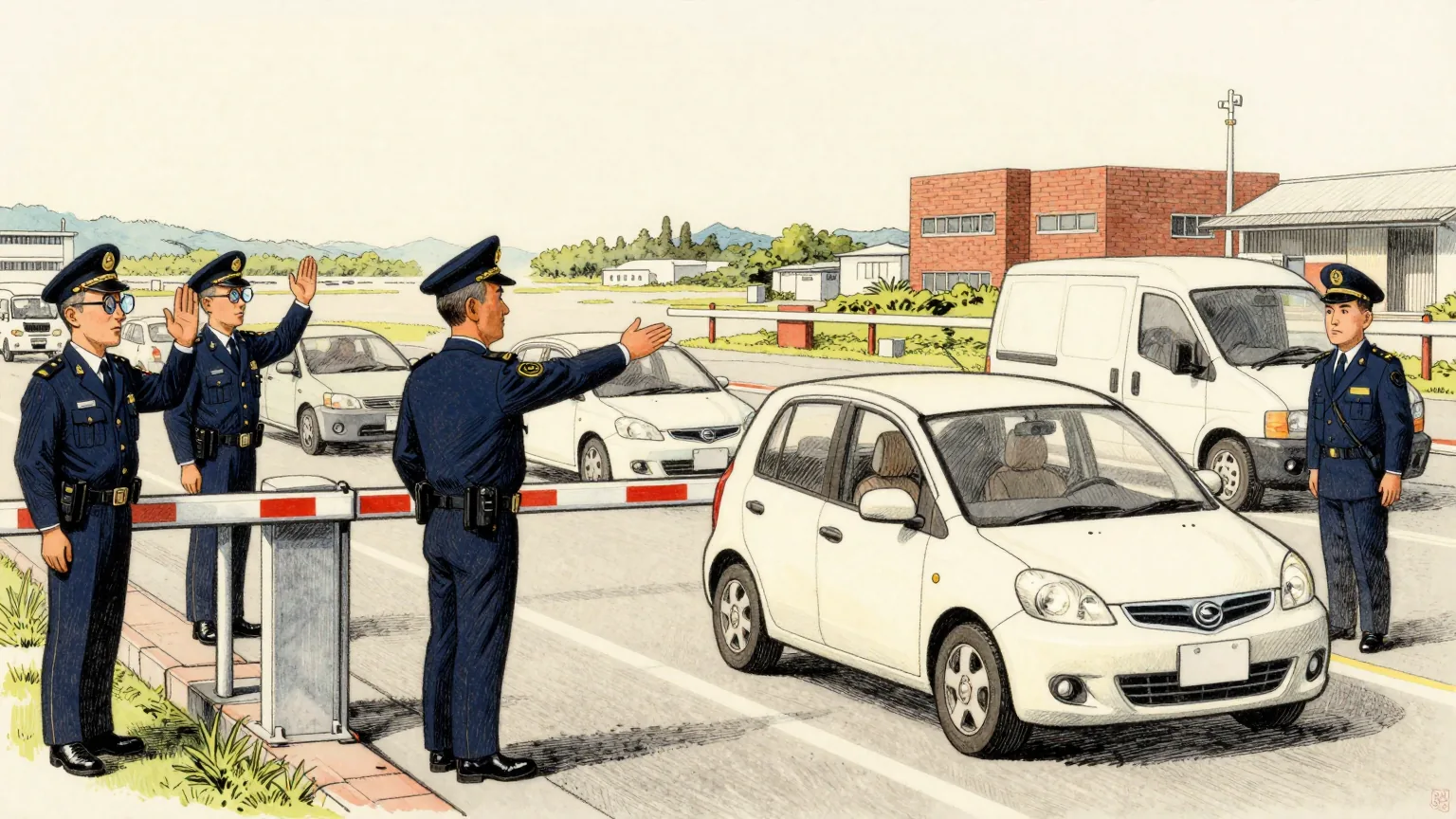
The restriction is drawn broadly. It applies to all BYD vehicles, including privately owned cars, taxis and delivery vehicles, and security personnel at the base's gates have been instructed to block them and tell drivers to turn around.
The concern, according to South Korea's Yonhap news agency, is the possibility of information leaking through vehicle-mounted technologies such as cameras, sensors and GPS devices. American military officials have not identified a specific threat.
The measure sits inside a wider pattern. In June the Pentagon added BYD to a list of 188 Chinese firms it believes have ties to the country's military, a move that drew a protest from Beijing. The same list includes the carmaker Nio, the e-commerce group Alibaba and the internet company Baidu.
There is precedent at base level, too. In 2018 the US defence department banned the sale and use of smartphones made by the Chinese companies Huawei and ZTE at military bases worldwide, also citing security concerns.
China has done much the same in the other direction. In 2021 it barred Teslas from some government compounds over the cameras fitted to the vehicles, and lifted the restriction in 2024 after Tesla won an endorsement from the country's top car industry association.
The commercial context is awkward. BYD overtook Tesla as the world's biggest seller of battery-electric vehicles in 2025 and is expanding abroad, including in Japan, the world's fourth-biggest car market, where in July it launched its Racco electric minicar in the hope that a small, cost-efficient vehicle could find a place in a market dominated by domestic brands. BYD has not responded publicly to the Kadena ban.
The decision has fuelled speculation that similar measures could follow at other American facilities as part of Washington's broader effort to restrict Chinese technology it suspects of being used to collect sensitive information.
It is worth being exact about what the gate is now deciding. The risk has been described as unmitigable, which is a strong formulation: it says that no available measure would bring the hazard down to an acceptable level. A mitigable risk would invite an inspection, a software check or a parking restriction. An unmitigable one requires none of these, because nothing done to the vehicle would make any difference.
The practical effect is that the screening has moved off the equipment and onto the manufacture. A BYD with its cameras removed and its systems switched off remains barred. Another car carrying the same cameras, the same sensors and the same satellite positioning is waved through, because it was assembled by somebody else. The perimeter has been drawn around a supply chain.
This creates work at the boom gate that no gate has previously been asked to do. A guard must now establish provenance at the speed of a taxi, and must do it for delivery vehicles, which are a risk for the duration of the delivery and cease to be one at the kerb. A passenger is a security question only while seated in the wrong badge.
The Department of Unnecessary Research has put the obvious case to the 18th Wing and is awaiting a ruling. A visitor who arrives in a permitted taxi and departs in a barred one has not changed, nor has anything he is carrying. Only the panel on the bonnet has.
Kadena is not defended against cameras. It is defended against where they were fitted.