
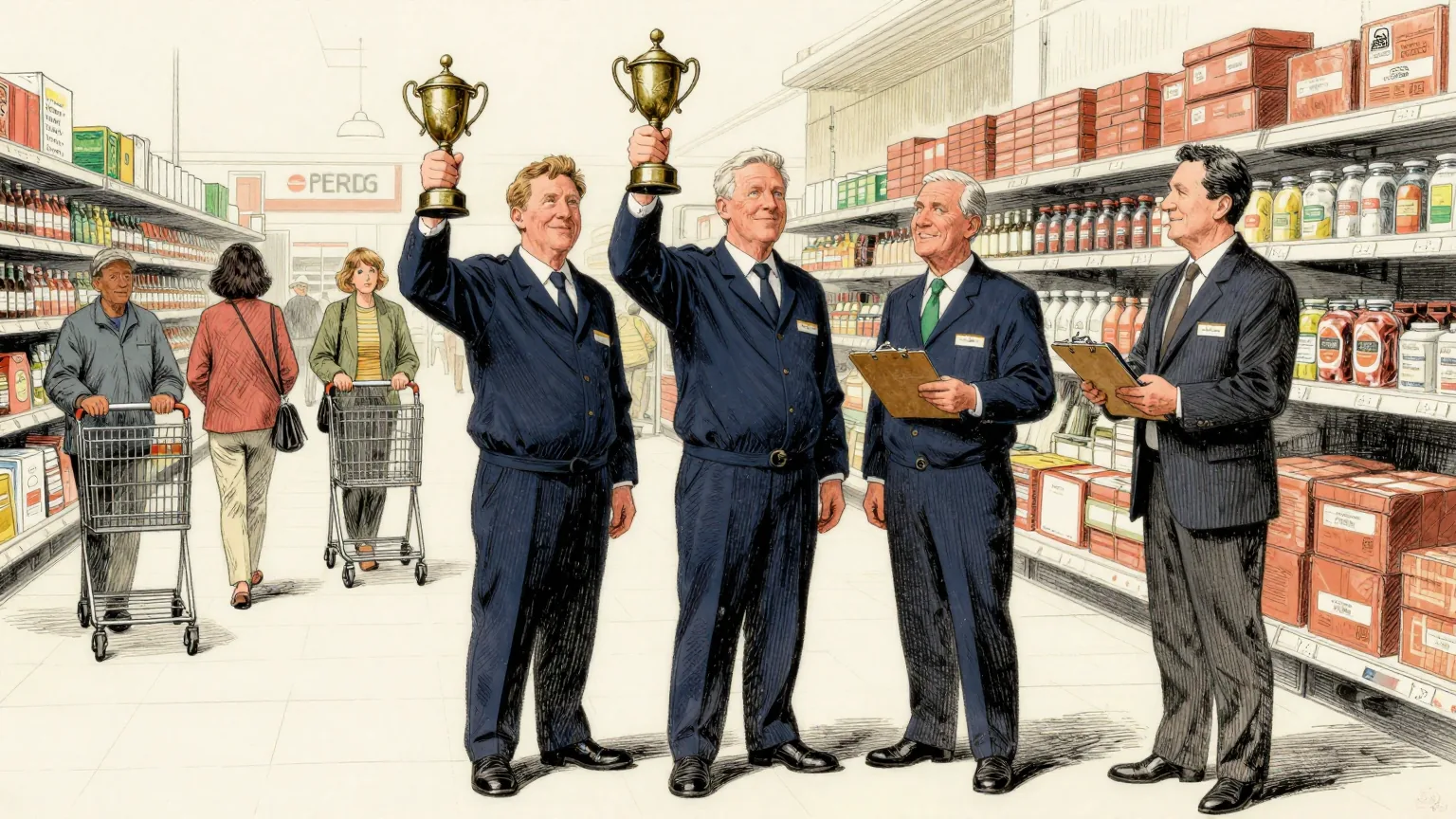
Aldi says it is stepping up investment in the UK, with plans to spend £900m and open more than 40 stores next year.
The company, which operates 1,092 budget supermarkets in the UK and Ireland, said sales rose 5 per cent to a record £19bn last year. It opened 40 stores over the period, while profits slipped by £2.6m to £433m as it cut prices in the face of cost inflation.
Giles Hurley, the boss of Aldi's UK and Irish arm, said the German-owned business had "increasing confidence around growing our business", claiming it was already the third largest UK supermarket in terms of items sold and customer numbers.
Asda is classed as the UK's third largest supermarket by value of sales, just ahead of Aldi. The Leeds-based chain is less than one percentage point ahead of its rival, with a market share of 10.6 per cent in mainland UK, according to the latest data from Worldpanel.
Aldi will open 42 stores this year, 30 of them in the next ten weeks, and plans a similar number next year, stepping up investment by about £100m to £900m. In the longer term it is aiming for 1,500 outlets across the UK and Ireland.
"We could probably grow faster but we need to find the right sites in the right locations and have to go through a planning process which can, at times, be challenging," Hurley said.
He said consumers were "feeling the pinch" against a backdrop of persistent inflation, and that the "continuity and clarity" of Aldi's range had attracted 425,300 more customers. Grocery inflation stood at 2.8 per cent in August, according to the British Retail Consortium.
Hurley said the outlook was hard to assess until the effect of drought and extreme heat on UK crop yields became clear. The industry was "not seeing systemic food shortages", he said, but the climate crisis was creating "a real challenge" for producers, and he urged the government to treat the food system as "a national strategic priority" because "relying on imports leaves us exposed".
Aldi said it spent £14bn with British suppliers in 2025, about 80 per cent of its sales, and has committed to sourcing at least half its products through long-term supplier agreements by next year. It has also signed a deal with Deliveroo, whose workers will pick, pack and deliver Aldi groceries ordered through its app.
The chain does not disclose sales performance in established stores, those open for more than a year, which makes it difficult to judge how much of the growth is simply the result of opening more shops. Its expansion is also slower than that of its rival Lidl.
The interesting disclosure in all of this is not the £900m or the £19bn. It is that Britain currently has two third-largest supermarkets, and that both claims are correct.
Asda is third by the value of what customers spend. Aldi is third by the number of items customers carry out and by the number of customers who carry them. Neither company has misstated anything. They have simply divided by different things.
This newspaper has looked for the national authority that determines which denominator governs the ranking, and can confirm that no such authority exists. There is no statutory unit of grocery seniority. Third place is a matter of selection.
Once that is understood, the field opens considerably. A chain trailing on value and volume may still lead on baskets per square metre, or on items per pound spent, or on customers per store per opening hour, each of which produces a ranking as defensible as the two currently in circulation.
The Department of Unnecessary Research has begun compiling the complete list of measures under which each of Britain's supermarkets is the third largest, and expects to publish it once it has finished establishing that every one of them is.