Americans are drinking about as much coffee as they were in 2003 and getting nearly 40 per cent more calories out of it.
The finding comes from researchers at the Gerald J. and Dorothy R. Friedman School of Nutrition Science and Policy at Tufts University, published in the Journal of the Academy of Nutrition and Dietetics and described in a Tufts release carried by ScienceDaily.
The team examined eight consecutive cycles of the National Health and Nutrition Examination Survey, covering 2003 to 2018. The nationally representative dataset included 30,000 adults aged 20 and older, each of whom completed two 24-hour dietary recalls.
Average coffee consumption over those fifteen years stayed relatively constant at approximately 13 ounces per day. Average calories from coffee rose from 43 to 60 a day.
By 2018 the leading sources of those added calories were non-dairy creamer, sugar or syrup, and dairy milk, in that order.
By weight the ranking is different. In 2018 dairy milk was the most commonly added ingredient, at 21.4 grams a day, followed by non-dairy creamer at 8.1 grams and sugar at 4.4 grams. Consumption of dairy milk, sugar and sugar substitutes showed no statistically significant change across the study period.
The non-dairy additions moved sharply. Their average consumption rose from 3.65 grams a day in 2003 to 10.5 grams in 2018, with non-dairy creamer climbing from 3.37 to 8 grams and non-dairy milk from 0.27 to 2.45 grams. Other additions rose by an average of half a gram a day.
On the calorie ledger, non-dairy creamer contributed 18.5 calories a day in 2018, against 16 from sugar and 11 from dairy milk. In 2003 creamer had contributed 7.71.
"Coffee consumption has been associated with several health benefits. However, coffee is often accompanied by the addition of sugar and cream, which can contribute to an increased consumption of calories from added sugar and saturated fat," said Fang Fang Zhang, the study's senior author and Neely Family Professor at the Friedman School.
"We found that non-dairy creamer being added to coffee has now passed both sugar and dairy for its contribution to the total energy consumed from coffee. Non-dairy creamers can be high in saturated fat, which is calorie dense. This could explain the increased calories that non-dairy creamer is contributing," said Yongyi Pan, the lead author and a doctoral candidate at the Friedman School, noting that creamer "has increased in popularity in recent years as consumers seek plant-based or dairy alternatives" despite having been on the market since the 1950s.
The team also found that adults who slept fewer hours drank more coffee than those who slept longer, and that the same pattern held for those working longer hours. Consumption was comparable among people with higher and lower overall diet quality. The researchers note that the survey relies on participants recalling what they ate and drank, which can introduce measurement error.
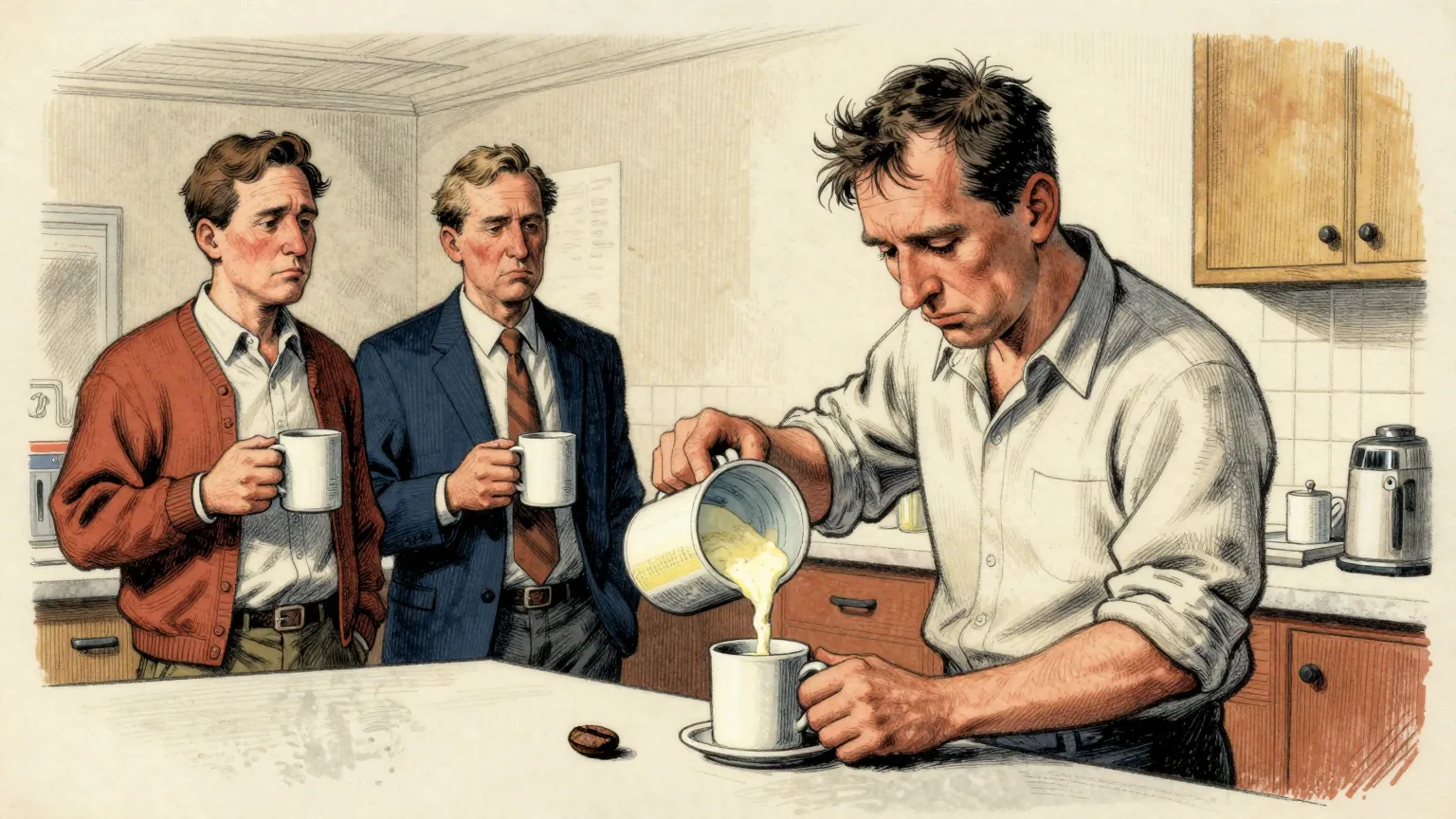
The coffee, then, did not change. Across fifteen years the volume in the cup held at thirteen ounces, and the only thing that moved was what was poured into it.
Measured by contribution, the largest single source of energy in an American cup of coffee is no longer the coffee. Dairy milk is the biggest addition by weight and the smallest by calories, which establishes that weight has been the wrong unit for a beverage all along.
Ranked honestly, the drink is creamer first, sugar second, milk third and coffee last, the last of these contributing almost nothing. The ingredient that gives the cup its name has been demoted to a flavouring.
The Department of Unnecessary Research wishes to record the methodological value of the thirteen ounces: a quantity that did not budge for fifteen years while everything around it did. After fifteen years of observation, coffee has changed nothing whatsoever about itself. Everything that happened to it was poured in afterwards.