
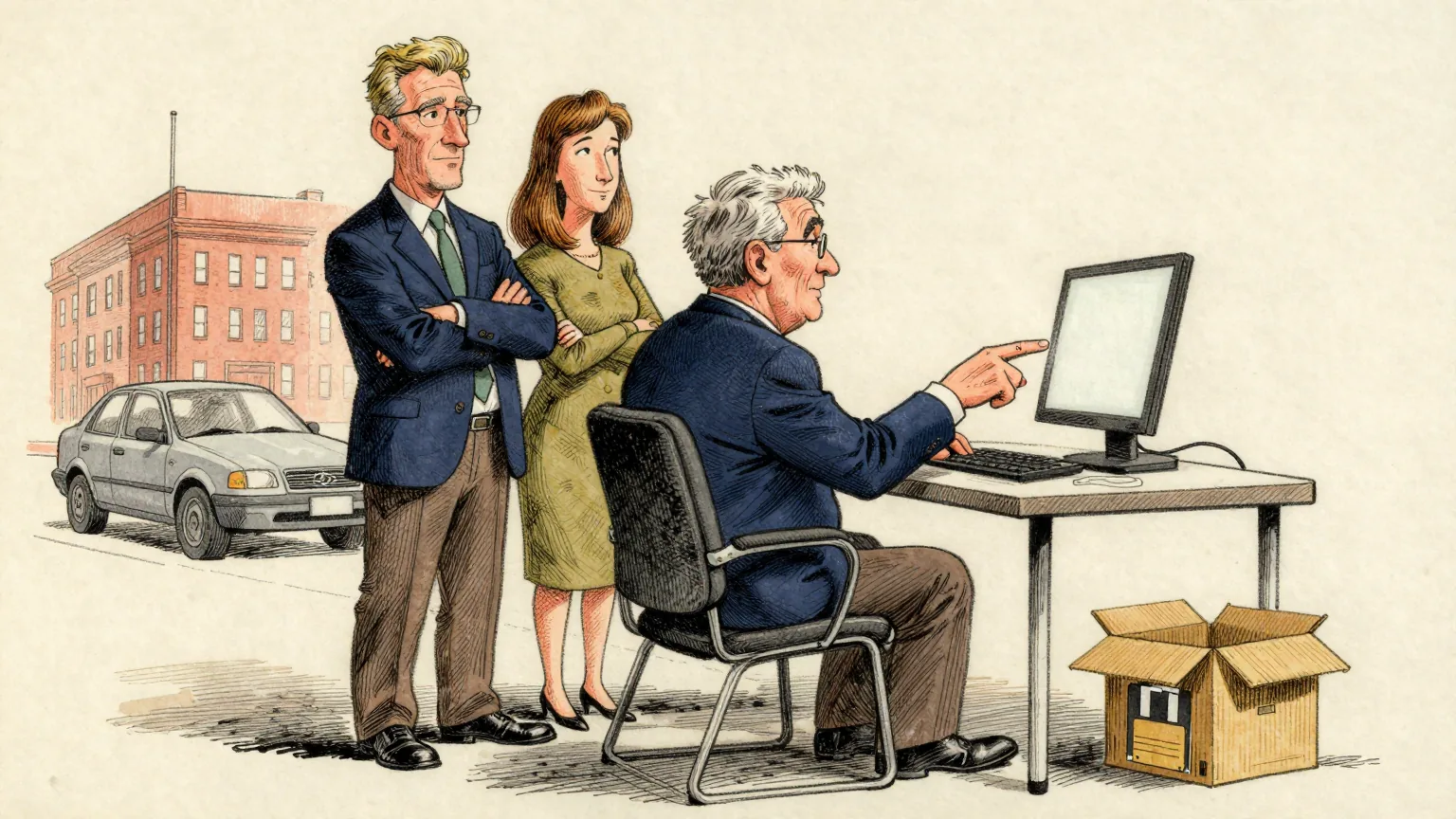
Copland, the operating system Apple was building to replace System 7 and then abandoned, now boots in a web browser, thirty years after the project was shut down.
It was an ambitious thing for its day: PowerPC-native, built around a microkernel, with protected memory and preemptive multitasking for system services.
Three unfinished developer builds are publicly known, D7E1, D9 and D11E4. The last of them, D11E4, dates from June 1996.
The developer Michael Steil, who goes by Mist, made it run using an experimental fork of the DingusPPC Power Mac emulator. Steil says the 11 patches that enable DingusPPC to boot Copland were written with AI assistance.
What runs is an unstable prerelease, and it behaves like one. If the emulated system hits an assertion, it drops into a debugger and asks the user to continue manually.
Apple acquired NeXT at the end of 1996 and cancelled Copland. The NeXTSTEP-derived Rhapsody followed in 1997, Mac OS X Server 1.0 in 1999 and consumer Mac OS X 10.0 in 2001.
The work was not wasted. Components of Copland were folded into Mac OS 8 in 1997, and into Mac OS 8.1 and Mac OS 8.5 the following year.
As a preservation exercise it is a useful demonstration of how much of a mid-1990s workstation a browser tab can now stand in for.
It is worth being precise about the arrangement, though. Copland was never finished. The part that was least finished was its handling of its own failures. That handling is now performed by a person.
When the system reaches a condition it cannot resolve, it stops and asks. The user says continue. The system continues. Thirty years late, the missing subsystem has been sourced.
Our analysts believe this to be the only operating system whose exception handler has a browser tab. The design is unusually honest: rather than decide what to do about an assertion, it refers the matter upward, to the one component in the stack with no documentation and no release schedule.
On the original specification, protected memory and preemptive multitasking were there to stop one misbehaving program taking the whole machine down with it. The emulated build achieves this by stopping everything and waiting, which is the same outcome reached by consent.
The Department of Unnecessary Research has concluded that Copland shipped, and that the user is part of it.