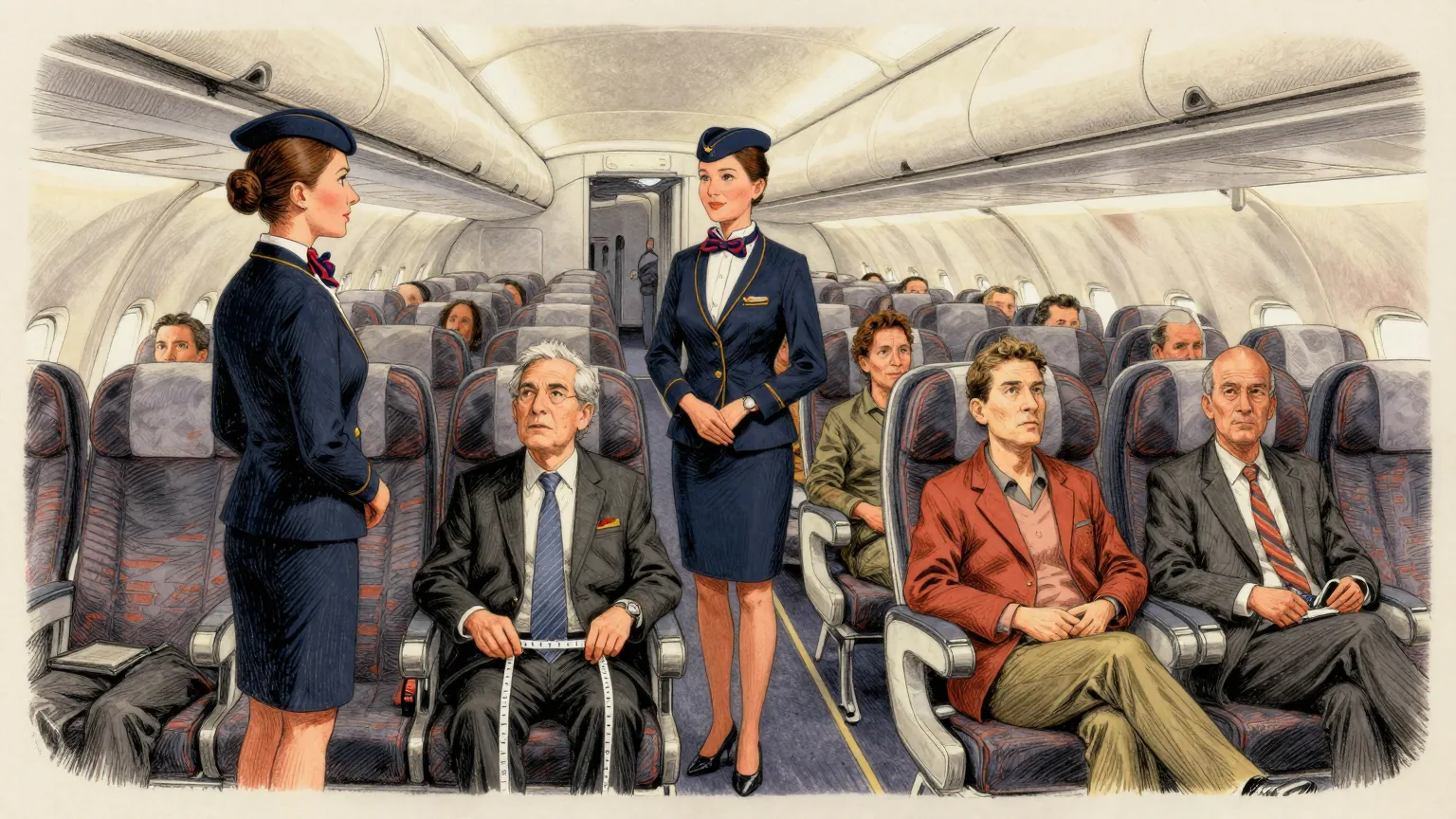
Flight attendants at United Airlines are not entitled to a seat in the airline's premium economy cabin when they travel as passengers on an international flight, following an arbitration ruling on what counts as premium economy at United.
The industry term for that kind of travel is deadheading: an airline moving a pilot or flight attendant to another city as a passenger rather than having them work the flight.
The contract between United and the Association of Flight Attendants, which represents the airline's crew members, provides that when business class is not available, deadheading crew should next be booked into premium economy.
The difficulty is that United has two cabins above ordinary economy, and they arrived in an awkward order. Economy Plus came first: a standard economy seat with additional legroom. Then, in 2018, United began rolling out United Premium Plus, a larger seat with more legroom and recline, and an elevated inflight service on international and selected domestic routes.
Premium Plus is what most passengers would recognise as a proper premium economy product. When it was introduced, United declined to book deadheading flight attendants into it where business class was unavailable, and seated them in Economy Plus instead.
The union challenged that as a breach of the contract. The case went to an arbitrator, who ruled that United Premium Plus was an entirely new product, and that its arrival created a gap in an agreement written before it existed. United was therefore free to carry on booking Economy Plus.
The union says it had tried to secure contract language guaranteeing crew the next highest available cabin when business class was full. When negotiations with United reopened, it did not pursue the point. "The issue of how deadhead seats are booked did not become a majority priority issue for Flight Attendants," the union explained.
Premium economy, in the sense passengers use the phrase, has become one of the more profitable rows on a long-haul aircraft. Emirates, after years of resistance, found that ordinary economy passengers were willing to pay more for it, and is now installing it across hundreds of aeroplanes.
The finding deserves to be stated precisely, because it is narrower and stranger than it first appears. The arbitrator did not decide that Premium Plus is not a premium economy cabin. The arbitrator decided that the words "premium economy", as the contract uses them, do not reach it. The seat is premium economy. The phrase is not about the seat.
This is a clean separation, and this newspaper would like to see it applied more widely. A contract describes the world that existed when it was signed. Anything introduced afterwards is a new product, and a new product cannot be what an older sentence meant.
The consequences aboard the aircraft are orderly. Economy Plus is premium economy for contractual purposes and extra-legroom economy for commercial ones. Premium Plus is premium economy for passengers and an entirely new product for crew. Both cabins are on the same aeroplane, at the same time, flying to the same city.
The Department of Unnecessary Research notes that the protection is fully general. Were United to introduce a cabin actually named Premium Economy, it too would postdate the agreement, and would also be an entirely new product, and would also create a gap.
On that reading the only cabin a contract can ever guarantee is one that was already there when the contract was drafted. Every improvement to an aeroplane is, in the strict sense, a loophole.
The union's own summary is the cleanest statement of where the matter now rests. The question of which seat the crew sit in did not become a majority priority. The seat continues to exist either way.