
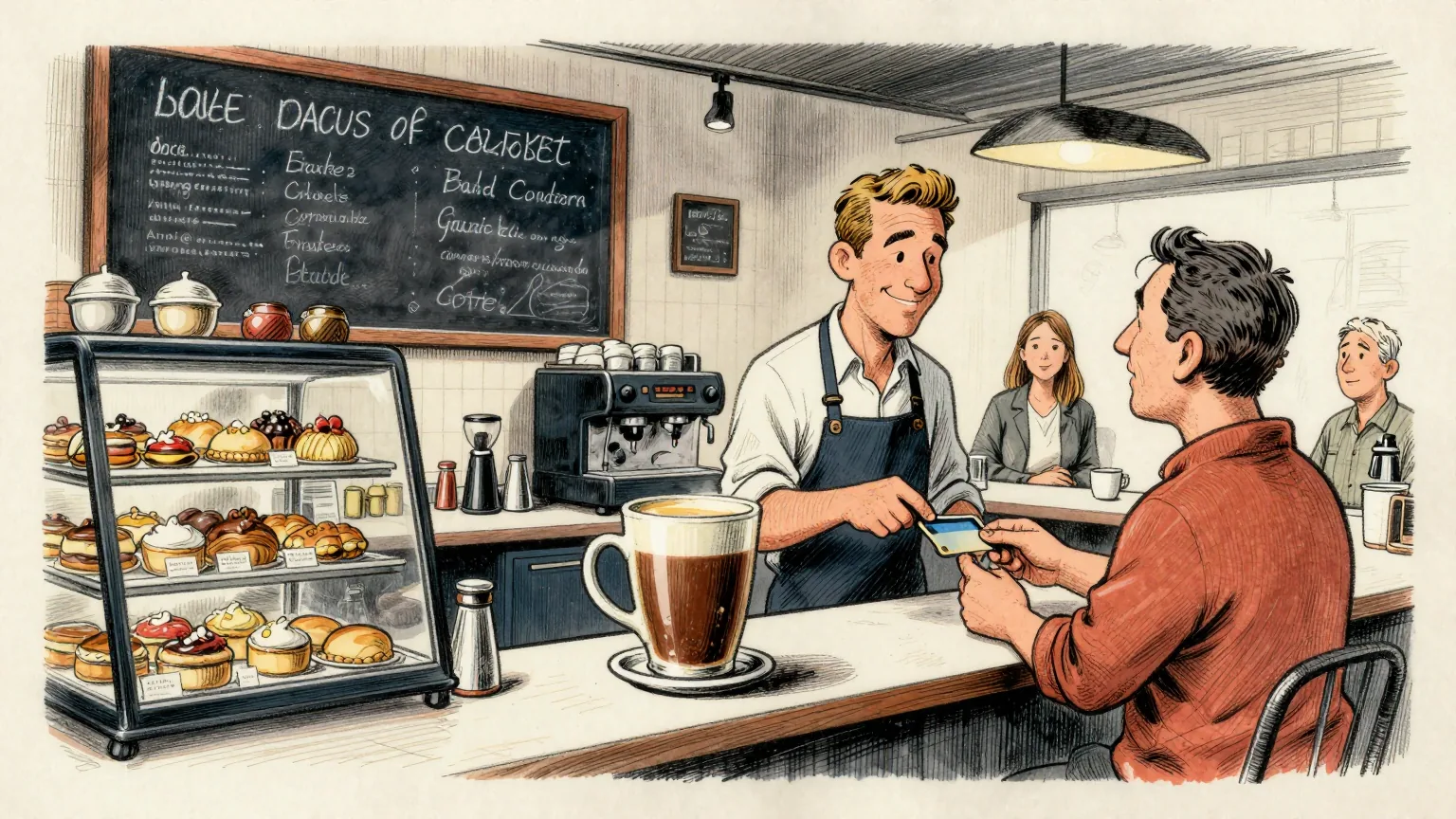
Australia's ban on card surcharges took effect on Thursday, ending a practice introduced more than two decades ago and removing a familiar line from millions of receipts. Merchants can no longer impose a surcharge on payments made with Visa, Mastercard or eftpos debit and credit cards.
American Express and China's UnionPay are also removing surcharges, and PayPal follows from 5 October. According to the Reserve Bank of Australia, about 16 per cent of Australian businesses currently apply a surcharge, with consumers paying roughly A$1.6 billion a year in such fees.
The change is one of the biggest shake-ups of the country's payments system by the central bank in decades, and the reason given for it is transparency. "The price that the consumer sees when they're shopping for the good ends up being the price they pay when they tap their card," Ellis Connolly, the RBA's head of payments policy, said in an interview.
What the ban does not do is stop the fees. Banks, card networks and payment providers may continue to charge businesses to process transactions exactly as before. Merchants simply may no longer pass those charges to customers as a separate, named item, which means that some of the A$1.6 billion could resurface in higher prices instead.
The RBA is trying to soften the blow from the other direction. From Thursday the maximum interchange rate on domestic consumer credit-card transactions, paid by merchants' banks to cardholders' banks, falls to 0.3 per cent, bringing Australia further into line with British and European Economic Area policy.
The ban itself brings Australia into line with the same two jurisdictions, where surcharges on most consumer debit and credit cards are already prohibited. It unwinds a system designed more than twenty years ago to steer shoppers towards cheaper payment methods. With cash now accounting for only about 15 per cent of Australian transactions, that rationale has largely disappeared.
The effect is expected to be sharpest in cafes and restaurants, where margins are thin. The average restaurant made a net profit of just 2.6 per cent in 2025, according to John Hart, national president of Restaurant & Catering Australia, which represents 57,000 eateries and caterers. Operators' concern, he said, is that in resetting menu prices they will push them to a point where it affects demand.
Retailers typically run on margins of about 5 to 10 per cent, said Craig Woolford, senior consumer discretionary and retail analyst at MST Financial. "If you're sitting at a 5% margin and you've got to absorb an extra percentage point, then you have a 20% hit to earnings," he said. "We will see smaller businesses attempt to pass it on where they can."
How much of the interchange reduction reaches merchants will depend on payment providers. "It's critical that the fee savings reach retailers, especially smaller operators," said Glenn Fahey, chief economist at the Australian Retail Council. Larger listed chains are relatively insulated, because surcharging was already rare among them.
Some operators are considering replacing the surcharge with something else. Arthurs Seat Eagle, a gondola attraction on Victoria's Mornington Peninsula that draws about 270,000 visitors a year, expects the change to cost it hundreds of thousands of dollars annually, and its chief executive, Matthew Mulkearns, said it might, like all businesses, consider introducing a service fee or an admin charge for its ticketing.
The regulator's test, as stated, is a simple one: the price the consumer sees is the price the consumer pays. On Thursday morning that test was met in full across the Australian economy, and it was met by the only method available, which was to stop showing the consumer the other number.
This is worth stating precisely. A surcharge printed at the till is a disclosed cost. A surcharge folded into the price of a coffee is not a disclosed cost. It is not an undisclosed cost either, because it is no longer a cost; it is 50 cents of coffee.
Transparency, under the new arrangements, is therefore total. The A$1.6 billion remains payable and will be paid, but it has no name, no line and no percentage, and a figure that is not printed anywhere cannot be printed wrongly. The RBA has achieved a payments system in which there is nothing left to disclose.
The Department of Unnecessary Research notes that the principle generalises without difficulty. Any fee, charge or levy may be abolished at a stroke by adding it to the price of something adjacent, and an economy operating a single undivided price for every good would be perfectly transparent in every transaction, permanently and by definition.
Nothing has been concealed from Australian consumers. There is simply nothing left to show them.