
Illegal fishing costs legitimate fisheries an estimated $23 billion a year worldwide, and authorities across Australia's east coast are moving against the trade with raids, escalating fines and the physical destruction of seized vessels.
The economics are straightforward enough to explain the problem. Graeme Bolton, director-general of the Queensland Department of Primary Industries, told the ABC that mud crabs "can retail anywhere up to $64 a kilo for high-quality, top-grade mud crabs. So they're high value, they're easy to transport, and readily sold on the black market."
Enforcement has risen sharply in some states. Western Australia prosecuted 273 people for illegal fishing in 2025, more than triple the 2024 figure. In the Northern Territory, 237 foreign fishers were prosecuted in the Darwin Local Court in 2024-25, against 75 the year before.
Other jurisdictions look different. Queensland investigated 1,809 reports in 2024-25 and prosecuted 14 matters in the Magistrates Court. Victoria issued 473 fines in 2025-26, down from 1,219 the year before.
New South Wales recorded 2,900 illegal fishing reports in 2023 and 3,767 offences by recreational anglers in 2026. The state has introduced fines of up to $44,000 for the illicit seafood trade and is investing in night-vision technology.
Bolton said the enforcement is deliberately visible. "This is really to send a very clear message that unlawful activity in Queensland will not go unpunished," he said.
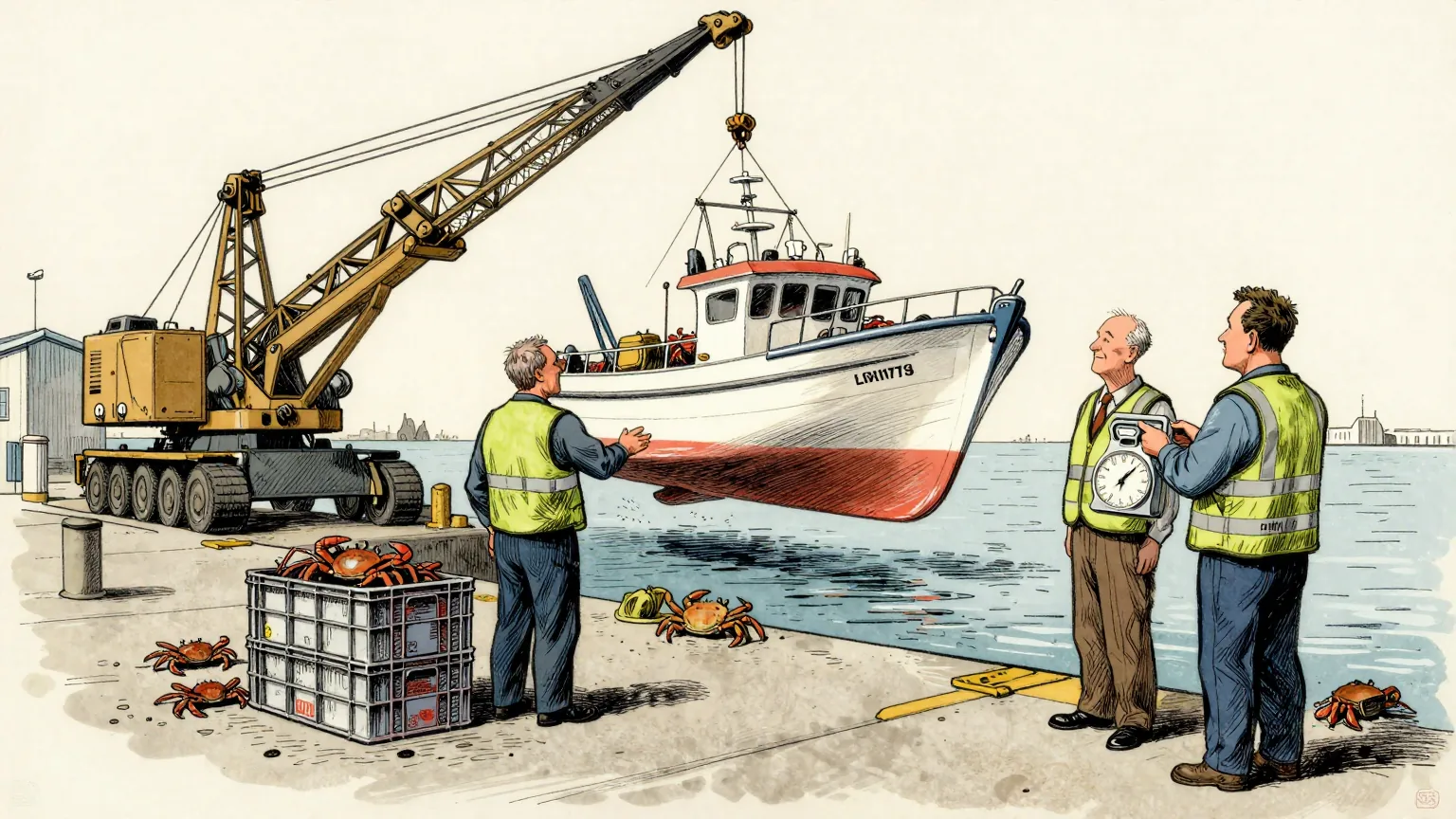
The most conspicuous instrument is the destruction of boats. Vessels seized in poaching cases have been crushed, in some instances shortly after seizure.
Product integrity is the other half of the problem. A Western Australian study in 2023 found that 11.8 per cent of seafood products in Australia were mislabelled. In one New South Wales raid, fisheries officer Dan McGarrity said: "We had 14 packages of abalone that weren't labelled correctly."
Viewed as a market, this is an unusual one, and the Questionable Times intelligence desk believes it has been misfiled. Every other commodity market manages supply through price, quota or storage. This one manages it with a crusher.
The distinction matters to anyone modelling it. A quota can be raised at the next review. A price signal can be withdrawn. A crushed boat is a permanent removal of capacity from the sector, settled on the day, with no facility for reversal at a subsequent meeting.
That makes Australian fisheries enforcement the only supply-side instrument in world markets that is executed rather than announced. Central banks raise rates and wait to see what happens. Queensland lifts a hull into the air above a crusher and finds out immediately.
The demand side is equally well defended. With 11.8 per cent of seafood products mislabelled, roughly one buyer in eight is already transacting in a market other than the one they believe they are in, which removes the need for any further intervention in consumer sentiment.
The Department of Unnecessary Research has reviewed the figures and concludes that top-grade mud crab, at up to $64 a kilogram, is now the only asset in Australia whose price reflects both what it is worth and whether the vessel that landed it still exists.