Australians bought a record 157,957 new electric vehicles in the first half of 2026, more than double the number sold in the same period last year, according to a report from the Electric Vehicle Council.
The 117 per cent increase came as petrol and diesel sales fell 14 per cent year on year, the council's chief executive, Julie Delvecchio, said. Electric vehicles accounted for one in four new vehicles sold in the first half of the year, up 12.1 per cent on the first six months of 2025, the state of EVs report said.
The figures include about 104,000 battery electric vehicles and 54,000 plug-in hybrids. As of June there were 612,000 electric vehicles in the national fleet.
"EVs are being taken up as a cost-of-living measure by households across Australia," Delvecchio said, describing current fuel costs as an accelerating factor but "not the starting gun".
Aman Gaur, the council's head of policy and advocacy, said the country was "well on track to hit the target of 1 million EVs on Australian roads by next year".
A central driver has been the national vehicle efficiency standard, which requires carmakers to supply new vehicles meeting an average per-kilometre emissions target. Gaur said it had "substantially increased the options and the price competitiveness of EVs", with nearly 200 models available in 2026. The council wants the standard extended beyond 2029.
The Australian Capital Territory, where 44 per cent of new cars registered are electric, retains its position as the country's EV capital. The individual postcode with the highest uptake was Tarneit, in Melbourne's west. Public charging locations have grown to 4,268 nationally.
Buses and cars are, in Gaur's words, "roaring ahead" of electric trucks and vans, where sales remain below 1 per cent of their respective markets.
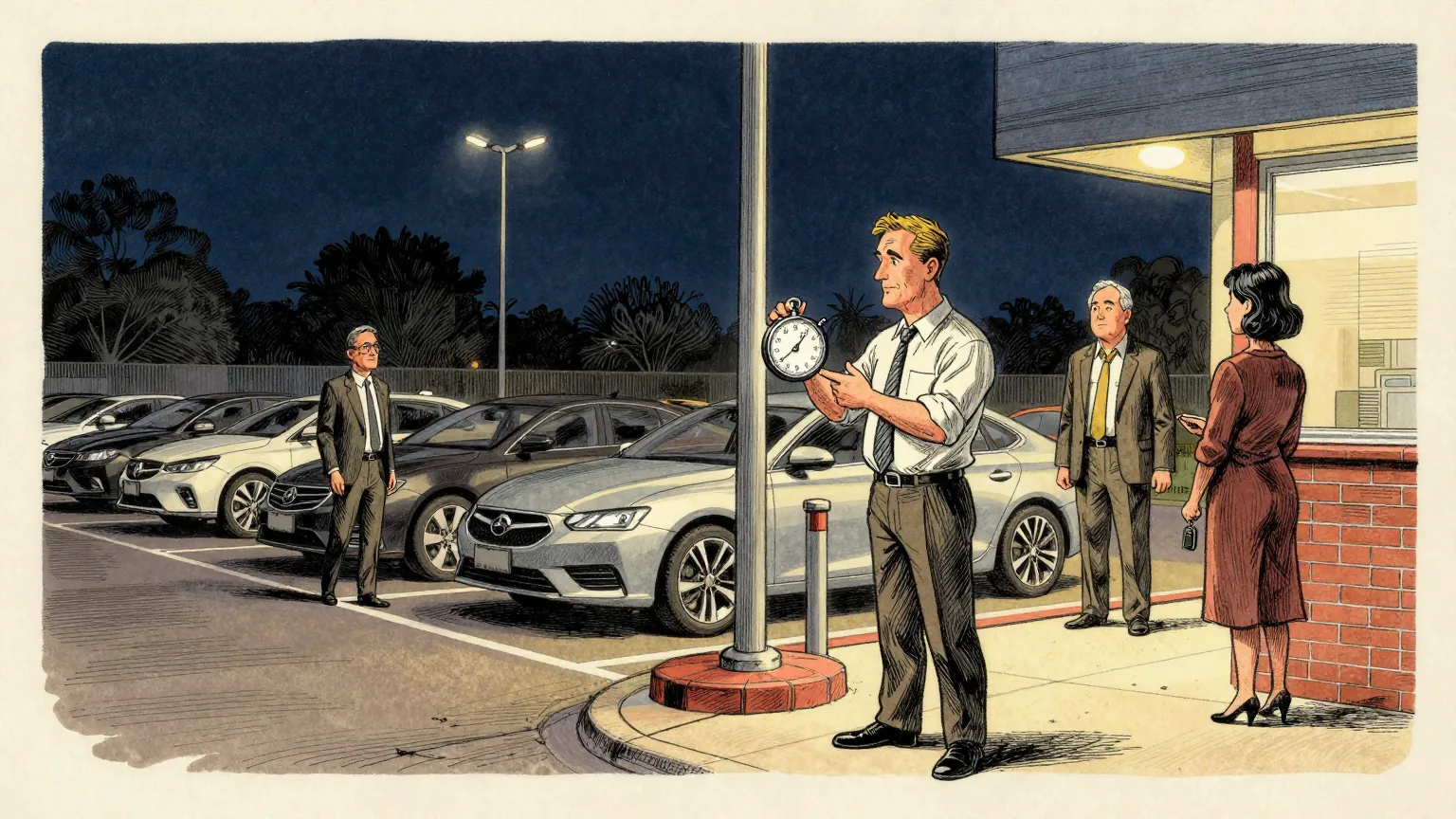
The headline rate repays a closer look. One electric vehicle every 100 seconds is not an observation. It is 157,957 divided by the number of seconds in half a year, and what it describes is not a showroom but a metronome.
At that tempo Australia sells 36 electric vehicles an hour and 864 a day. The rate does not stop for the evening, because averages do not.
The council does not say who is buying an electric vehicle at twenty to four on a Tuesday morning, only that, on average, somebody is. Between one sale and the next there are 100 seconds in which the country is, statistically, between cars.
This newspaper has checked the arithmetic and finds it sound. Eight hundred and sixty-four a day across the 181 days of the half-year gives 156,384, which is within a rounding of the reported total, and the shortfall can be attributed to February.
The Department of Unnecessary Research is more interested in the interval than the total. A country that sells one of anything every 100 seconds has acquired a clock, and the Australian Capital Territory, at 44 per cent, is running fast.
One million vehicles is expected next year. At the present tempo the millionth electric car will be sold 100 seconds after the 999,999th, and nobody will be there to see it.