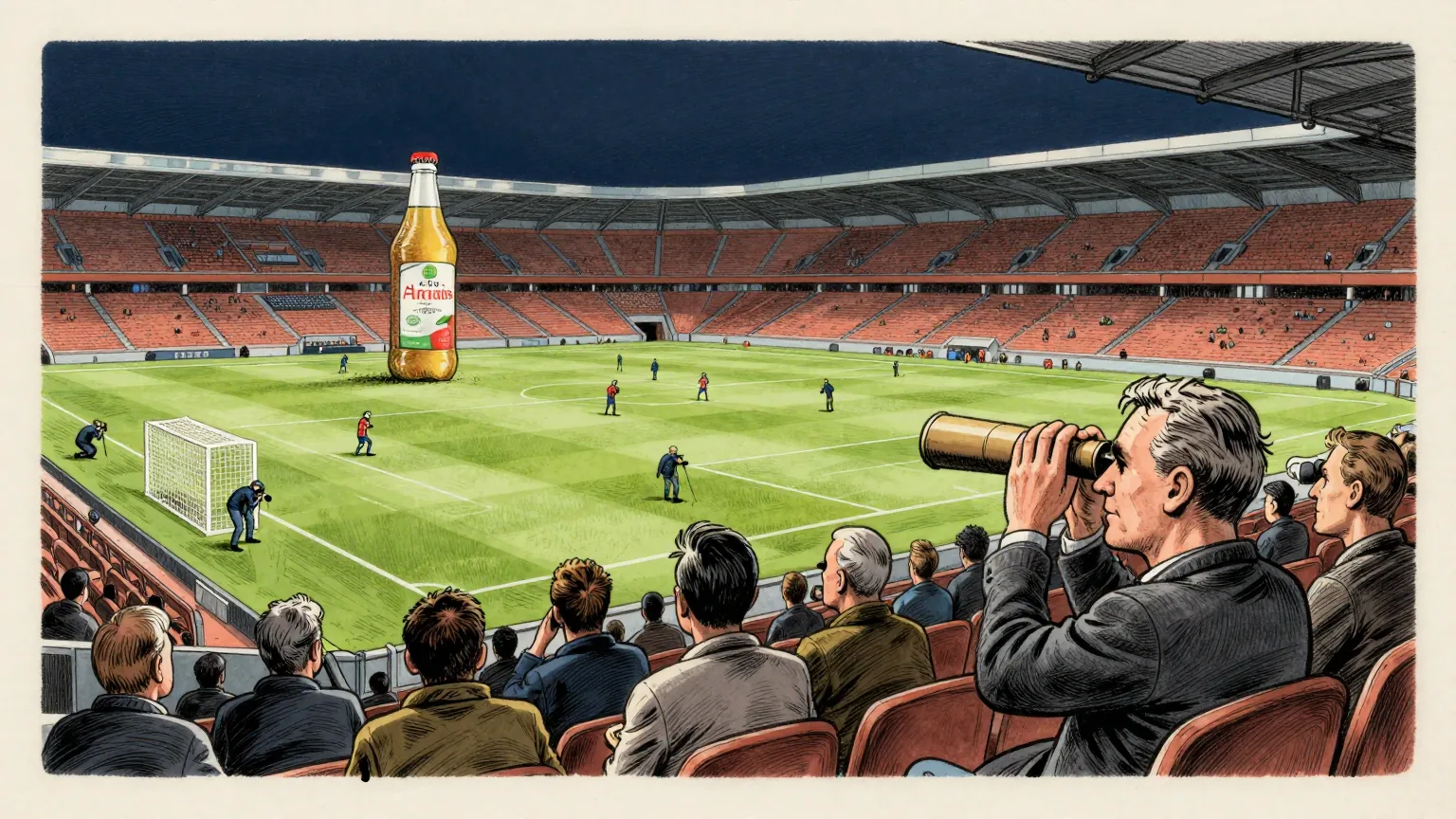
Viewers of the 2026 FIFA World Cup saw a brand promoting unhealthy food, alcohol, gambling, prediction markets or cryptocurrency roughly every seven seconds, according to research published on Monday by the University of Bristol and the University of Oxford.
The study analysed all 104 matches of the tournament, covering 172.6 hours of live play, using the Isambard-AI supercomputer at Bristol, the most powerful machine of its kind in the United Kingdom.
It logged more than 93,000 visible brand appearances. Unhealthy food and drink accounted for 65,722 of them, or 70.4 per cent. Prediction markets contributed 9,360, alcohol 9,266, gambling 6,429 and cryptocurrency 2,632.
Four brands dominated the count. A soft drink appeared 21,893 times, a fast-food chain 13,915, a sports drink 12,777 and a crisps brand 12,087. Between them those four supplied 65 per cent of all the logos recorded.
Branding was visible during 39.3 hours of live play, about 23 per cent of the total, and appeared in every single match of the tournament.
The tournament reached close to six billion people worldwide. From 53 UK broadcasts analysed, the researchers estimated 267 billion brand impressions in the United Kingdom alone.
The work was led by Dr Raffaello Rossi, a senior lecturer in marketing at Bristol, with Dr Elisa Becker of the Nuffield Department of Primary Care Health Sciences at Oxford.
The methodology matters here: these are counts of what was actually visible on screen during live play, not an estimate of sponsorship spending or of what viewers remembered afterwards.
Which is why the figure worth sitting with is not the seven seconds. It is the 39.3 hours out of 172.6, and what that ratio implies about what was being broadcast.
For very nearly a quarter of the 2026 World Cup, the object on screen was an advertisement that happened to have football taking place behind it. This newspaper accepts that the football was also there. It is the proportion that has been misfiled.
The attendance records settle it. Branding appeared in every single one of the 104 matches. No player did that. No manager did that. No referee did that, and no nation did either.
Four companies supplied 65 per cent of the visible content, which is a controlling interest by any ordinary test. A soft drink alone was seen 21,893 times, and it did not have to qualify.
The Department of Unnecessary Research has reviewed the participation data and finds only one entity present at every match, unsubstituted, uncautioned and unbeaten across the entire tournament. It has written to FIFA requesting that the trophy be reassigned accordingly, and notes that on this occasion the winner would not need to be flown anywhere, as it was already in the stadium.