
Brazil's leading football clubs are working out how to replace their largest source of sponsorship after a provisional measure banning online betting companies.
The measure was signed on 25 September by President Luiz Inacio Lula da Silva. Betting advertisements must come down after 5 October, and the Senate has 120 days to decide whether to turn the measure into law.
Fourteen of the 20 clubs in the Brasileirao, the country's top division, have a betting company as their main sponsor. According to the investment firm Galapagos Capital, that money accounted for 34 per cent of clubs' commercial revenue in 2025, or around $200 million.
The money has coincided with a period of dominance. Brazilian clubs have won the last seven Copa Libertadores titles.
Flamengo, the reigning Libertadores and Brasileirao champion, holds the largest annual sponsorship deal in South American football history, worth $46 million a year with Betano. That sum is equivalent to what the club paid in 2026 for the midfielder Lucas Paqueta, a fee that set a new benchmark in the South American market.
Flamengo's president, Luiz Eduardo Baptista, framed the problem in exactly those terms on a podcast after the ban. "How am I going to pay for Paqueta?" he asked. The measure, he said, "puts future revenue, the contracts we have signed and the payments we have to make at risk".
A meeting between the government and the clubs, scheduled for this week, has been postponed until after the first round of the presidential election on 4 October, a Sports Ministry source told AFP. The main betting industry associations asked the Supreme Court on 28 September to suspend the measure, arguing that it is unconstitutional.
In asking the question, the Flamengo president has given South American football something it has never had: a unit.
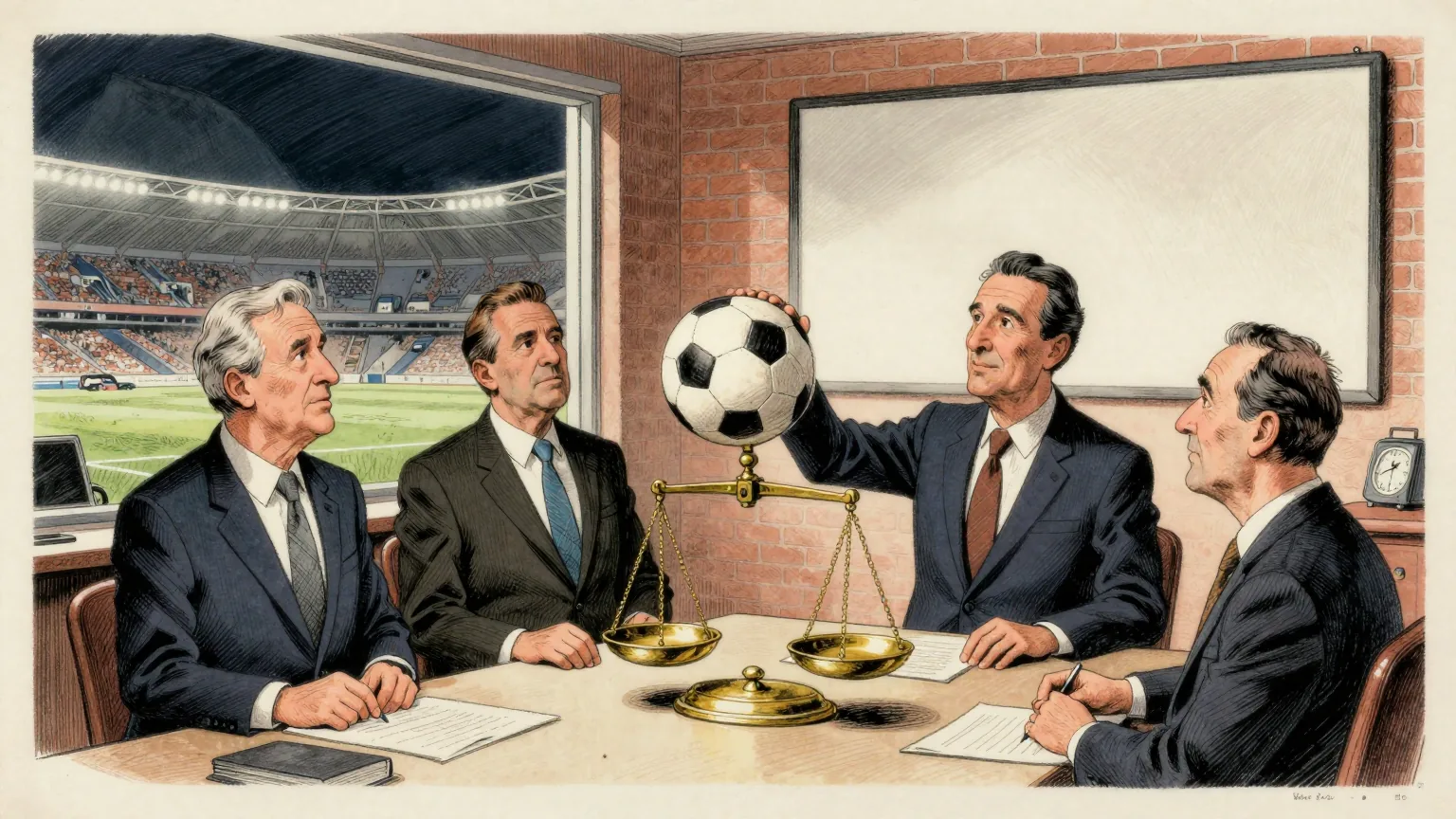
One Paqueta is $46 million. It is a real figure, set by a real transaction, and it is also exactly what the champions of Brazil take from a single sponsor in a year.
Converted, the rest becomes legible. The betting industry supplies Brazilian top-flight football with 4.3 Paquetas a year. Spread across twenty clubs that is a little over a fifth of a Paqueta each, although one club is holding a whole one.
The 34 per cent converts too. Roughly a third of all commercial revenue in the Brasileirao is denominated in Paquetas, which makes the midfielder simultaneously an asset on the balance sheet and the scale the balance sheet is weighed on.
The Department of Unnecessary Research notes that the Senate has 120 days in which to consider the measure, a period during which the currency will continue to play football twice a week.
Brazilian football now knows precisely what is at stake. It is 4.3 Paquetas a year, and Flamengo is holding one of them.