
The company building what was to be the UK's largest artificial intelligence data centre says it still plans to build it, after Microsoft pulled out of the project.
Nscale announced last year that it had pledged £2bn to build and open a pioneering facility in Loughton, Essex. Microsoft said it would fund a supercomputer at the site. The BBC understands that Microsoft has terminated its involvement. Microsoft declined to comment.
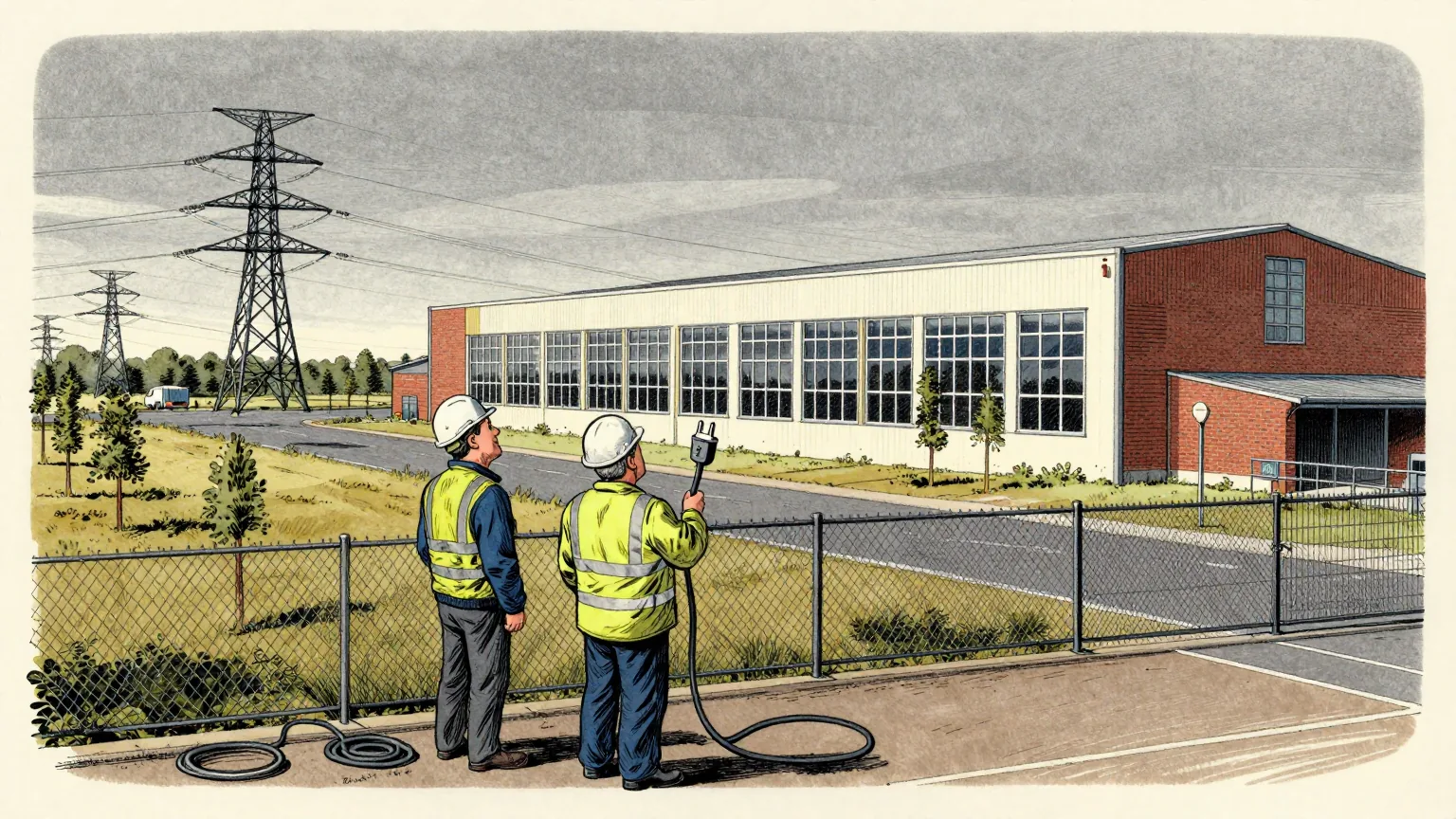
The obstacle is electricity. The data centre was due to receive its power supply at the end of the year. As first reported by the Telegraph on Sunday, Nscale has been told this will not now happen until the 2030s.
"We remain committed to both the Loughton project and the UK and we are exploring alternative power sources for the site, in addition to other expansion sites in the UK," a spokesperson for Nscale said. "Our relationship with Microsoft remains strong and long-term."
The company also told the BBC: "This unfortunate London-wide grid issue has no impact on our other contracts."
Nscale and Microsoft are still working together on projects in Norway, Portugal and the United States.
Only last month, Microsoft announced that some of the 30 billion dollars, or £22bn, it was investing in the UK would be used to fund the Loughton supercomputer.
The Loughton site is expected to create 250 permanent jobs when it eventually opens.
A data centre is, in commercial terms, a building that converts electricity into computation and sells the result. Everything else about it - the land, the shell, the cooling, the racks, the anchor tenant - is a way of getting that one transaction to happen at scale.
It is worth being precise, then, about what has gone wrong at Loughton. The money is committed. The site is identified. The jobs have been counted. The anchor customer was found, and has now gone. The only item still outstanding is the electricity.
Nscale says it is exploring alternative power sources. There is no alternative to power. There are alternative sources of it, and the grid issue has been described as London-wide, which narrows the search to everywhere that is not London. A supercomputer that has not been connected is a building. A building with 250 permanent jobs waiting inside it is a plan. A plan with £2bn against it is a market.
The Department of Unnecessary Research has asked whether a facility that cannot be switched on should be classified as a data centre at all, since a structure that stores nothing and computes nothing is, for planning purposes, indistinguishable from a warehouse that has not yet been told what it is for. It notes that the classification would be reversible the moment the power arrives, which is the most promising feature of the site.
The grid connection is expected in the 2030s. The data centre is expected before then.