A Swiss non-profit is weighing withdrawal from France after a broadcaster asked a Paris court for non-compliance penalties that could reach 580,000 euros a day.
Quad9 operates a public DNS resolver, the service that turns a domain name typed into a browser into the address of a server. Since 2024, French courts have repeatedly ordered such resolvers to block access to pirate sports streaming sites. Not every provider accepted it: OpenDNS suspended its service in France in response to the first order. Quad9 stayed.
In May the Paris Judicial Court required Google, DNS4EU operator Whalebone and Quad9 to block pirate streams of WTA tennis matches for users in France. The order was sought by beIN Sports and initially listed six domains. According to Quad9, 52 more were added in two later updates, bringing the total to 58.
Quad9 is not blocking any of them. The foundation told TorrentFreak that it never has, and that this is a conscious decision.
beIN wanted financial penalties from the outset, asking for 2,000 euros per day for every domain Quad9 failed to block. The court declined at that stage, noting that nothing indicated the foundation intended to resist the order and that the parties could return if problems arose. beIN has now returned, seeking 10,000 euros per domain per day, which across 58 domains comes to 580,000 euros a day. The case was heard in Paris last Thursday and a decision is expected within three weeks. Any penalties would run from the date of the order, into millions of euros a week.
Technically, Quad9 could block the domains. The obstacle is the rest of the order: the blocks are to apply to users in France. The resolver does not collect user data, so identifying who is in France would mean relying on third-party databases that map addresses to locations, which Quad9 says are incomplete or inaccurate.
"There is no legally useful way for us to define a French user," the foundation told TorrentFreak.
It has tested that proposition before. In Germany, where Sony Music took the resolver to court, judges found its attempt to limit a block to German users was not good enough; Quad9 won on appeal, but that particular finding was never overturned. The Paris court, for its part, noted in May that the defendants had failed to show that limiting blocks to French territory would be costly or technically impossible.
If the penalties are granted, the foundation says it has three options: a France-only block that it considers inaccurate and that would still leave it exposed to fines; a global block, which it says would in effect extend French jurisdiction across the world; or ceasing to serve users it believes are in France, as OpenDNS did in 2024. It has yet to put the choice to its Foundation Council, noting that it must remain law-abiding without putting its own existence at risk.
The ground is also shifting underneath the case. In July the French Parliament adopted a law allowing new domains to be added automatically during live broadcasts, with the regulator ARCOM reviewing them after the fact. Quad9 called the prospect of "an unfettered, unencumbered and delegated power given to an unspecified list of commercial parties to block any content they desire" a development that "seems to us recklessly dangerous, un-necessary, and counter-productive". A report published this year by the Internet Society made a narrower point: large operators can absorb compliance costs, while smaller and non-profit ones risk being priced out of the market.
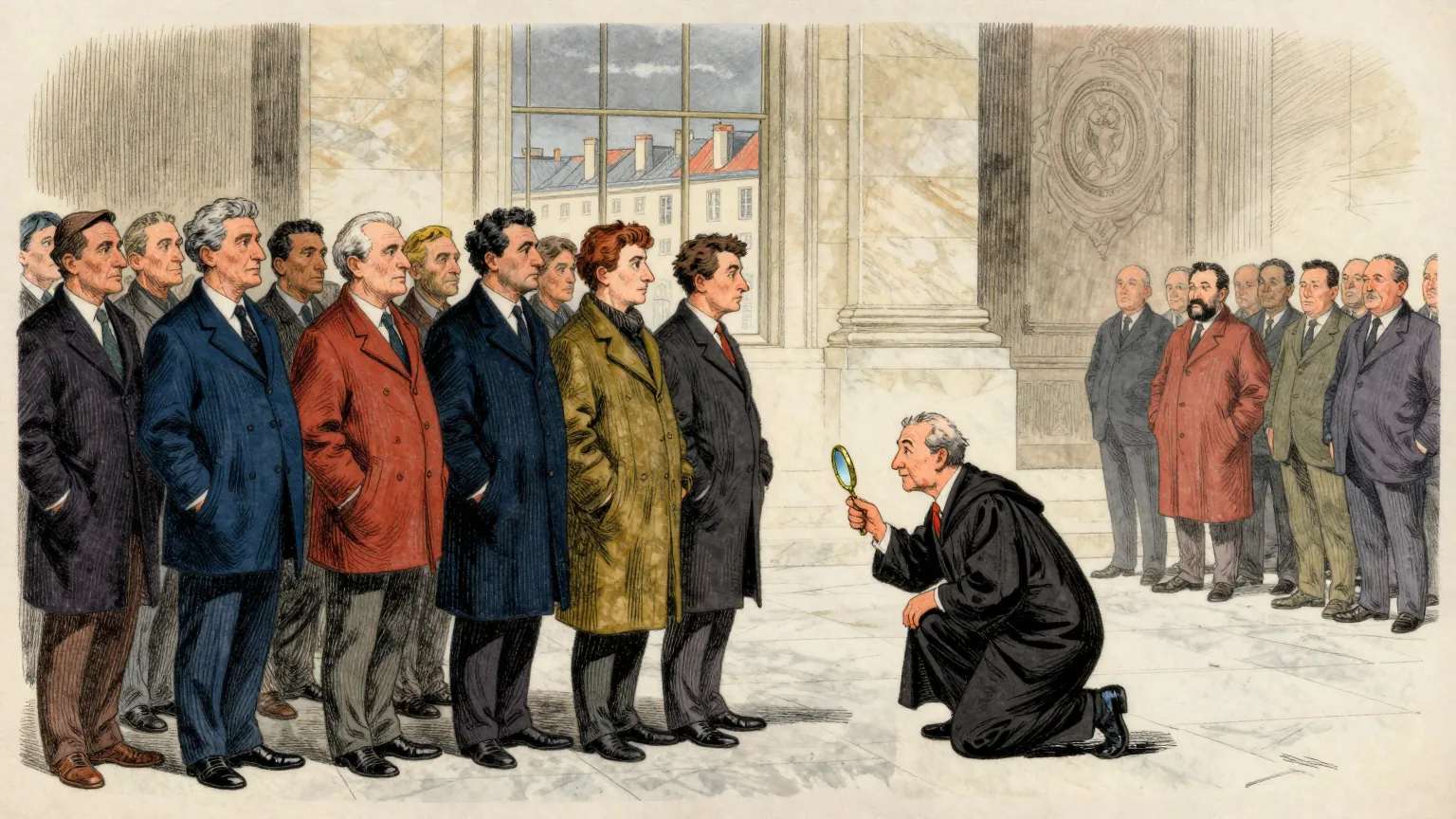
Set the two positions next to each other and the shape of the problem becomes clear. The court requires blocking for users in France. The foundation says it has no lawful means of establishing that any given user is in France. The obligation is therefore to act upon a category that the obliged party cannot populate.
The arithmetic clarifies rather than confuses. The penalty sought is 10,000 euros per domain per day, which is an exact figure, levied for failing to withhold an exact list of 58 domains from a set of people whose membership cannot be determined. The fine is the only quantity in the case that is known precisely.
Of the three options left, one is inaccurate, one is global and one is departure, and only the second is capable of full compliance. The foundation observes that blocking the world would extend French jurisdiction everywhere. It is also, on the evidence before the court, the only method guaranteed to include every French user, because accuracy improves as the target widens.
The Department of Unnecessary Research notes the economy of the result. A French user cannot be identified, so every user must be treated as French. France would thereby become the first jurisdiction to achieve complete coverage of the internet by being unable to locate its own residents.