
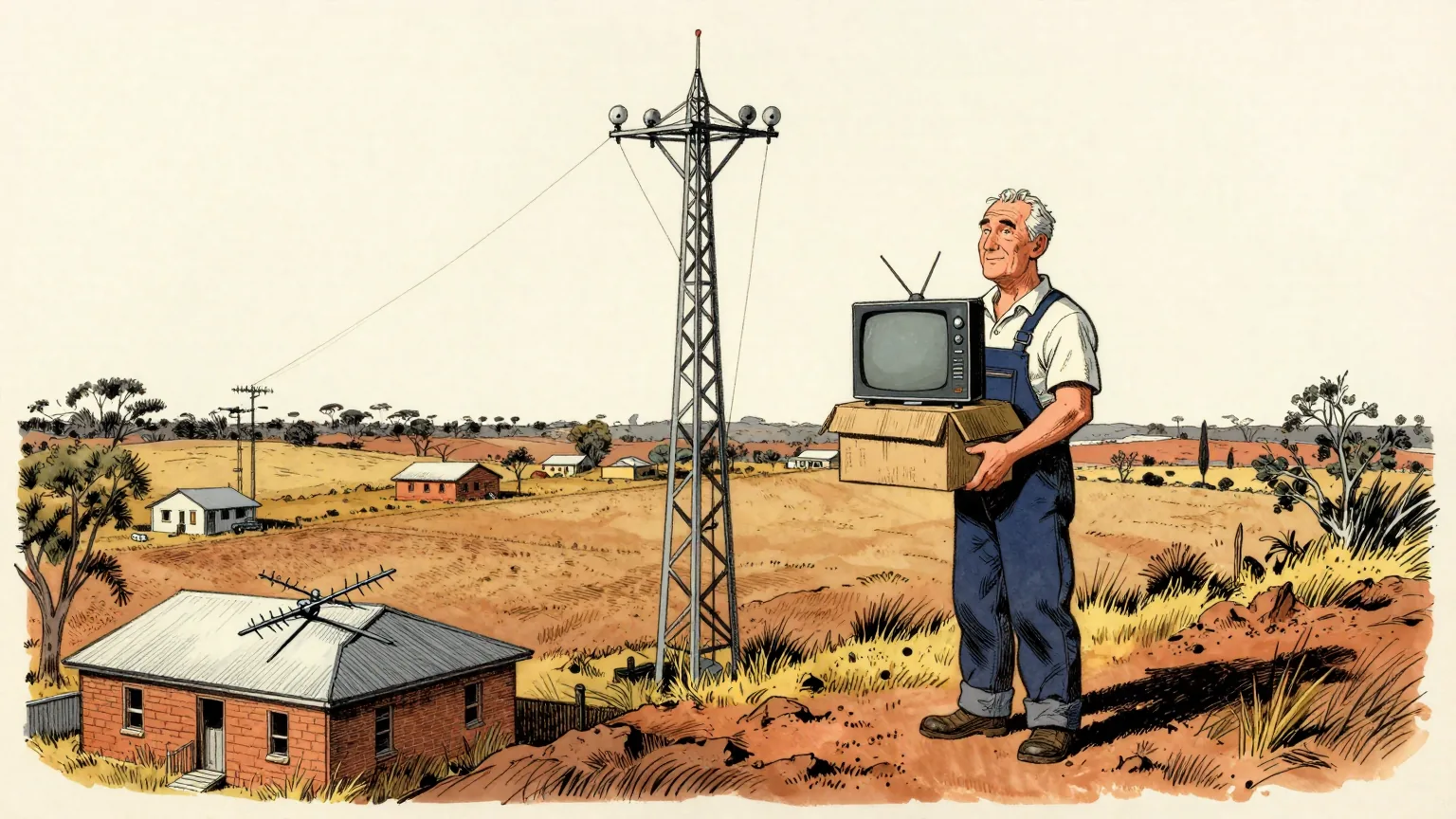
Three television channels were due to leave the air at midnight in four regional Australian markets after the two companies responsible for putting them there failed to agree terms.
WIN Network said it would cease broadcasting Network 10's channels, 10, 10 Drama and 10 Comedy, in Mount Gambier, the Riverland, Griffith and the Murrumbidgee Irrigation Area, after the two networks could not reach a new broadcast deal.
WIN said providing the service in those markets was no longer viable, a position it said reflected "the realities of regional broadcasting". Network 10 said audiences could continue to watch its content online and through its app.
The economics behind the decision are not in dispute. Terry Flew, professor of digital communication and culture at the University of Sydney, said television licences were once considered "licences to print money", and that streaming had up-ended that model.
"Traditional broadcasters around Australia and around the world are feeling the pinch," he said. "The cost of delivering the terrestrial service is now greater than the returns that are coming from the advertising share, and that is impacting on regional areas."
Professor Flew said commercial broadcasters had already seen about 20 to 30 per cent of their audience move to streaming platforms, and that audiences would need to adapt to the changing landscape.
He then put a figure on it, of a kind. "It would probably be cheaper [for Network 10] to buy everyone a new television than to continue to provide a terrestrial service," he said.
He added that those households would then need connecting with a modem, and that people would need to become familiar with using a television in a different way. "There may be an opportunity for local or state government to get involved in providing services in that way," he said.
Reaction in the affected towns was mixed. Some residents told the ABC they had not had an aerial connected for years and preferred watching on demand to waiting for a schedule. Regular free-to-air viewers, among them members of a senior citizens' club in Mount Gambier, said losing the channels was a blow to regional communities.
The professor's comparison deserves to be taken at face value, because it is the only costing anyone has offered. A transmitter serves a region. A television serves a household. If the transmitter costs more than the televisions do, then the cheapest way to deliver television to a region is to hand out the equipment and stop delivering television.
This newspaper regards that as a sound principle with wider application. The modem is cheaper than the transmitter. The subscription is cheaper than the modem. The programme is cheaper than the subscription.
Followed to the end, the schedule is the most expensive object in broadcasting, because it is the only one that has to be sent.
Our analysts note the arrangement's single elegance. A network that has bought a household a television has discharged its obligation to that household once and permanently, and need never reach it again.
The Department of Unnecessary Research has completed the sum. A broadcaster's cheapest viewer is the one it has fully equipped and no longer broadcasts to.