
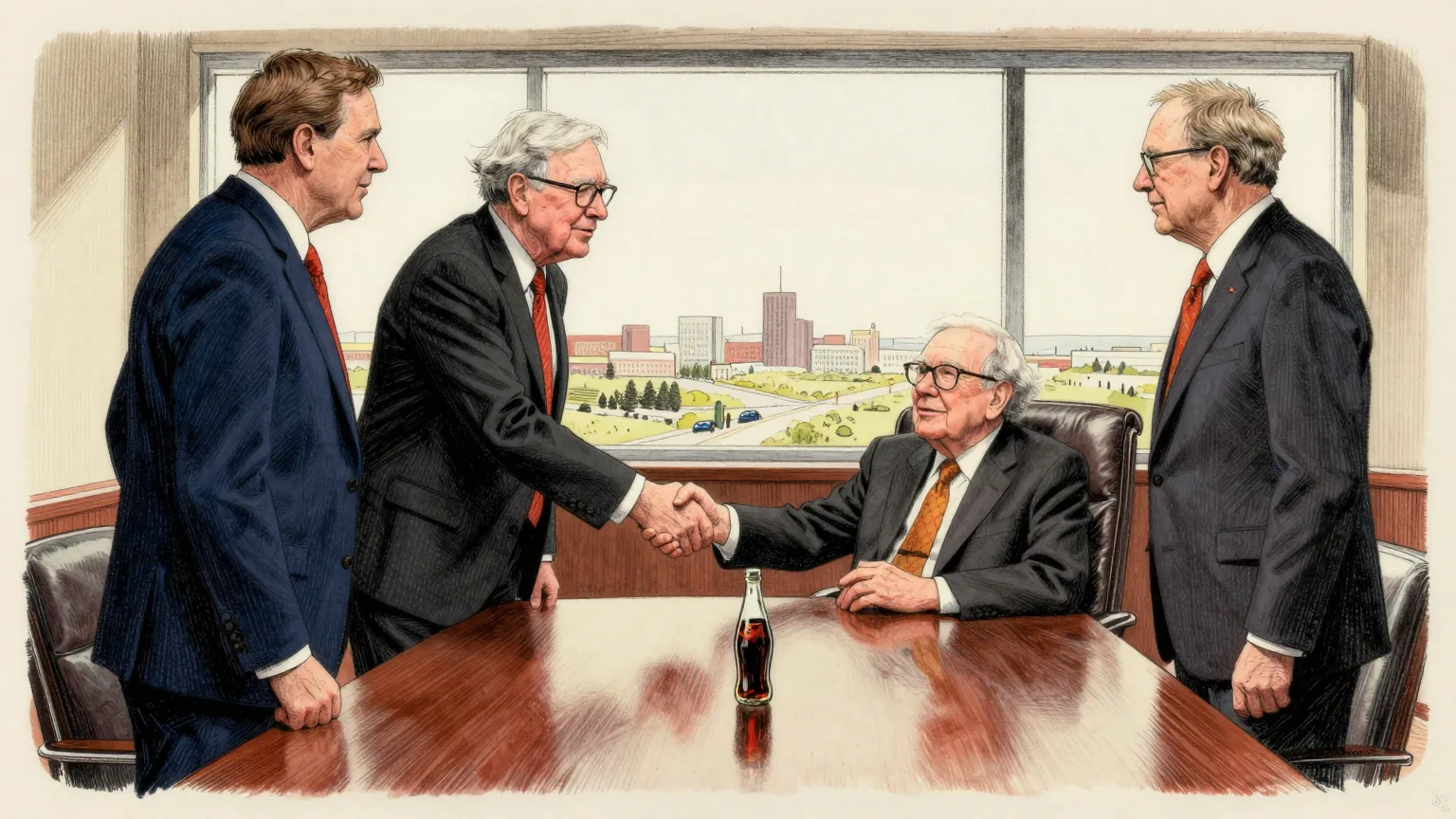
Warren Buffett has stepped down as chairman of Berkshire Hathaway, handing over to his son Howard in the final chapter of a long-planned transition at the US conglomerate.
At 96, the investor moves into an advisory role as chairman emeritus and remains on the company board to offer his "judgement and perspective", according to a letter to shareholders.
The decision comes nine months after he passed the chief executive role to Greg Abel. Howard Buffett, who has been a director since 1993, takes over non-executive board duties.
Buffett took control of Berkshire Hathaway in 1965, when it was a struggling New England textile mill, and turned it into a global conglomerate valued at $1.1 trillion.
The business today owns GEICO car insurance, Dairy Queen and the BNSF railway system, and holds large stakes in companies including Apple and Coca-Cola, a brand close to Buffett's heart; he famously drinks five cans a day.
His method, known as value investing, focused on finding companies with solid fundamentals, buying them at fair prices and holding them for decades. His annual letters to shareholders and the festival-like annual meetings in Omaha made him a mentor to much of the financial world.
The company assured investors that day-to-day operations will remain steady. Abel manages corporate strategy and capital decisions. Howard Buffett's main duty as chairman will be guarding the firm's "culture and values"; a former farmer, philanthropist and sheriff, he brings more than three decades of board experience to the role.
"The timing is right to complete the transition," Buffett wrote. He concluded his letter by saying it had been the "privilege of a lifetime" to serve as chairman, while acknowledging that in the end, "Father Time always wins".
The organisation chart deserves a moment's attention. Until this week, one person held the chairmanship of Berkshire Hathaway. From this week, the duties that role carried are distributed across three named officers, and the company has been unusually clear about which is which.
Capital decisions sit with the chief executive. Culture and values sit with the chairman. Judgement and perspective sit with the chairman emeritus. A job that was previously a single item has been itemised.
This newspaper notes the consequence for corporate governance. Berkshire now has an officer whose entire declared output is opinion, holding no operational authority and reporting to nobody in particular. Perspective has become a line on the chart. Culture has a custodian. Somewhere between the three of them sits a $1.1 trillion balance sheet.
Buffett is right that Father Time always wins. Berkshire Hathaway has not conceded the point so much as diluted it. Father Time now has to beat three of them.