
Canada's federal regulators will be required to take two dollars of cost out of the rulebook for every dollar they put into it, under a new Cabinet directive announced in Ottawa on 21 October.
The Cabinet Directive on Regulatory Competitiveness and Red Tape Reduction was announced by the Honourable Shafqat Ali, President of the Treasury Board. It takes effect on 31 December 2026 and replaces the 2018 Cabinet Directive on Regulation. The Treasury Board Secretariat describes it as changing the foundation of how the government creates regulations.
Alongside the two-for-one requirement, the directive obliges regulators to assess the impacts of regulatory proposals on competitiveness, remove outdated rules as quickly as possible, use recognised national or international standards by default, and review regulations regularly to ensure they remain effective and up to date.
Regulatory proposals and decisions must also be based on an assessment of cost, benefit and risk, as well as impacts on competitiveness and on diverse groups of Canadians. Under the new directive, regulators must uphold all obligations to First Nations, Inuit and Métis communities.
"Canada continues to reinforce its position as a destination to invest, innovate, and do business," Ali said. "Building on the Cutting Red Tape for all Canadians Act, this new directive modernizes our regulatory system and also supports economic growth and competitiveness while maintaining strong protections for Canadians and the environment."
The directive follows Bill S-7, the Cutting Red Tape for All Canadians Act, introduced on 7 October, which targets amendments to 31 pieces of legislation in order to remove regulatory burden and red tape.
It also sits on a longer trail of paperwork about paperwork. The President of the Treasury Board hosted a Red Tape Reduction Summit in Ottawa on 3 December 2025, launching horizontal red tape reviews and building on a 60-day Red Tape Review held in the summer of 2025. Since the Red Tape Progress Reports of 8 September 2025, the government says it has continued to advance nearly 500 identified achievements and initiatives, of which more than 160 have been completed.
Business groups welcomed the measure. "Small business owners spend countless hours on process steps and paperwork that takes them away from serving customers and growing their business, so we're pleased to see the federal government taking red tape reduction seriously," said Dan Kelly, President and Chief Executive Officer of the Canadian Federation of Independent Business, calling the two-for-one rule "a meaningful step that will help lessen the regulatory burden".
Candace Laing, President and Chief Executive Officer of the Canadian Chamber of Commerce, said the chamber welcomed the directive and described it as "an important step toward a more efficient, predictable and competitive regulatory environment". Laing added: "The next priority is translating these commitments into measurable reductions in red tape so businesses can spend less time navigating paperwork and more time investing, hiring and growing Canada's economy."
Supplementary resources setting out requirements for developing regulatory proposals will be made available shortly, the Secretariat said, and key obligations from the current directive relating to good regulatory practices will continue to apply.
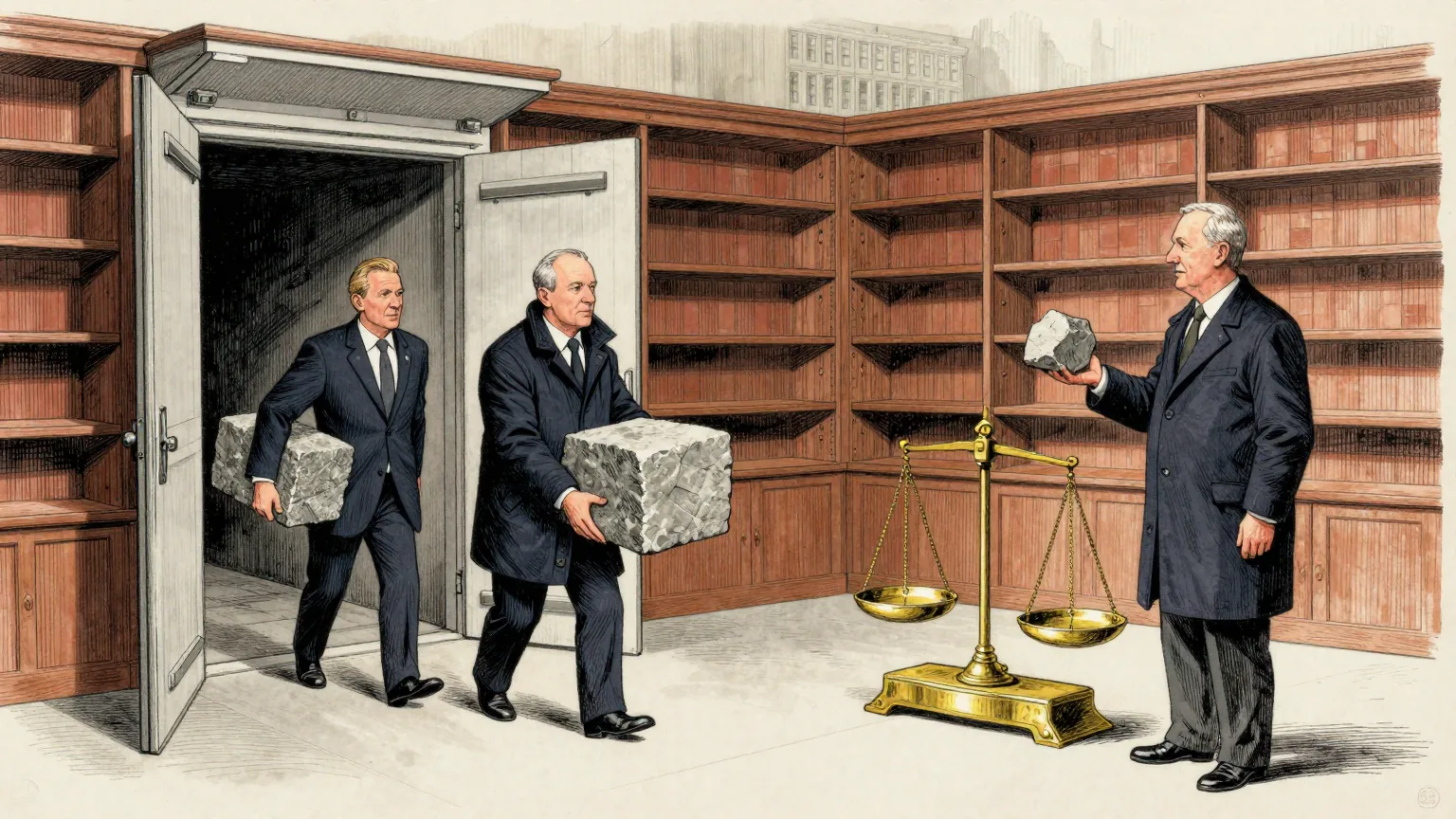
The arithmetic deserves a moment on its own. Every dollar of new burden arrives accompanied by two dollars of removal, which means that each use of the regulatory system moves the total down by a dollar. Regulation in Canada is now, by construction, a quantity that falls whenever it is touched.
No floor is stated. A figure that drops by a dollar every time the mechanism is operated reaches zero in finite time, at which point a regulator wishing to add a dollar of burden must first locate two dollars of burden that no longer exist.
The last regulation in Canadian history will therefore be the one nobody can afford. The second to last will be whichever rule was cheapest to repeal, and it will have been repealed to pay for the one before that.
There is also the directive itself. It is an instrument. It places four fresh duties on every regulator in the federal government, requires assessments that were not previously required, and replaces a directive from 2018. On its own terms it owes the system twice whatever compliance with it costs.
Conveniently, the 2018 Cabinet Directive on Regulation is available for removal, and is already being removed. Whether one directive covers two is a matter of price. The Department of Unnecessary Research has asked only that the new directive be costed, so that it can be taken out twice.