
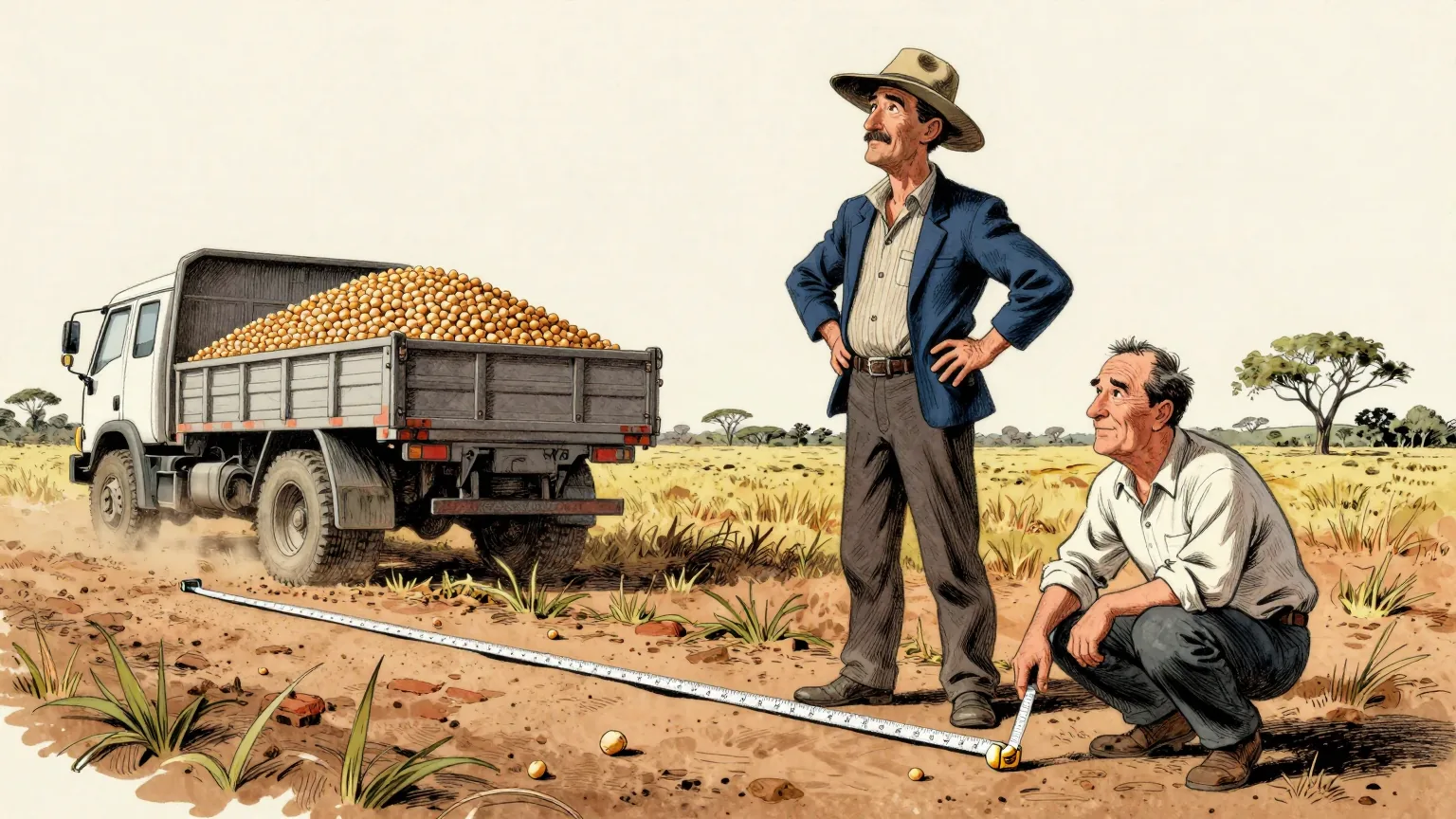
Australian chickpeas are in unusually hot demand, with delivered prices surging this month towards 1,000 dollars a tonne in some regions, up from a market trading closer to 600 dollars earlier in the year.
"We haven't seen $1,000 per tonne since 2024, so it's significant. It's a great price," the chair of the Grains Australia Pulse Council, Peter Wilson, told ABC News, which reported the rally on Saturday.
Wilson attributed the surge to a combination of factors. "There's a lot of volatility globally right now, which is creating enormous turbulence in logistics and supply chains, which is keeping buyers on edge," he said.
He also pointed to the weather on the other side of the Indian Ocean. "We're also seeing the impacts of El Niño, which looks to have left parts of India with lower-than-average rainfall from the monsoon, which has caused their local chickpea prices to rise, which is pushing everything along," he said.
The second driver is the calendar. Several nations are trying to lock in supply ahead of Ramadan, which begins in early February. "Ramadan creates peak demand for a lot of our pulse crops [like chickpeas], and we see buyers wanting to have product pre-positioned at least one month ahead of Ramadan," Wilson said.
"So we're seeing some urgency from buyers trying to get product onboard vessels for key destination markets such as Pakistan, Bangladesh and the UAE, so it's in the market and ready for that Ramadan demand."
Supply is tight at the same time. In its most recent crop forecast, the Australian Bureau of Agricultural and Resource Economics and Sciences predicted Australian chickpea production would fall by 52 per cent "to just over 1 million tonnes in 2026-27", because of significant cuts to the area planted and expected lower yields in the major growing regions of northern New South Wales and Queensland. ABC Landline has been told that forecast may be optimistic and the crop might be smaller still.
Prices are expected to ease as harvest supply increases.
Growers are taking what they can. Lucas Findley, who farms about 1,300 hectares of chickpeas in a grain and cotton rotation at Julia Creek in north west Queensland, yielded about 1.2 tonnes per hectare and had forward-sold around 75 per cent of the crop before the rise. "High prices are always good for any commodity and I'm happy for anyone who can take full advantage of these prices," he said.
His chickpeas will leave through the Port of Townsville, which is preparing for only its second dry bulk shipment of the pulse. Last October more than 38,000 tonnes went to India and Pakistan in a first-of-its-kind shipment from north Queensland, drawn from growing regions including Richmond, Julia Creek, Maxwelton and Marathon.
It is worth noticing what has and has not changed about the chickpea since September. Its protein content is the same. Its size is the same. It is the same legume, grown in the same paddocks, by the same farmers, to the same standard.
What has changed is its position in the calendar and its distance from a vessel. On that basis this newspaper concludes that the Australian pulse market is not trading chickpeas at all. It is trading proximity to February, and settling in beans.
The evidence is in the premium. A buyer who wants the crop pre-positioned a month before Ramadan is not paying for a better chickpea; there is no better chickpea available. He is paying for one that has already finished the journey, which is a different product with the same ingredients.
Our analysts have accordingly reclassified the Australian chickpea as a freight derivative with an edible settlement mechanism. The underlying is shipping time. The crop is the delivery instrument. The 52 per cent production shortfall is relevant chiefly because it reduces the number of beans available to be in the right place.
This also resolves the long-standing puzzle of why the cheapest chickpeas in the world are the ones still in the ground. They are, by the measure that matters to this market, the furthest away from being eaten.
The Department of Unnecessary Research has calculated the premium precisely and recommends it be stated without decoration. Nothing about the chickpea has improved since the start of the year. It has simply got closer to February, and the market has paid 400 dollars a tonne for the difference.