
The United States Coast Guard has proposed removing six training and competency requirements from certain merchant mariner credential endorsements, on the grounds that they go beyond what either US law or the relevant international convention demands.
The proposed rule, titled "Clarification of Certain Mariner Training Requirements", was published in the Federal Register on 1 October under docket number USCG-2025-0392. Comments close on 30 December.
The six items are: leadership and managerial skills training for masters of vessels under 500 gross tons in near-coastal waters; bridge resource management training for certain officers in charge of a navigational watch; leadership and teamworking competency requirements for certain officers in charge of a navigational watch; engineering terminology and shipboard operations training for engineering watch officers and designated duty engineers; and, for electro-technical ratings, both computer systems and maintenance training and high voltage power systems training.
The endorsements affected cover masters and navigational watch officers on smaller near-coastal vessels, engineering officers and designated duty engineers, and electro-technical ratings serving on vessels with propulsion machinery of 750 kilowatts or more.
Electro-technical ratings, two of whose requirements are in scope, serve on vessels with propulsion machinery of 750 kilowatts, or 1,000 horsepower, and above. The agency has framed the whole package as a clarification rather than a relaxation, and the rule's title says as much.
The agency's case is that the requirements "exceed international standards and impose unnecessary costs on American mariners", and that they "are not required under U.S. law or minimum international STCW standards". The endorsements themselves sit under the International Convention on Standards of Training, Certification and Watchkeeping for Seafarers.
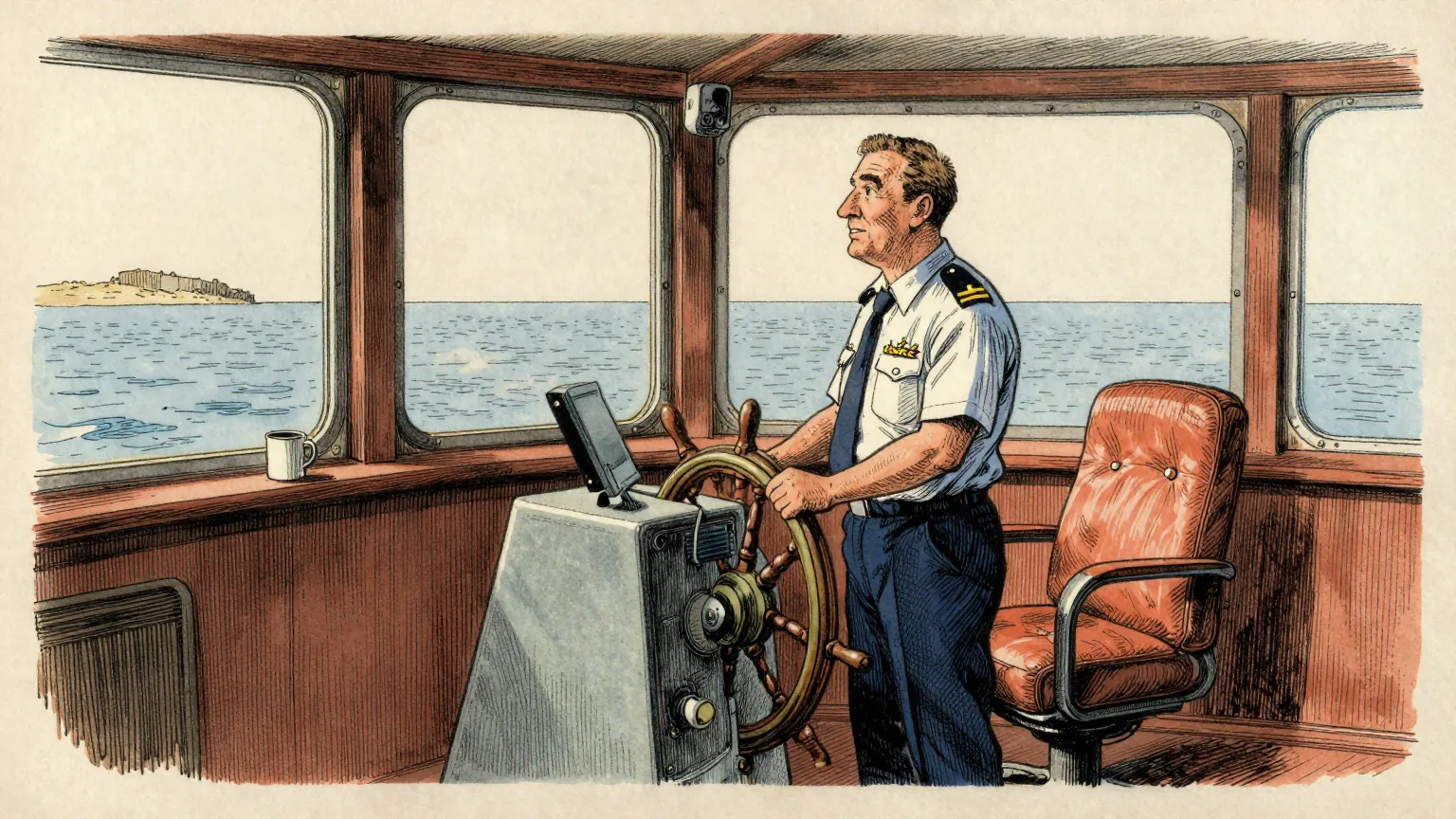
On the deck side, the Coast Guard notes that on the vessels in question "bridge teams generally consist of a single credentialed mariner", who may be serving at once as officer in charge of the navigational watch, helmsman and lookout, and that this limited manning leaves the additional resource management training offering "little safety benefit". It stressed that the requirements would remain in place for deck officers on vessels of 500 gross tons or more and on ocean routes, where bridge watch teams typically consist of multiple personnel. The engineering items it considers duplicative of knowledge already covered by broader training and examinations.
The savings are put at $42.8 million over ten years on a discounted basis, or $6.1 million a year, arising from avoided tuition, travel expenses and the working time spent attending courses. About 825 mariners a year are expected to be affected.
Nothing has been decided. The proposal is open for public comment until 30 December, and the docket will carry whatever the industry, training providers and mariners themselves send in.
The deck finding is the one that repays attention. Bridge resource management is, by name and by design, training in coordinating the people on a ship's bridge. The agency's position is that on these vessels there is generally one such person. The training is therefore being withdrawn for want of a second party.
This newspaper accepts the logic without reservation. A team of one is in continuous agreement with itself. Its briefings are instantaneous, its handovers are complete, and no instruction it issues has ever been misheard.
The leadership and teamworking competency goes the same way and on the same basis. Leadership presupposes somebody to lead. Teamworking presupposes a team. Where the regulated population is one mariner, both requirements describe a relationship that the vessel does not contain.
The money follows neatly from the premise. The $6.1 million a year is what was previously paid for instruction in managing a colleague who was never aboard. Expressed as a return per colleague, the figure is undefined.
The Department of Unnecessary Research notes the one difficulty that remains. A single-member bridge team is also a single point of agreement, and the rulemaking does not yet set out the procedure for the occasion on which it disagrees with itself.