
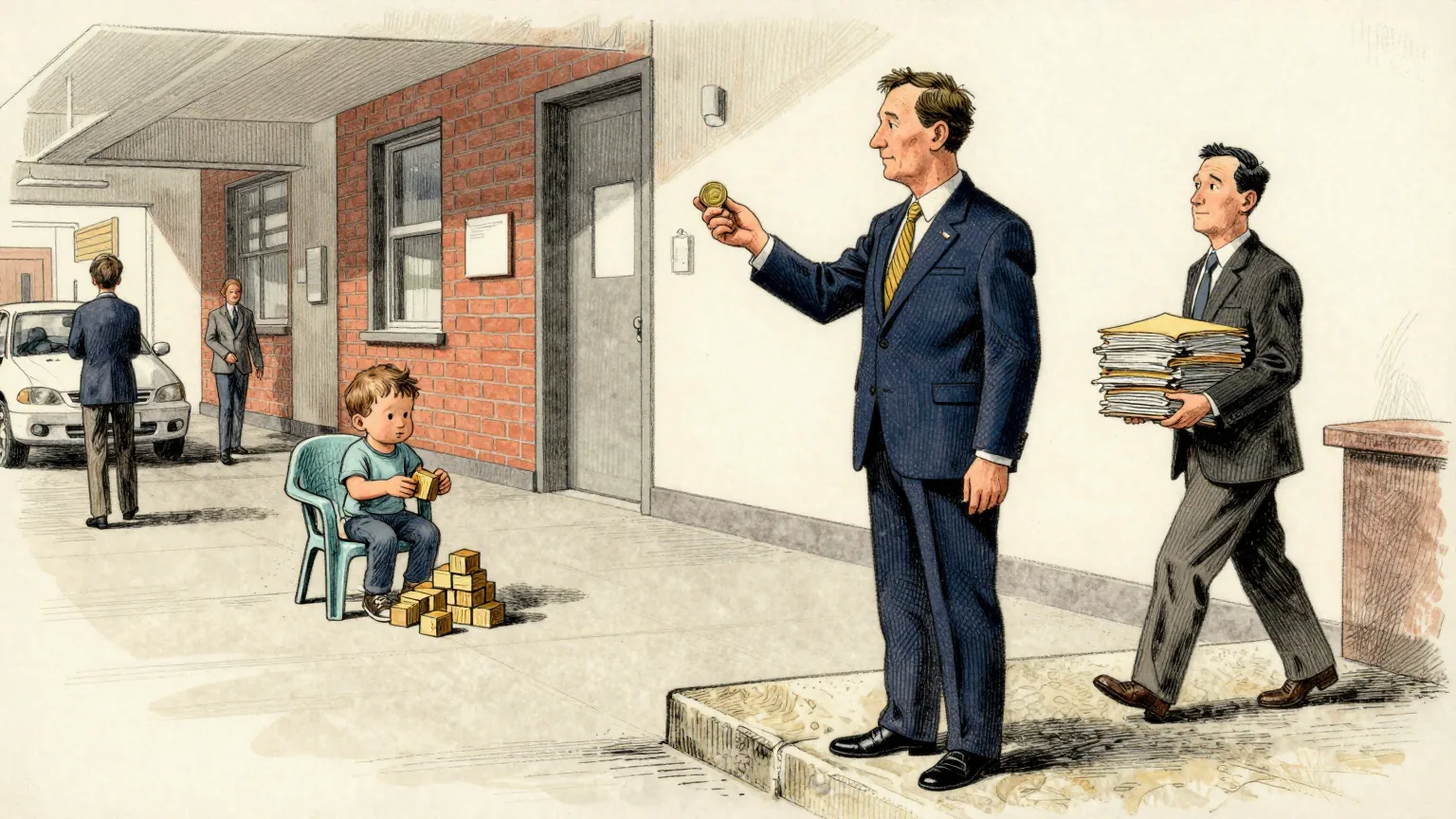
The Conservative Party has said it would scrap the point at which parents in England lose government childcare support, describing the £100,000 limit as an “absurd cliff edge”.
Under the current system, only families in which no parent earns more than £100,000 a year are eligible for government-funded or tax-free childcare.
Since September 2025, working parents in England have been entitled to 30 hours of free childcare a week for children aged between nine months and four years old. To qualify, both parents must earn less than £100,000.
The same threshold applies to the government's tax-free childcare scheme. For every £8 paid into an online childcare account the government adds £2, up to £2,000 per child per year.
“What we want to see is that people who work harder don't get punished for doing so,” Conservative leader Kemi Badenoch told the BBC's Sunday with Laura Kuenssberg programme. The party said it would remove the threshold entirely.
Asked whether someone earning £1 million a year would then receive free childcare, Badenoch said: “It doesn't matter what you earn - we don't want you to be punished for working hard. What we're trying to do is grow our economy.”
The announcement came as party members gathered for the annual conference in Birmingham. The party said the move would be a “first step” in wider efforts to address parts of the tax system that damage incentives to work or invest, a theme of shadow chancellor Andrew Griffith's conference speech on Monday.
“Removing this childcare cliff edge is the first step in our mission to deliver lower, simpler, and fairer taxes across the board,” Griffith said in a statement.
The party said the policy would be funded by cutting the number of public servants working in executive non-departmental public bodies, organisations that operate at arm's length from ministers, such as Arts Council England and the Environment Agency. It said this would save £1.6bn by 2029-30, against an estimated £700m cost of removing the threshold.
The Conservatives also argue that the threshold is unfair because it is calculated on an individual earner's income rather than on the whole household, and that some people may delay having children or decide not to start a family at all. They describe scrapping it as “both pro-family and pro-growth”. The party is currently polling behind Labour and Reform UK.
Economists have criticised the threshold for years, pointing out that it can leave parents worse off overall even after a pay rise of tens of thousands of pounds. That criticism is arithmetic rather than opinion, and it is worth following to the end.
The support is not tapered. It is withdrawn at a point. A parent earning £100,000 keeps it. A parent earning £100,001 does not.
The threshold therefore attaches a value to a single pound: the hundred-thousandth one. It is worth 30 funded hours a week, plus up to £2,000 a child in the tax-free scheme, and the value is negative. Receiving it costs money.
This newspaper has looked for another pound in the British economy that behaves this way and has not found one. The first 99,999 are worth a pound each. The hundred-thousandth is worth several thousand pounds in the other direction, and it is not labelled.
The Department of Unnecessary Research has worked through the consequence. A parent offered a rise from £99,000 to £130,000 is being offered £31,000 and an invoice, and whether to accept it is not a question about ambition. It is a question about how many children are under five.
Both numbers in this story are now on the record. Removing the cliff edge is costed at £700 million. The cliff edge has never been costed at all, because its price is paid one pound at a time, by whoever happens to earn it.