
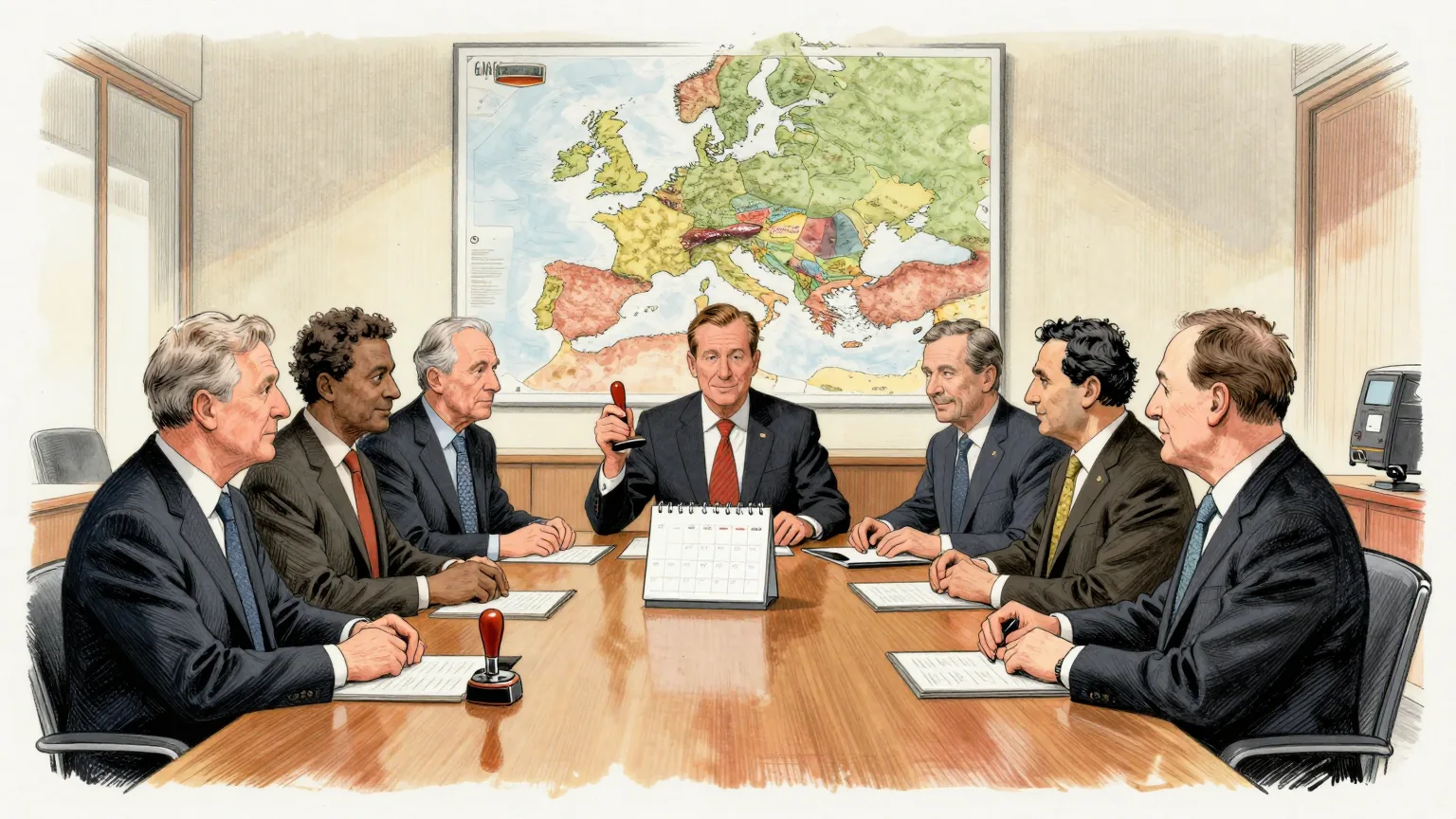
France has dropped its opposition to the United Kingdom being included in the European Union's "Made in Europe" legislation, provided the British government aligns with the bloc's position on tariffs on Chinese electric vehicles.
France came round on Thursday to backing Germany, which has consistently supported the UK's request to be designated European for the purposes of the Industrial Accelerator Act. The legislation, still in draft, is designed to protect domestic manufacturing from cheap Chinese competition.
According to a joint Franco-German paper seen by The Guardian, the two countries now propose that the UK could be included in Made in Europe for the car industry specifically.
The paper sets out the mechanism in full. "For the automotive sector, 'Made in Europe' should comprise the EU27 and an opt-in to further include European partners who were part of the EU single market as of 01/01/2020, subject to an agreement on full reciprocity - i.e. adopting the European preference scheme relevant to the automotive sector," it says.
The reference is to the UK, which was still in the single market as an EU member in January 2020. The formula would also take in Norway, which is in the single market but not a member of the EU.
The opt-in would carry conditions. The paper says that, "as well as relevant anti-circumvention measures", opt-in countries would have to accept "dynamic alignment on the EU's conditions related to third countries' investments and on relevant EU trade defence measures".
Those measures have included the tariffs on Chinese electric vehicles imposed by the EU in 2024, and would extend to future trade barriers, such as the quota deal being finalised with China on its exports of hybrid cars.
Liam Byrne, the chair of the UK's business, innovation, science and trade committee, said alignment was worth the cost. "Sometimes politics is the least worst choice - aligning with Europe on trade defence against an over-subsidised China is the way we deliver for all of us," he said.
"Tariffs on these would be a small price to pay for the protection of a European manufacturing industry which safeguards jobs across supply chains in the UK and makes us less prone to coercion from China in the future," he added.
The head of Mercedes-Benz said on Wednesday that locking the UK out of the package would amount to a "deliberate choice" by EU leaders to "hurt" the car industry across the bloc. The UK business secretary, Jonathan Reynolds, said this week that he would not be coerced into aligning with the EU's policy.
It is worth reading the definition slowly, because it is doing something unusual. Made in Europe is to mean the EU27, plus any country that was inside the single market on a specified morning six and a half years ago, provided it agrees to a schedule of conditions and keeps agreeing to them as they change.
Europe, in other words, has been defined as a date and a form.
Our analysts note that geography has been removed from the test entirely. Nothing in the proposed wording asks where a country is. It asks where a country was on 1 January 2020, and what it is prepared to sign now.
This yields the first continent in modern practice with an application process. Norway qualifies without joining. The UK qualifies by having once been a member and agreeing to behave as though it still were. A country's European status is held, under the drafting, on conditions of dynamic alignment, which means the conditions may be revised after the status is granted.
The Department of Unnecessary Research has identified the practical consequence. Whether a car is European will depend on a quota deal on Chinese hybrid exports. The same vehicle, on the same production line, may be European in one quarter and not in the next, without moving.
The Department would like one point clarified before the draft proceeds. If European is a status that can be opted into, the Department wishes to know the procedure by which it is lost, and whether the continent is notified.