
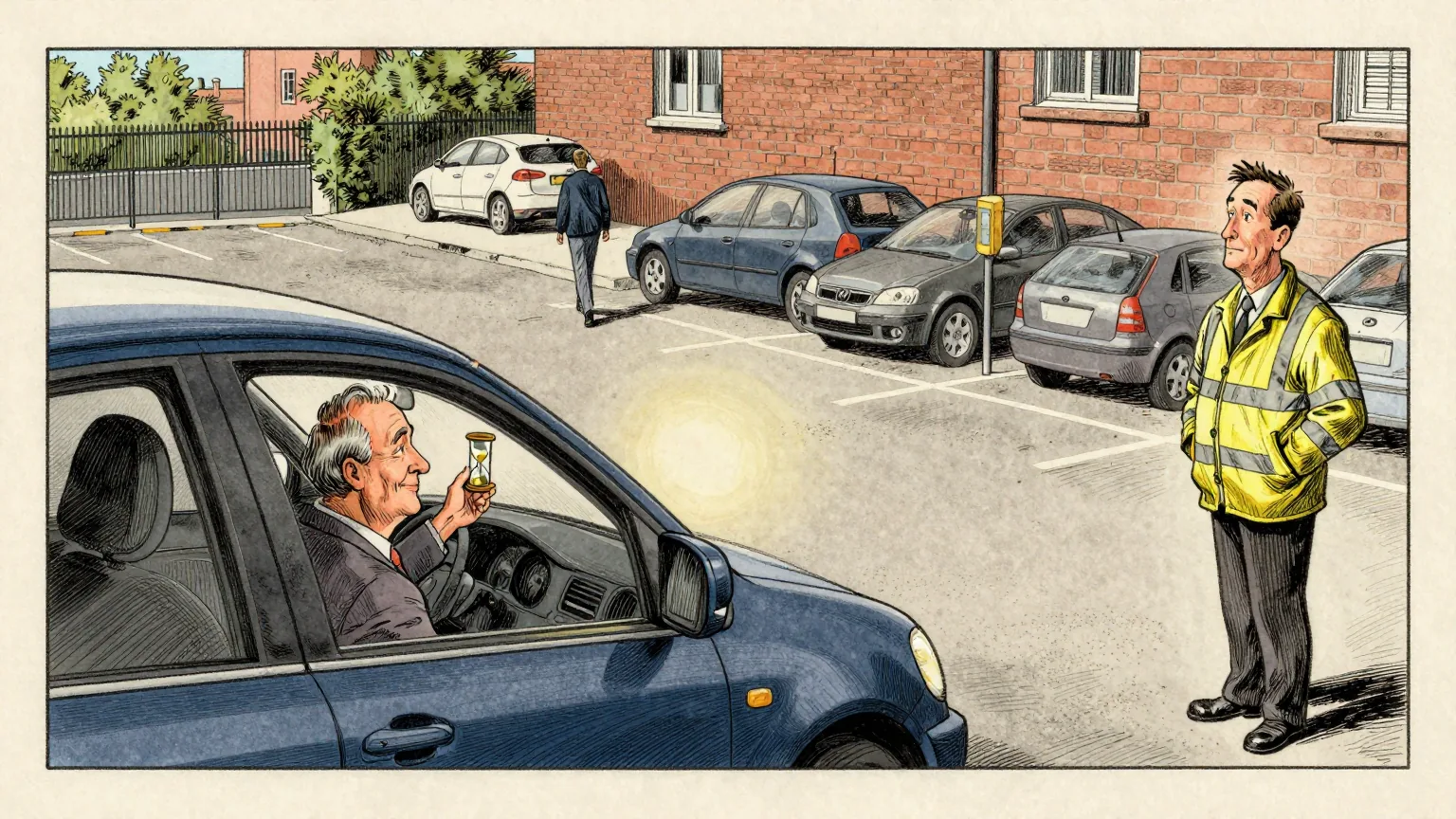
Drivers using private car parks in England, Scotland and Wales will be given a guaranteed five-minute period in which to decide whether to park, and a ten-minute window in which to leave without facing a penalty, under new rules set out by the government.
The code also requires charges to be cancelled where the driver could not control the outcome, including vehicle breakdowns in car parks, broken ticket machines and medical emergencies, and for honest mistakes such as stopping to check directions.
Charges on appeal will be capped at £20 for slip-ups including forgetting a parking permit, entering the wrong vehicle registration, or forgetting to confirm the registration in the machine when parking. The maximum parking charge is frozen at £100, the same limit as the current private parking Code of Practice.
Private car parks are governed separately from council-owned car parks and streets, and more tickets are now being issued at private sites than ever recorded. According to RAC analysis of government data, some 17 million private parking tickets were issued in 2025-26, a 17 per cent increase on the year before. With each charge worth up to £100, the data suggests drivers could collectively face private parking charges worth more than £4.6m each day.
Prime Minister Andy Burnham said: "Being a few minutes late back to your car or typing one digit of your number plate wrong shouldn't end with a hefty fine landing on your doormat." He added that such charges left "people feeling ripped off and out of pocket".
Angela Rayner, the Communities and Housing Secretary, told BBC Breakfast that parking "shouldn't be a way of making money". Of the industry's existing arrangements she said: "We're calling time on it. They have regulated themselves and they have their appeals process but we're giving it more meat now." She said the current level of fine was a "proportionate response to when people don't follow the rules".
The government's code has been seven years in the making. An act of Parliament was passed in 2019 to create one; the resulting code was withdrawn in 2022, which the RAC attributes to resistance from the private parking industry. The industry's own Code of Practice, written by the British Parking Association and the International Parking Community, was introduced in 2024 and updated last year after a review.
Derek Millard-Smith of the British Parking Association said the group welcomed the changes because they would "increase trust", and defended the level of charges. "We know dog fouling, rail fare dodging, littering - all those levels are around £100 or more because that is a level that is deemed sufficient to change behaviours," he said.
Motoring groups welcomed the rules without being satisfied by them. Jack Cousens, head of roads policy at the AA, said: "There is still a huge amount of work to do, such as tackling the scourge of debt recovery fees," adding: "Ultimately, we need to stop charges being issued in the first place, especially where the driver has done nothing wrong." The RAC's head of policy, Simon Williams, called for debt recovery fees to be banned and for the industry-run appeals bodies to be replaced by a single independent one.
Operators who do not comply risk losing access to DVLA data, which makes it harder to pursue a car's owner even if a charge is issued. The government says it will consult on debt recovery fees and on other recommendations from the Competition and Markets Authority.
The two headline periods repay closer attention, because they are not the same period. One is five minutes to decide whether to park. The other is ten minutes to leave. Read together, the code establishes fifteen minutes during which a vehicle is on private land and is not, in any enforceable sense, parked.
This is a new category and the code does not name it. The motorist is inside the car park, inside the rules, and generating no liability. The first five minutes are spent deciding. The last ten are spent leaving. At no point in the sequence is anyone required to park.
The arithmetic is not difficult. A driver who declines to park and departs has used the full fifteen-minute entitlement and owes nothing. A driver who then re-enters begins a fresh five minutes of deciding. The code places no limit on how many times a motorist may consider a car park.
Our analysts note that this leaves the operators in an unusual position. They have secured a frozen £100 maximum and a £20 appeal cap, and have accepted in exchange that parking is now formally the thing which happens between minute five and the moment of departure. The interval in between belongs to the driver.
The Department of Unnecessary Research has written to the British Parking Association for guidance on the one question the code leaves open. If every arrival is spent deciding and every departure is spent leaving, at what point does a car park acquire a customer.