
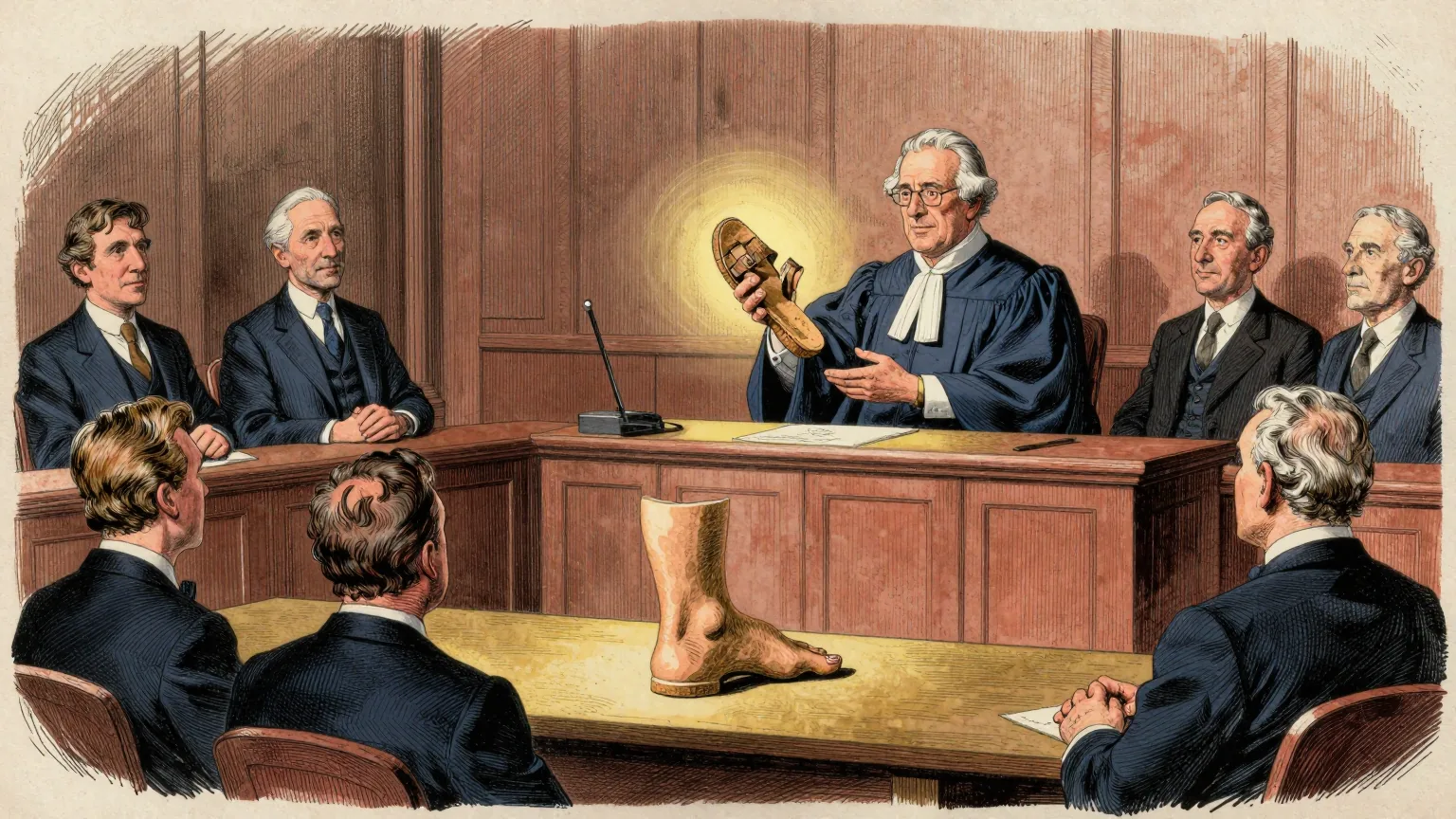
Lidl must stop selling copycat versions of Birkenstock's sandals in the Netherlands, a Dutch court has ruled.
The discount supermarket chain faces a fine of €5,000 (£4,200) a day if it fails to comply, and must hand over sales data to Birkenstock. Lidl must also compensate the company and pay its legal fees, with the amounts to be settled in separate decisions.
The ruling, which can still be appealed, covers the Arizona, Madrid, Gizeh, Boston and Florida models. The court found that the discount grocer had infringed the brand's trademark "footbed design".
Birkenstock said the judgment sent a clear message that "copycats must not be allowed to free-ride on [our] creativity and innovation", and added that it will "continue to defend its rights vigorously and will use all available legal means to combat imitations of its iconic products".
It is the latest in a run of court decisions on Birkenstock designs. In November 2025 a Dutch court stopped the retailer Scapino from selling similar lookalikes, in a judgment that is being appealed.
In December 2025 Europe's highest court ruled that everyday commercial products can hold copyright if they represent creative design choices, a decision Birkenstock said was relevant to its sandals.
The company had a setback earlier. In early 2025 Germany's highest court ruled that the sandals were practical products rather than works of art, an outcome Birkenstock called a "missed opportunity" at the time.
Birkenstock is not the only fashion brand in litigation with mass retailers over design mimicry. Dr. Martens has repeatedly taken online big-box sellers to court over boot designs, and Christian Louboutin spent years in global litigation defending its red soles.
The red sole is at least on the outside. What distinguishes this week's ruling is the location of the protected element, and this newspaper believes the location has not been given enough weight.
The footbed is the surface a foot presses into. It is not a picture of a foot or a sculpture of one. It is the volume a foot displaces, moulded in cork and rendered in the negative, which means the protected work is defined entirely by the thing that is missing from it.
Germany's highest court has already established that this is not art, and the Dutch court has now established that it may not be copied. Both findings can be held at once, and together they describe an object of intellectual property consisting of a hollow.
The Department of Unnecessary Research has followed the reasoning to the boundary. If the protected design is the impression a foot makes, then infringement is a question of fidelity, and the most faithful reproduction of the impression of a foot is available to every reader of this newspaper without a licence.
Our analysts have examined the chain of authorship and cannot locate its start. Birkenstock's footbed reproduces the foot. The copies reproduce the footbed. Each step is a reproduction of the step before it, and the sequence runs backwards to an original that nobody designed and that predates the brand by some margin.
The court has set the price of the wrong shape at €5,000 a day, which is the only figure in the case anybody has quantified. The sandals themselves remain, by German law, practical objects, and by Dutch law, practical objects that may not be reproduced.
The foot remains unrepresented in both proceedings.