
The next phase of global industrial competition is increasingly being shaped by a resource that factories have used for more than a century: electricity. What is changing is the scale at which economies need it and the number of industries now competing for the same supply.
Data centres, electric vehicles, manufacturing and broader decarbonisation efforts are pushing electricity demand higher. For energy-intensive businesses, the price and reliability of power can influence where new facilities are built just as access to coal, oil, ports and railways shaped earlier industrial centres.
The shift is particularly visible around artificial intelligence. Large computing facilities require enormous and dependable power supplies, while grid connections can take years to develop. That makes electricity infrastructure part of the technology race rather than merely a utility operating quietly behind it.
China has moved rapidly on industrial electrification and energy infrastructure. Europe, despite substantial renewable capacity, continues to wrestle with relatively high electricity prices in parts of the region. Developing economies face another obstacle: the cost of financing the grids, storage and generation needed to support rapid growth.
The result is an industrial map increasingly influenced by transmission lines, generation capacity and the speed at which governments can connect new demand. A country can have excellent engineers, factories and ambitions, but those assets become less impressive when the power connection is scheduled for 2034.
Business leaders therefore have an unusually practical concern. Electricity is no longer simply something that arrives after a building is constructed. In some sectors it is becoming one of the first questions asked before construction begins.
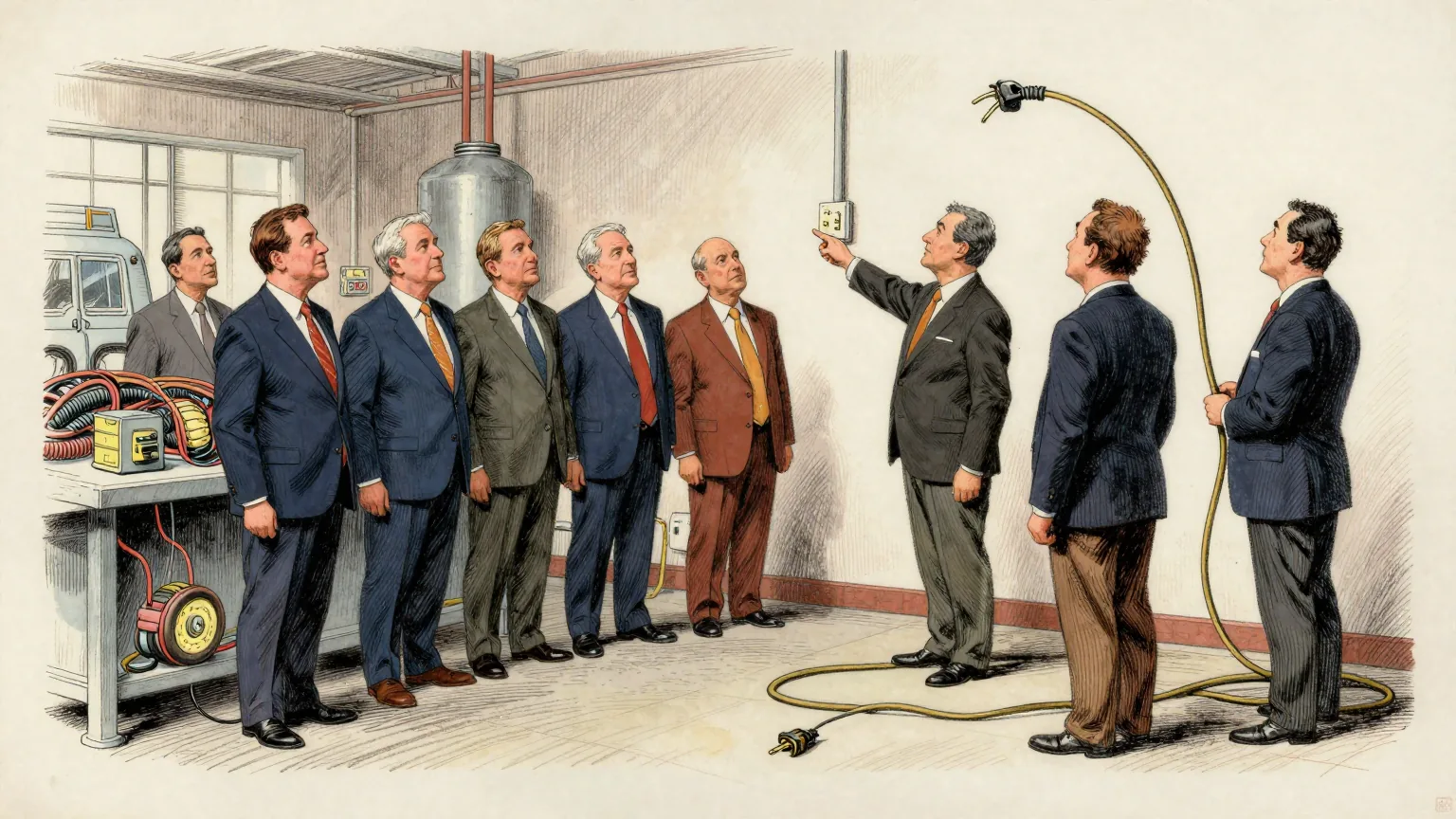
The Questionable Times has reviewed this trend and identified a potentially overlooked bottleneck: extension cords. A nation possessing enormous generating capacity may still find itself at a competitive disadvantage if its factories are several metres away from the nearest socket.
This suggests governments should establish strategic cable reserves, discourage citizens from wasting premium outlets on decorative lamps, and map every available power strip with the seriousness normally reserved for mineral deposits.
Countries with two adjacent wall sockets may hold a particularly strong hand, although this advantage can be neutralised by badly designed chargers that block the neighbouring outlet. Economists have not yet incorporated this factor into mainstream productivity models.