A painting made entirely from turmeric and chilli powder, measuring 175.82 square metres (1,892.5 square feet), holds the Guinness World Records title for the largest spice painting.
The work was made in Dharwad, Karnataka, by Amar Kale, a 29-year-old self-taught artist, and the record was recorded on 27 January 2026. Guinness World Records lists Kale as the holder and gives the same measurements.
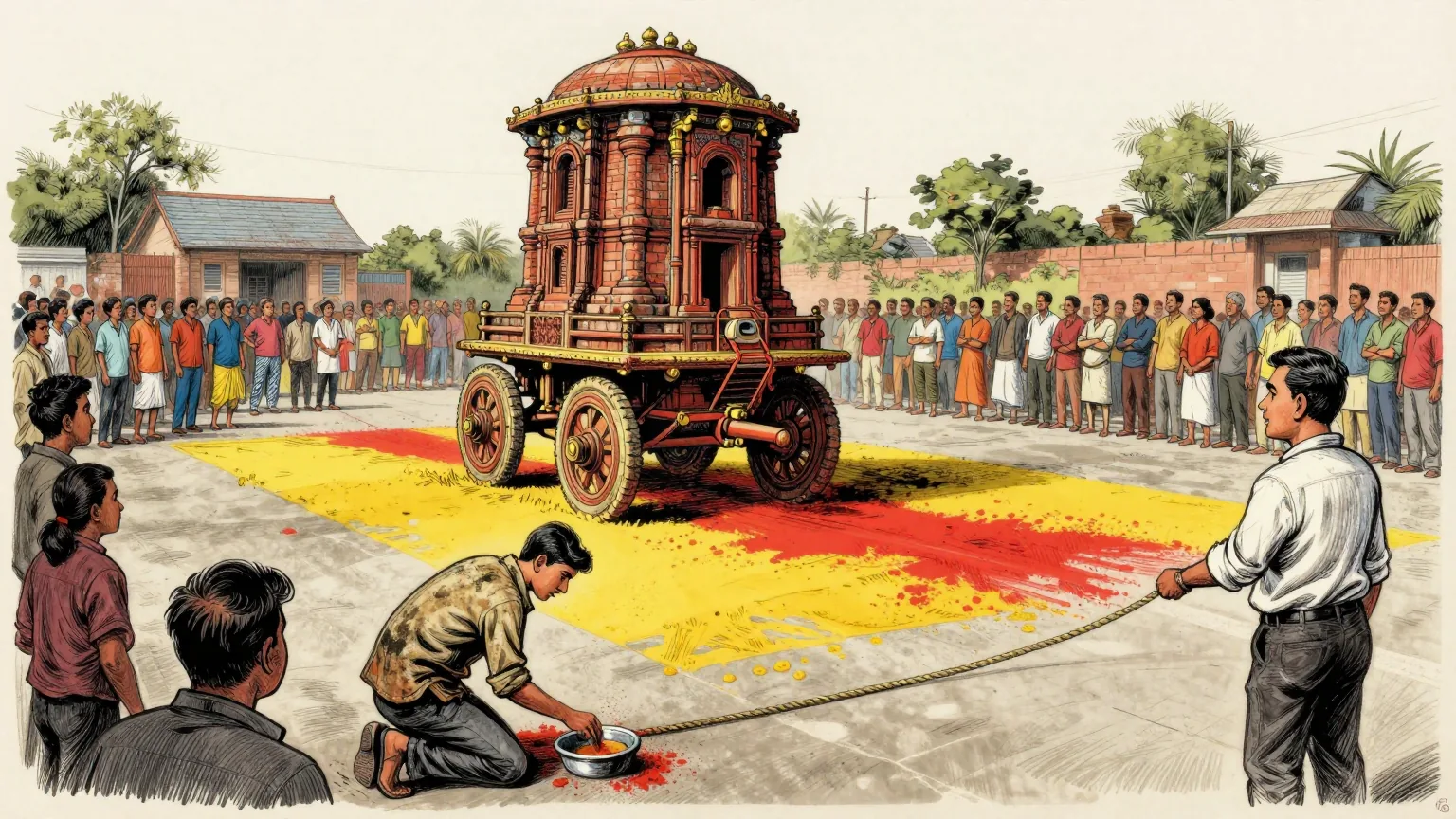
Kale used approximately 6 kg of turmeric powder and 5 kg of chilli powder, whose natural yellow and red tones gave the painting its colouring. He completed it in around ten hours.
The subject is the outline of Karnataka with the Hampi Chariot at its centre. The chariot is among the best-known landmarks of the ruins of Hampi, a UNESCO World Heritage Site celebrated for its monuments and architecture. The finished work was later put on public display.
The choice of materials was deliberate rather than convenient. Karnataka has a long relationship with spices, and Kale wanted the painting to celebrate that using materials that were meaningful to the subject.
"This artwork was my small contribution towards showcasing Karnataka's rich culture, heritage, art and architecture to the world," he told Guinness World Records.
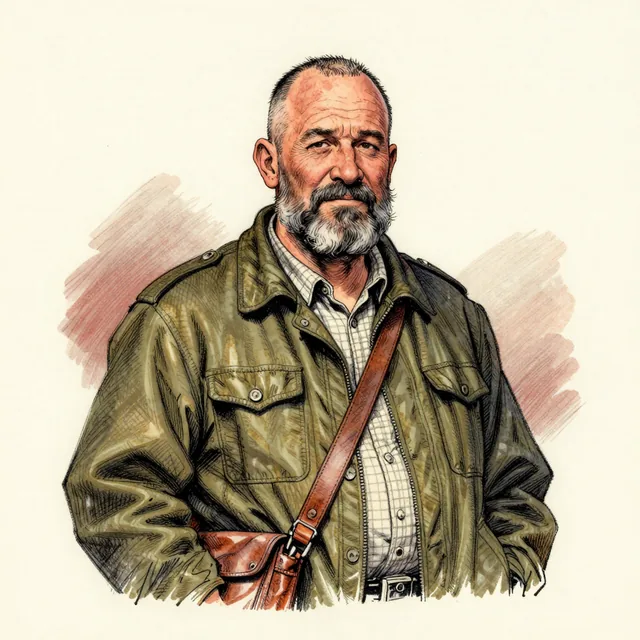
Kale trained as an engineer. He completed a diploma in mechanical engineering and took a job, then left it in 2018 to paint full time. Guinness World Records puts his professional career at around eight years. He normally works in oil and acrylic paints.
It is his third Guinness World Records title. The first, in 2021, was for 98 painted handprints in one minute and has since been surpassed. The second, for the largest painting by mouth by an individual, measured 112.36 square metres (1,209.43 square feet) and was completed in February 2026.
He has said that each record-setting work should carry a concept or a message rather than exist only to break a numerical benchmark. Spice powder prepared in excess of what the painting required was donated rather than thrown away.
The record itself repays a careful reading, because it is an area record. The title is for the largest spice painting, and the quantity that decides it is 175.82 square metres. The eleven kilograms of spice appear nowhere in the measurement.
That produces a coverage rate of about 63 grams of spice per square metre, and a clear strategy for anybody intending to take the title. Spice is the input and area is the score. The thinner the application, the better the ratio, and the category specifies no minimum thickness.
Pushed to its limit, the optimal spice painting is the one in which the spice is least present per unit of ground. Our analysts note that the current holder has already demonstrated the principle at scale: two-thirds of a tennis court, covered by eleven kilograms of kitchen ingredients, in ten hours.
The Department of Unnecessary Research has written to Guinness World Records for a ruling on the one question the rules leave open. The organisation has undertaken to measure the painting. It has not undertaken to measure the paint.