Africa will return to the Formula One calendar for the first time since 1993, with Rwanda set to host a grand prix from the early 2030s under a 10-year deal, Reuters reported in a story carried by ABC News.
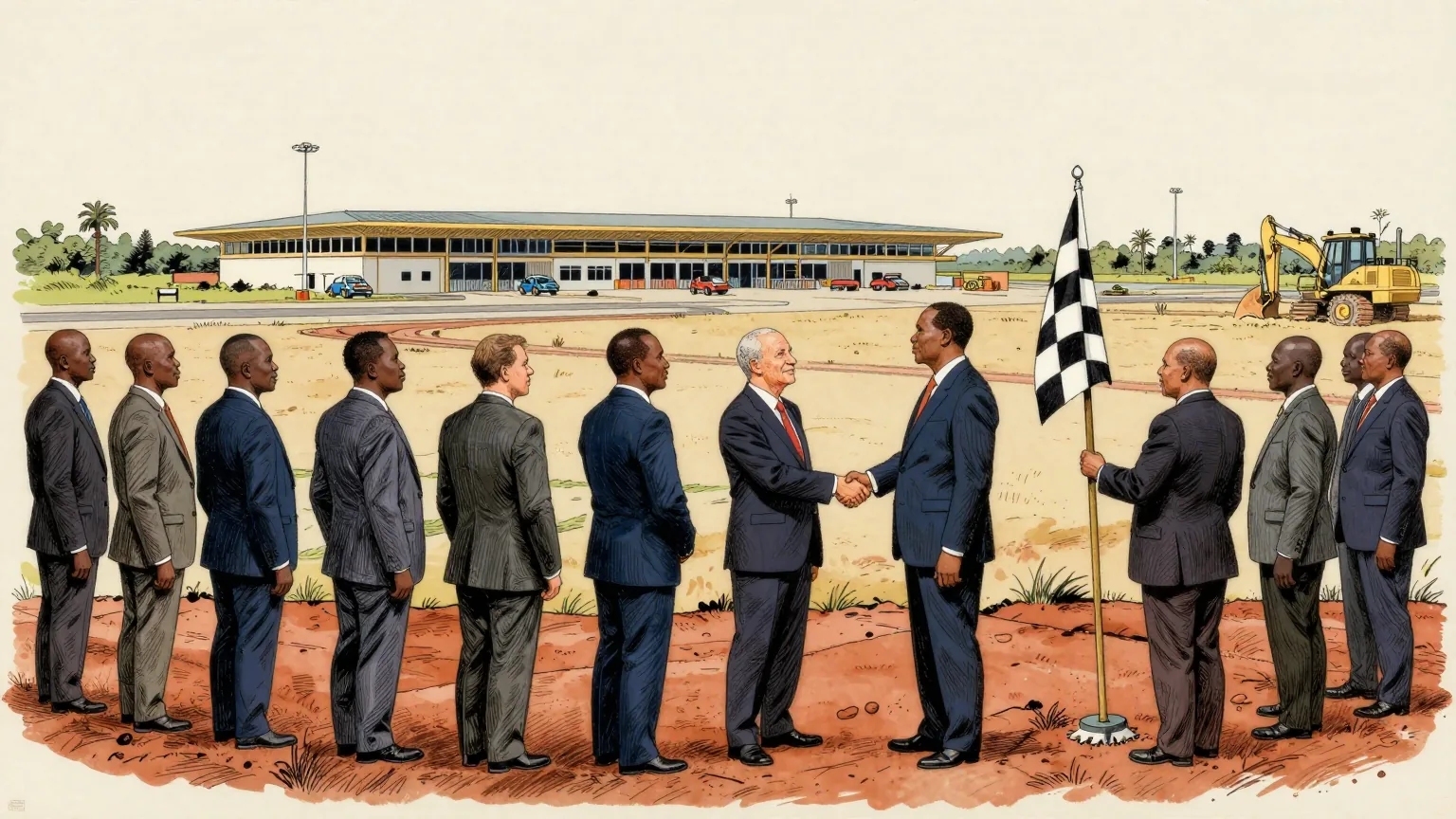
The race will be called the African Grand Prix. It is to be held at a circuit that is yet to be built, alongside a new international airport under construction at Bugesera, about 40 kilometres south of the capital, Kigali. The first running could come as early as 2030.
Formula One last raced on the continent at South Africa's Kyalami Circuit, to the north of Johannesburg, and has long sought a way back. Rwanda will be the third African country to stage a round of the championship since it began in 1950; Morocco put on a race outside Casablanca in 1958.
"Today is a landmark moment for Formula 1," the series' chief executive, Stefano Domenicali, said at a press conference on Tuesday alongside Rwandan President Paul Kagame and the head of the International Automobile Federation, Mohammed Ben Sulayem.
"With Rwanda joining the calendar from the next decade, our sport will race in every inhabited continent, bringing the world championship closer than ever to fans around the globe," Domenicali said.
"Africa has always been part of Formula 1's future, and from the beginning we were determined to return in the right way, with the right partner, a long-term commitment and a clear vision for creating meaningful impact," he added.
Kagame announced the landlocked East African country's bid two years ago. The purpose-built grade one track has been designed by the Austrian former driver Alex Wurz, with the long-time Formula One architect Tilke also involved, and is expected to be completed early in the next decade.
The layout is described as fast and flowing, with significant changes of elevation and spectators close to the action. The chief executive of the Rwanda Development Board, Jean-Guy Afrika, said the venue would have a 100,000 capacity and would be a multi-purpose facility used year-round for concerts and exhibitions.
"We want to make it bigger than just Rwanda. We want to make it the moment when the sport came back to Africa and then never left," Afrika told the press conference, adding that the initiative would likely be "powered by the private sector and coordinated by the government".
The claim at the centre of Tuesday's announcement deserves to be set out precisely, because it is the part that has already been achieved. With Rwanda on the calendar, the sport will race on every inhabited continent. It will do so at a circuit that currently consists of a design, beside an airport that currently consists of construction.
This newspaper regards the arrangement as the most efficient in modern sport. Formula One has secured a decade of racing in a venue where no car has yet turned a wheel, and completed its coverage of the inhabited world in a location where nothing has yet been inhabited by a grandstand.
The competitive advantages are immediate. The lap record at Bugesera is held by nobody and cannot be beaten. No team has data for the circuit, so no team is behind. There are no recurring complaints about the final chicane, because there is no final chicane.
Homologation presents no difficulty either. A grade one licence certifies a track against the regulations, and a track that does not exist cannot yet breach them. The surface has never degraded, the run-off has never been criticised, and the drag reduction zones remain, for the moment, theoretical.
The Department of Unnecessary Research has examined the ten-year term and finds it generous. On the published timetable the first race may not arrive until 2030, and until it does the African Grand Prix will return the highest safety record on the calendar.
Until the first car arrives at Bugesera, it remains the only round of the world championship at which nothing can go wrong.