
Frozen yoghurt has returned to the British high street, with several chains opening this year and tubs selling for as much as £12.
Froyo was a substantial trend in the UK in the late 2000s and early 2010s, most of all in London, where the chain Snog had ten stores at its peak. Brands such as AngelBerry had shops in Bristol and Brighton. By the end of that decade the category was all but dead.
This year it has come back, driven by nostalgia, social media and a perception that it is a healthier dessert choice. Go Greek, Myka and Yo-Chi have launched in London, while Frurt, which operates mainly in the north west of England and Yorkshire, has opened new stores, including one in Leicester.
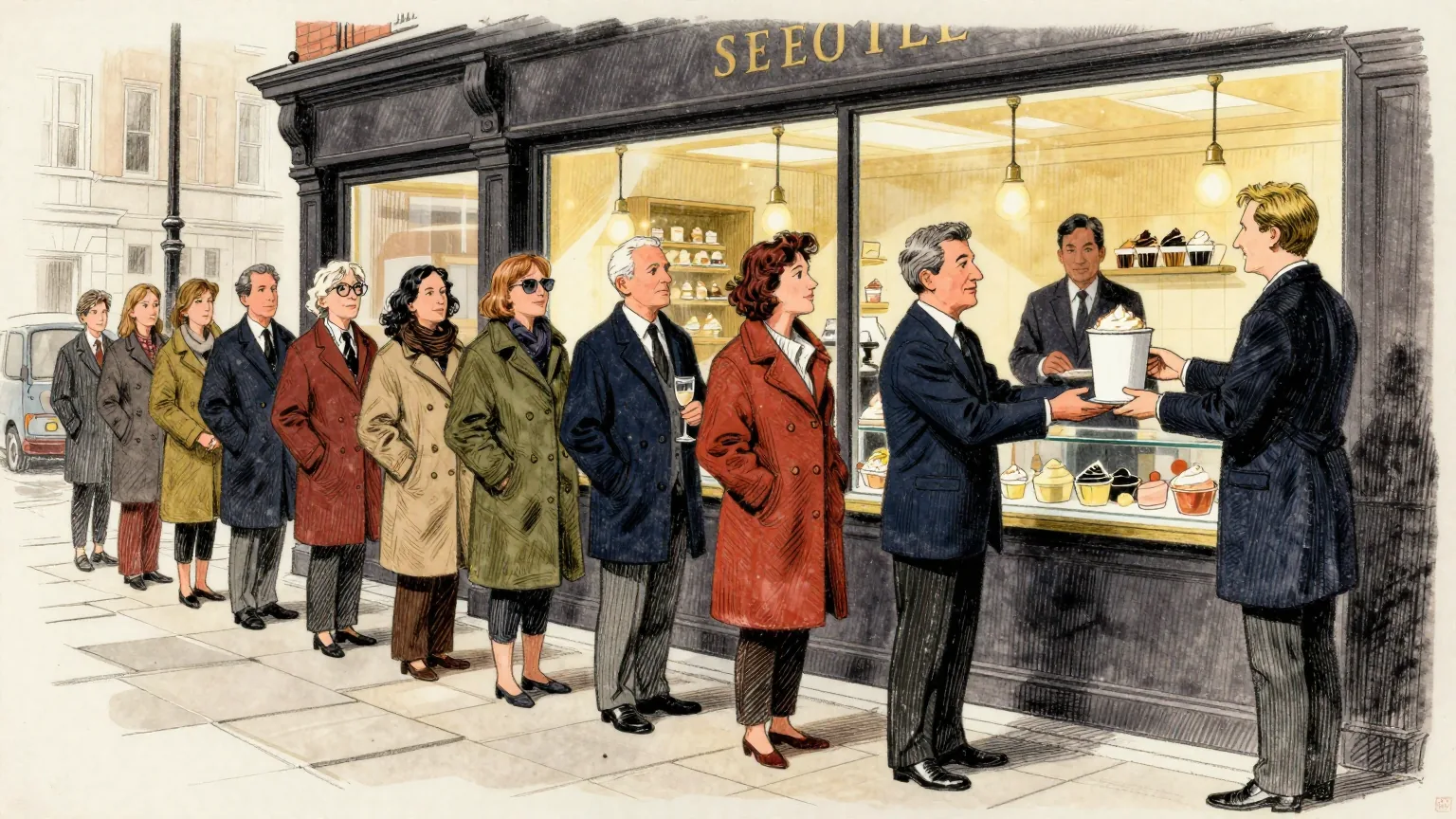
The openings drew hundreds of customers queueing to assemble their own dessert pots, with waits reported of up to two hours.
The market data points the same way. Market Data Forecast estimates that the European frozen yoghurt market is worth £434m in 2026, up from £419m last year.
The Australian brand Yo-Chi opened a Notting Hill branch in August and spread quickly on social media for its range of toppings and "third space" feel. "Sweet treat culture is huge. People aren’t spending a fortune on big things, but a little thing like that, they’re happy to," said Bethan Clarke, the chain’s campaign manager.
Clarke said the company would "never call ourselves healthy" — frozen yoghurt is usually lower in calories and fat than ice cream, but may also contain more added sugar — and that being customisable means customers control their own portion sizes and sugar levels. Trends such as "2026 is the new 2016" have helped. "People are coming back to re-experience childhood a little bit," she said.
Whether the revival lasts is the open question, given what happened to the last one. "Market over-saturation played a role in the initial disappearance of froyo, as well as the natural cycle of dying trends," said Vhari Russell, founder of Food Marketing Experts, who noted that the market leader Snog had faced increasing competition from the likes of Yog, Yoomoo and Pinkberry, and that consumers also realised the dessert may not have been the healthier option they initially thought.
Russell does not think £12 will deter anyone, calling froyo an "affordable luxury" and a trip out for one "an experiential moment". "For many people, they don’t smoke or have expensive lifestyles, so froyo isn’t viewed as food, it’s viewed as an experience."
That last point settles the pricing question entirely, and it repays careful reading. If frozen yoghurt is not viewed as food, then £12 is not a food price. Comparisons with other dairy products are category errors, and the objection that a tub of yoghurt costs £12 collapses on the ground that this is not a tub of yoghurt.
The accounting follows. Market Data Forecast’s £434m is therefore not a food market. It is £434m of experience, delivered in cups, and it grew by £15m in a year — the only known instance of an industry expanding while ceasing to sell a product.
Our analysts have looked for the boundary and cannot find one. The yoghurt is still in the tub. It is still cold, still yoghurt, still weighed out by the person serving it. What changed is the classification, which was changed by the people selling it and accepted by the people buying it at the till.
The Department of Unnecessary Research considers the collapse of the 2010s now fully explained. Froyo did not die of over-saturation. It died because it was still being sold as a dessert. Priced as an experience it cannot be over-saturated, because there is no ceiling on how much of something a person can be having.