
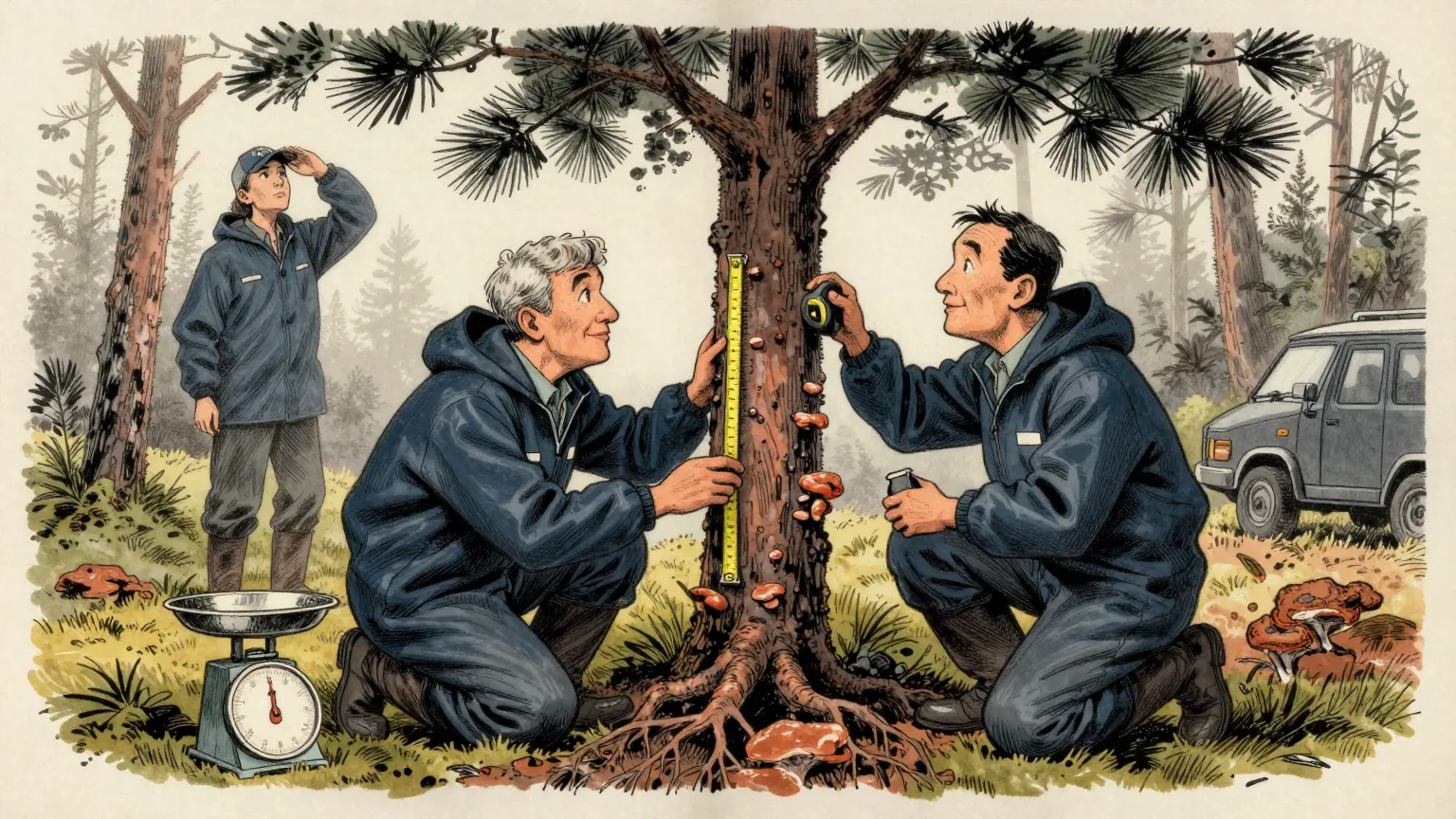
A fungus found in the forests of Yunnan, in south-west China, has been described as a new species, a new genus and a new family, and is now the largest of its kind known to science. The study was written up by Frontiers, the publisher of the journal in which it appears, in an account carried by Phys.org.
The species has been named Dianjunus rex. Its fruiting bodies, known as stromata, grow vertically to as much as 50 centimetres (20 inches) tall and weigh up to 2.2 kilograms (4.9 pounds).
That makes them the largest known in the phylum Ascomycota, the largest group of fungi, which contains more than 64,000 described species. The previous record-holders reached 20 to 30 centimetres (8 to 12 inches).
The fungus was collected in temperate coniferous forests near Damaidi and Yipinglang and in a tropical rainforest near Nanbang, growing on the woody roots of Chinese cork oak.
The research was published in Frontiers in Fungal Biology by Jing Song and colleagues, under the title "Unearthing a fungal giant: Dianjunaceae fam. nov., a novel Paleocene lineage of Xylariales harboring Dianjunus rex gen. et sp. nov." The corresponding author, Dr Indunil C. Senanayake, works at the Germplasm Bank of Wild Species at the Kunming Institute of Botany.
The new family, Dianjunaceae, sits within the order Xylariales. Its closest known relative is Graphostroma platystoma, which occupies a family of its own. The species name was chosen to reflect both the fungus's regal size and the ancient Dian kingdom of the region.
A molecular clock analysis places the origin of the family at roughly 65 million years ago, about one million years after the mass extinction at the end of the Cretaceous.
Fungi in the Xylariales produce enzymes capable of breaking down complex plant molecules, which may help Dianjunus rex digest dead wood. The researchers hypothesise that its height could help the wind carry its spores through dense forest, and note that the energy cost of building such a structure suggests the strategy evolved only where the benefits outweighed the costs.
That last sentence is the one worth dwelling on, because it describes a decision. Somewhere in the Paleocene, an organism with no nervous system weighed the cost of a 2.2-kilogram tower against the expected return in spores, and approved the expenditure.
The Department of Unnecessary Research regards this as the most patient capital project on record. The fungus has been running it for 65 million years, beginning roughly a million years after the end-Cretaceous extinction removed the previous management.
The business case is narrow. The structure exists to release spores from a greater height than the alternative, and the alternative, among its nearest competitors, is 20 to 30 centimetres. The entire advantage secured by 2.2 kilograms of fungal tissue is therefore the final 20 centimetres of altitude.
Our analysts note that the benefit accrues only in dense forest, where the wind at ground level is poor. In open country the investment would be written off entirely, which is presumably why the species has not been found there.
No competitor has matched the outlay. Graphostroma platystoma, the closest relative, remains in a family of its own and at the older height, having evidently reviewed the same numbers and declined.
On the evidence the record now stands at 50 centimetres, held by an organism that spent 65 million years and 2.2 kilograms to lift a spore above the opposition, and has never once been asked to justify the return.