Harry Kane broke the 49-year-old record for the fastest player to score 100 Bundesliga goals during Bayern Munich's 7-0 victory over Union Berlin on Friday, reaching the mark in his 98th league game for the club.
Cologne's Dieter Müller set the previous mark in 1977, taking 129 matches to reach 100. With the England captain scoring at better than a goal a game, a new record had been inevitable for some time.
Kane took the record with a 39th-minute penalty, then nodded in a Michael Olise cross early in the second half to send Bayern top of the table before the other weekend matches.
Since his arrival in 2023 Kane has averaged a Bundesliga goal every 78.5 minutes. He has now scored 152 goals in 154 appearances in all competitions, including 61 in 51 games last season.
"I'm very proud to have now scored 100 and 101 Bundesliga goals. I haven't been around that long. I've loved every second of it," Kane told Sky Germany.
"With Michael, Lucho [Luis Díaz] and Jamal I naturally get chances and today was no exception," he added. "So I just want to thank the team, the club, the coach, and the staff - everyone who has helped me achieve this. Let's keep going like this."
"Scoring more goals in games is obviously a big step. Of course, there have been many important goals among them. I can only say that I'm enjoying every minute of it. Just like today," he said.
The record rather overshadowed the rest of the scoring. Olise took his first Bayern hat-trick in the same match, and Jamal Musiala added a goal worthy of settling any game on its own.
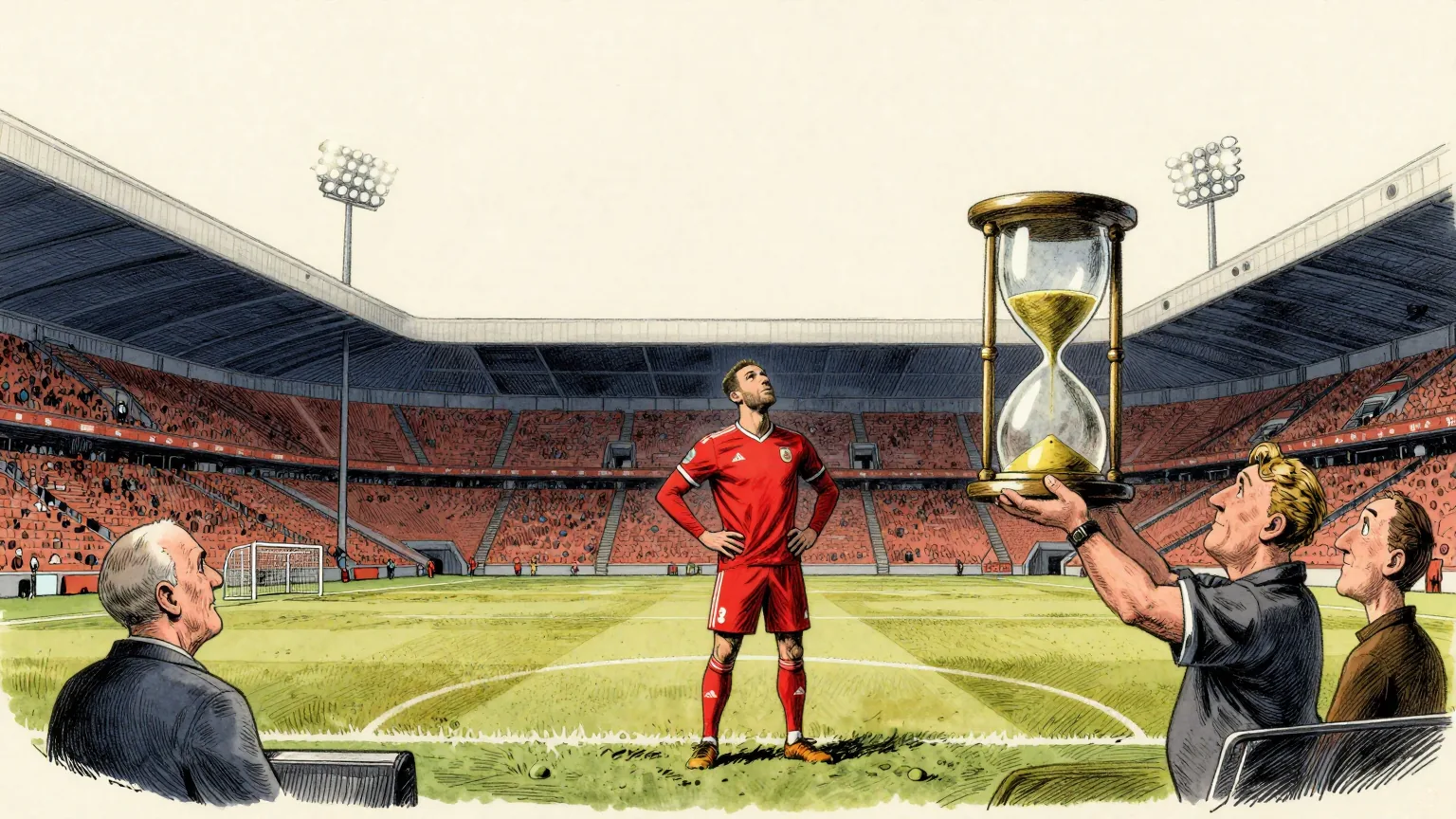
The 78.5-minute figure is the one that repays attention, because a Bundesliga match lasts 90 minutes. Kane's scoring interval is therefore shorter than the fixture he is asked to play, by 11.5 minutes.
This newspaper has calculated the accumulated surplus. Across the 98 matches it took him to reach 100 goals, those spare 11.5 minutes add up to 1,127 minutes of football, or roughly twelve and a half complete matches in which, at his own established rate, he was already owed goals that the fixture list had no room to accommodate.
Dieter Müller's record survived for 49 years on the opposite arrangement. He required 129 matches, which is 31 more than Kane needed, and the German league has spent five decades scheduling around a rate that no longer applies.
Our analysts note that the competition has not been adjusted for this. No Bundesliga match has been extended to accommodate a striker whose unit of time does not divide into the referee's, and the surplus simply expires at full time, unrecorded and unclaimed. The Department of Unnecessary Research has asked the league to rule on whether a goal scored in minutes that have not taken place remains eligible for the record.
Kane told Sky Germany that he has loved every second of it. At his present rate that is 4,710 seconds per goal, and this newspaper has no reason to doubt him.