
India's National River-Linking Project is the world's most ambitious scheme of its kind to date. It proposes to connect 37 major river basins using 30 links, redistributing around 174 billion cubic metres of water from basins classified as surplus to those classified as deficit, and generating some 34,000 megawatts of power along the way.
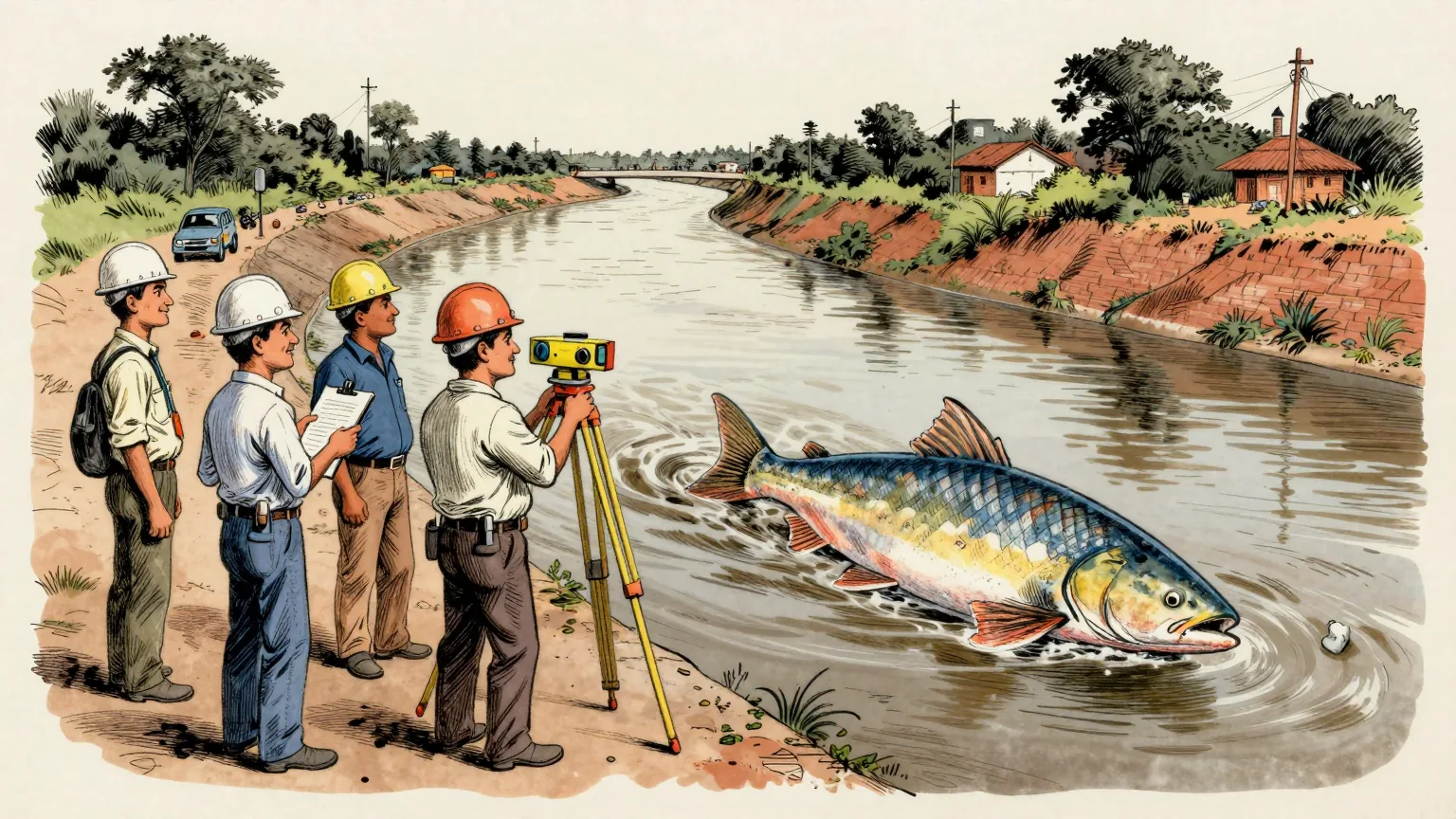
A new assessment of the Project, by researchers at the Ashoka Trust for Research in Ecology and the Environment in Bengaluru, identifies a consequence that the engineering case does not address. Their findings, published in Scientific Reports, describe the links as potential "ecological highways" along which invasive species can travel into new and ecologically sensitive areas.
The reason is geographical. India's river basins are largely isolated from one another, so a great many of the species in each are endemic, inhabiting a small area and found nowhere else on the planet. A connection between two basins is therefore not a neutral piece of plumbing. It is an introduction.
"Right now, [the invasive alien species] are isolated, restricted to individual river basins," said the study's lead author, ATREE senior fellow Aravind Neelavar Ananthram. "By connecting rivers, we would not only introduce new species which are not naturally found but also increase the vulnerability of the native species that cannot compete with the invasive alien species."
The team found that all Northeast and peninsular Indian basins are more vulnerable to biological invasions than those in Central and North India. The Southwestern Ghats, Kaveri, Krishna, Lower Ganga and Brahmaputra basins support diverse habitats and complex ecological niches holding native species, threatened species and invasive alien species together.
One link is singled out. The Lower Ganga basin hosts 13 to 15 invasive alien species and could become a major source of invasives for the Mahanadi, which is home to 69 threatened species. The paper describes this as one of the Project's most ecologically sensitive connections, and one that could increase the risk of extinction for those species.
Water connections could also carry aquatic pathogens. "Fishes in one river basin may be well adapted or immune to the pathogens it harbours, while species in other basins may not be able to protect themselves against such pathogens," Dr Ananthram said.
These findings sit alongside concerns raised about the Project for years. Experts have argued that the categories of surplus and deficit can mask seasonal and year-on-year variation in river flows; that transferring water between basins alters downstream flows, sediment transport, floodplains, deltas and the habitats that depend on them; and that dams, reservoirs and canals break ecosystems into pieces and disturb fish migration. Climate change has further complicated assumptions about how much water a basin will reliably have to spare in the decades ahead.
The study worked with the 15 freshwater invasive species for which data is available. Across India as a whole, including terrestrial and marine systems, Dr Ananthram puts the figure at approximately 350 to 400 species at different stages of invasion, and argues that the country needs a specific policy to regulate, manage and control them. Development plans, he said, should be holistic, addressing ecological impact, the effect on biodiversity and people's lives.
It is worth returning to the Project's organising idea, which is an accounting one. Some basins hold more than they need. Others hold less than they need. A canal settles the difference. The paper's real contribution is to observe that water is not the only thing of which a basin can hold more than it needs.
Applied consistently, the classification is unambiguous. A basin carrying 13 to 15 invasive alien species is, on any reading of the word, in surplus. A basin carrying 69 threatened species and comparatively few invaders is in deficit. The instrument designed to correct exactly that imbalance is a link, and 30 of them are proposed.
The canal does not distinguish between the categories of thing it moves, and nothing in the design requires it to. Water flows from surplus to deficit. So does everything in the water.
Once all 30 links are open, the logic completes itself. Every basin would tend towards the national average, and no basin would be in surplus of anything at all. The word invasive is a statement about distribution rather than about a species; a species present everywhere is not invasive but resident.
The Department of Unnecessary Research has reviewed the Project's objectives against the study's findings and reports no conflict between them. India would end with 37 basins holding the same species in the same proportions, which is the most equitable outcome available and would require no further links.
On the Project's own definitions, this is not an environmental risk. It is the completion of the work.