
The Jammu and Kashmir government on Tuesday announced the annual shifting of its capital from Srinagar to Jammu, the administrative migration known as the Darbar Move.
According to the Darbar Move calendar, offices in the summer capital, Srinagar, will start closing from 30 and 31 October, and will reopen in the winter capital, Jammu, on 2 November. Employees and official files travel on 31 October and 1 November.
To carry them, the government directed the Jammu and Kashmir Road Transport Corporation "to arrange an adequate number of buses in good condition to transport employees on October 31 and November 1". A government spokesman said tickets would be issued in advance from 27 October.
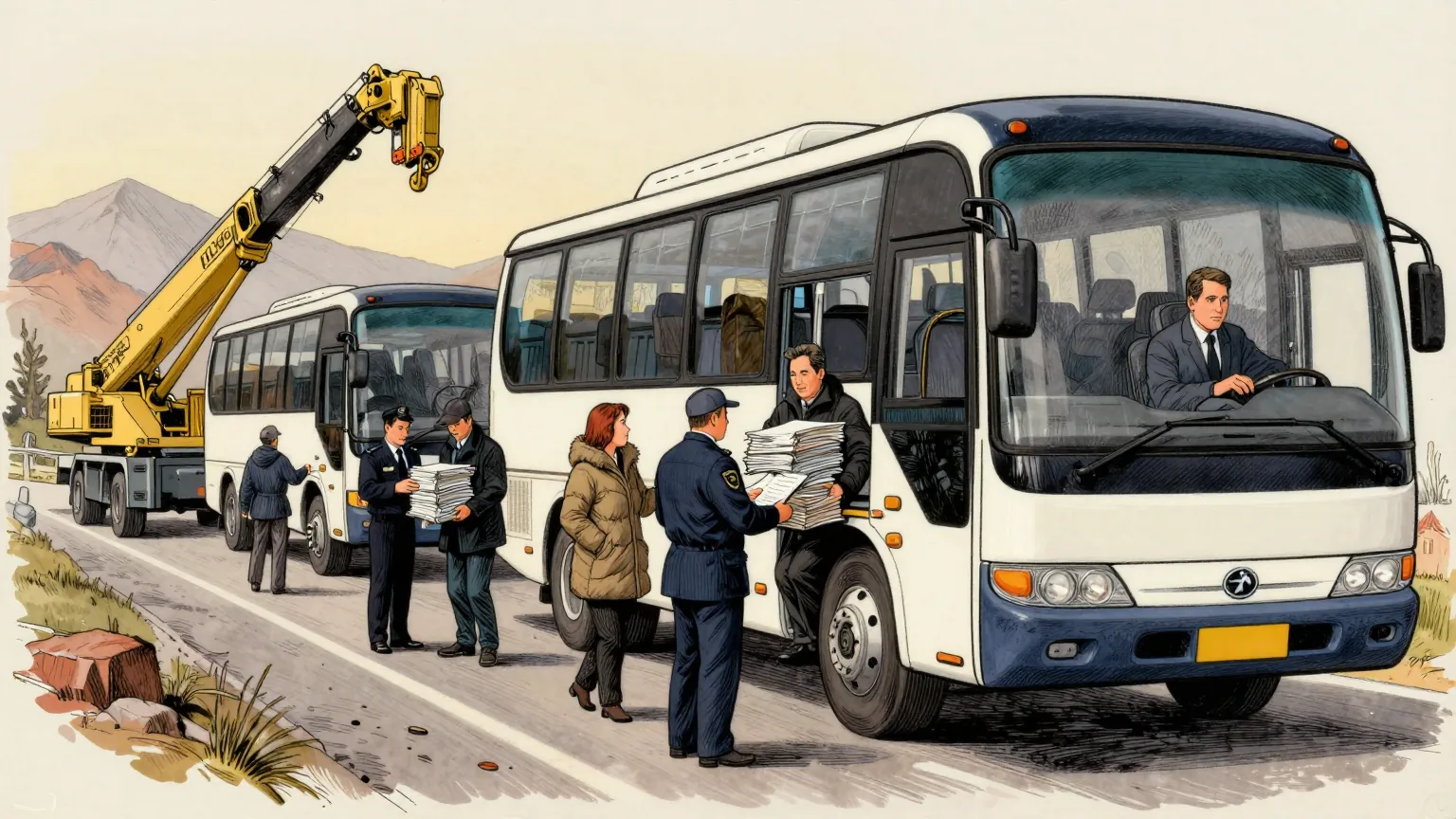
The order sets out what each convoy must contain. Every convoy of buses is to be accompanied by a crane, two empty buses and mobile workshops, to deal with any eventuality during the journey.
The route is also covered. "The Jammu and Kashmir Police will provide security to the convoys and ensure their precedence at the Banihal-Qazigund Tunnel and the Dr Syama Prasad Mookerjee Tunnel," the order said.
More than 9,000 government employees relocate every year from around 51 government departments as part of the practice, which has been reported from Srinagar by The Hindu.
The move is not only a matter of people. Official files travel with the employees, which is why the order goes to the road transport corporation and sets out the dates on which staff and papers are to be carried between the two capitals.
Not all of them travel at once. "Offices moving in camp mode will carry up to 33 per cent of their staff strength or 10 officials, whichever is lower, unless specified otherwise," the order said.
The arrangement is old. The Darbar Move was introduced in 1872 by the Dogra Maharaja Gulab Singh, and allowed offices to shift from Jammu to Srinagar when summers peaked in Jammu and to return as winter peaked in the Valley.
It has lately been interrupted. The practice was stopped by the Lieutenant Governor's administration in 2021, on account of the burden on the exchequer, and resumed by the Omar Abdullah government in 2025. The region's parties, including the ruling National Conference, were in favour of the move, which is also described as a bridge between the two distinct cultures of Kashmir and Jammu.
The order's central limit repays a moment's arithmetic. A department moving in camp mode may take up to 33 per cent of its staff strength, or 10 officials, whichever is lower. Those two ceilings meet at a department of 30 people, where a third of the staff and ten officials are the same ten officials.
Below thirty, the percentage binds. Above thirty, the number does. A department of 30 therefore moves at 33 per cent, a department of 100 at 10 per cent, and a department of 1,000 at one per cent.
The practical consequence is that the Darbar Move becomes more efficient the larger the government gets. Every additional appointment lowers the share of a department that has to be put on a bus, so a recruitment drive is, in camp-mode terms, a transport saving.
The Department of Unnecessary Research notes that only one element of the convoy is specified without reference to staff strength. The two empty buses are required regardless of the size of the department they accompany, and carry nobody in either direction.
On the order's own terms, a department with no staff at all would move in full.