
Japan has passed another demographic milestone, with the number of people aged 100 or older rising above 100,000 as the country continues to combine exceptional longevity with one of the world's most advanced population-ageing trends.
Centenarians were once rare enough to attract individual attention. Improvements in living standards, nutrition and healthcare have made reaching 100 considerably more common, even though it remains an extraordinary lifespan for any individual.
The milestone also illustrates a broader challenge for Japan. Longer lives are a public-health achievement, but an ageing population changes demand for healthcare, pensions, housing and the workforce supporting those systems.
Japan has spent years adapting to those pressures. Businesses have redesigned products for older customers, local authorities have confronted shrinking working-age populations, and policymakers continue to debate how technology and migration might offset labour shortages.
Demographic statistics can sound abstract until they are translated into ordinary objects. One hundred thousand people is a large town. One hundred years is a century. Combining the two produces a figure of sufficient size to concern the birthday-cake sector.
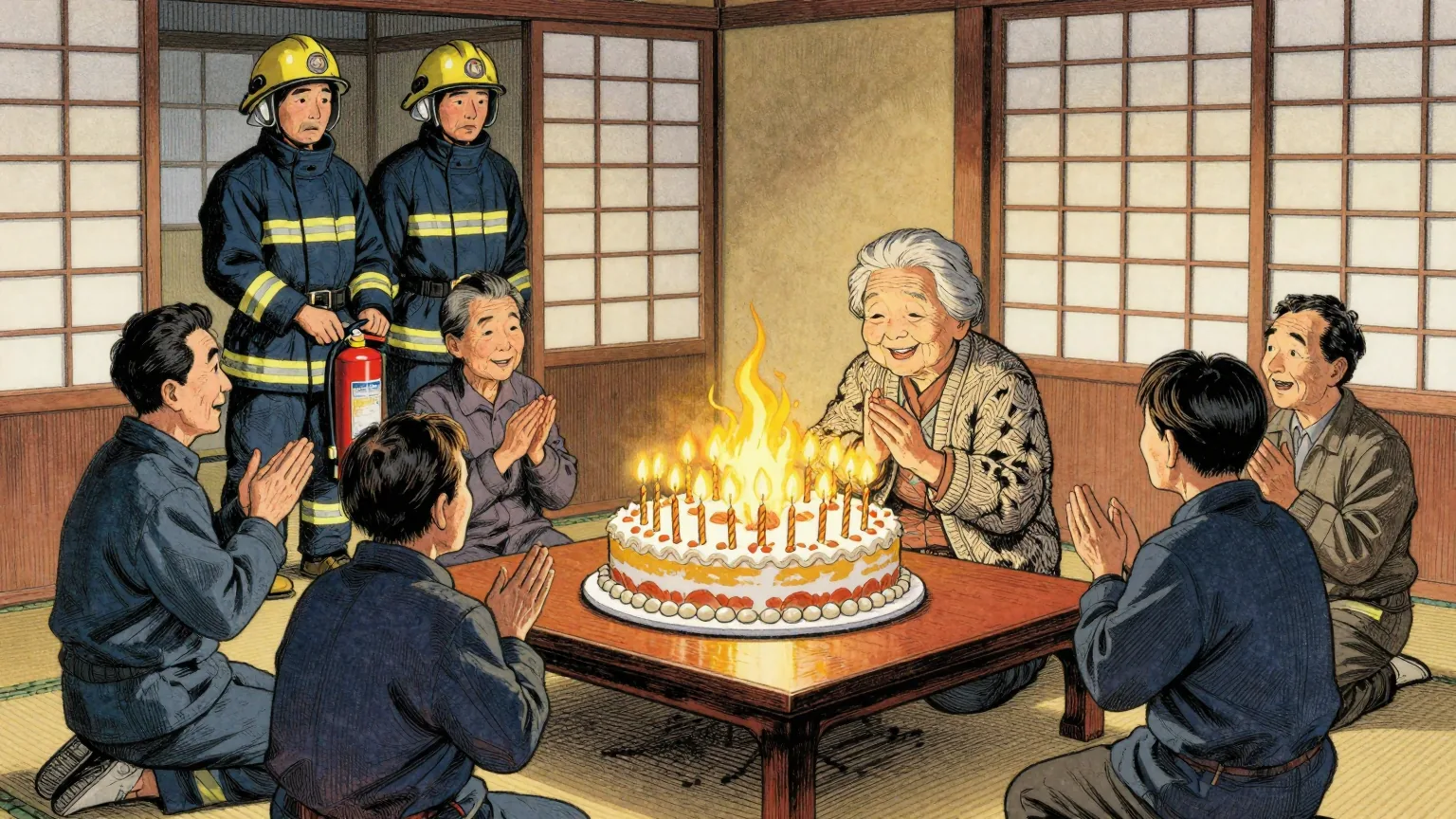
If every Japanese centenarian were presented with a cake carrying the traditional one candle per year, the country would require at least ten million candles for a single round of birthdays. This calculation assumes nobody turns 101 while procurement paperwork is being completed.
The fire-safety implications have not been included in official demographic forecasts, nor has the structural capacity of cakes to support triple-digit candle loads. A sufficiently dense arrangement could leave little room for icing, which economists generally consider a negative externality.
The Questionable Times therefore recommends transitioning to a more sustainable system in which one candle represents ten years. Japan could preserve the ceremony while reducing strategic wax exposure by roughly 90%.