Eliud Kipchoge won the Melbourne Marathon on Sunday morning in 2 hours 9 minutes and 10 seconds, two seconds inside the previous race record.
Kenya's two-time Olympic champion and former world record holder broke away from the field inside the last 10 kilometres of the 42.2km course and finished alone in front of several thousand spectators at the Melbourne Cricket Ground.
Thomas Do Canto was second in 2:10:35 and his fellow Australian Reece Edwards third in 2:15:57. In the women's race New Zealand's Camille French was first to the tape in 2:28:25, 23 seconds ahead of Australia's Sinead Diver, with Ireland's Nichola Sheridan a further 24 seconds back in third.
The course took runners down St Kilda Road, past Flinders Street Station and around Albert Park Lake before finishing inside the MCG, which also staged the start and finish of the Olympic marathon in 1956.
Kipchoge, who is 41, said the anniversary was part of the appeal. "So I come here to celebrate the 70 years and tell the people of Melbourne, 'Let us run together here at the MCG' so it was a beautiful time for me, happy to enter this stadium," he said afterwards.
It was his first Melbourne Marathon and only his second visit to Australia, and his first marathon win since 2023. The race forms part of a world tour on which he intends to run a marathon on all seven continents, including Antarctica.
He looked at the finish, in the ABC and AAP account of the race, as though he had been out for an easy training run, and spent several minutes with spectators along the MCG boundary line.
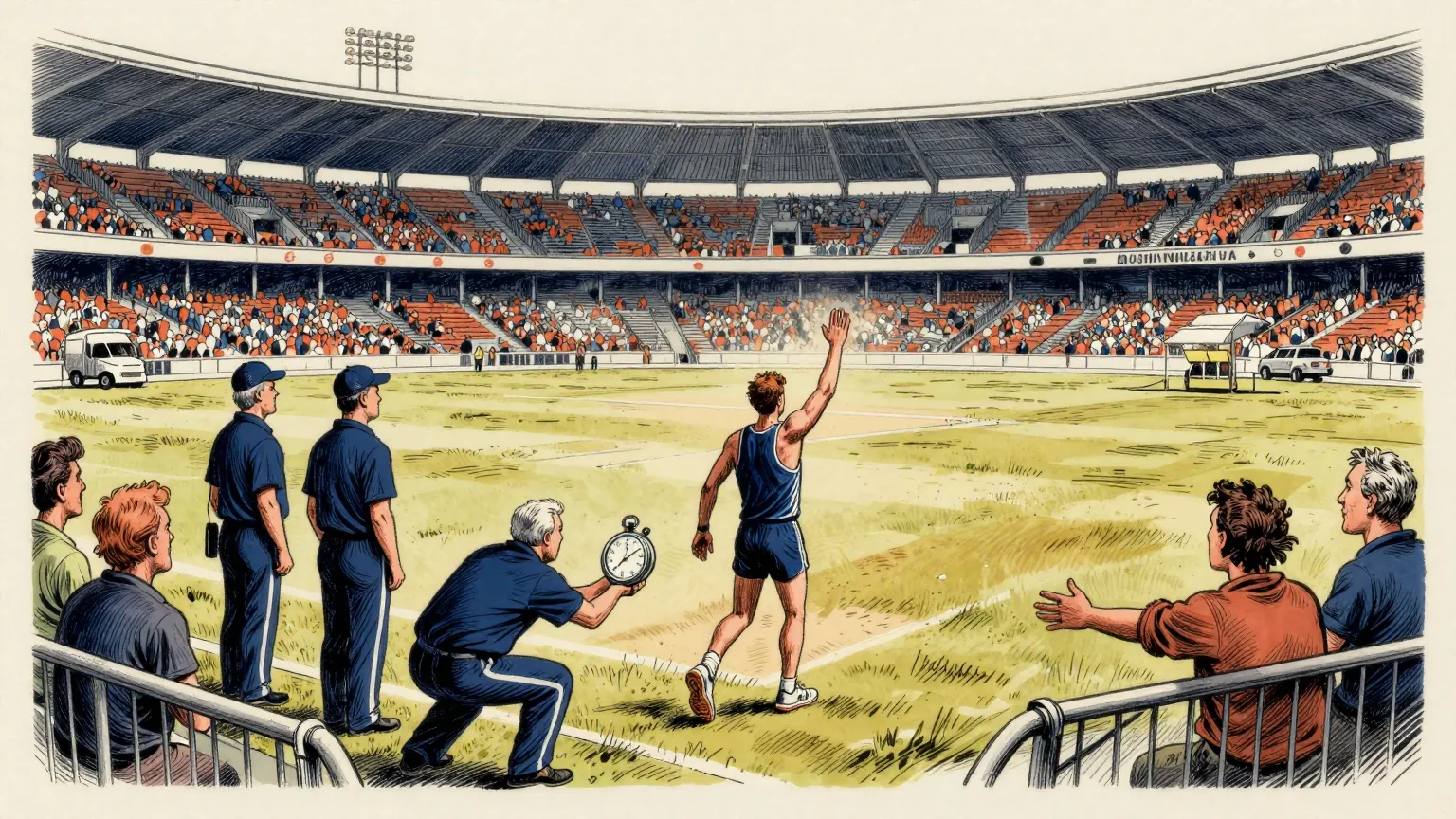
One detail from that finish is worth recording precisely. He would have come home a few seconds quicker, the report noted, had he not been waving to the crowd on the half-lap inside the stadium.
Those two figures cannot be left side by side without comment. The margin of the record is two seconds. The time handed to the crowd is a few. On the only arithmetic available, the greeting cost more than the record was won by.
The record therefore does not belong to the whole run. It belongs to the portion of the run that was not spent waving, and was set by a man who, at the decisive moment, was doing something else.
This newspaper regards the consequence as settled. The Melbourne Marathon record is now a function of crowd size, and the half-lap inside the MCG is the only stretch of the course on which hospitality is timed.
Our analysts have identified the remaining difficulty. If a few seconds of waving sit inside a two-second margin, the previous record holder was beaten by a man who had already stopped racing, and the new mark is the slowest fast time in the event's history.
The Department of Unnecessary Research has written to the organisers for a ruling. No governing body currently recognises a record set at a wave.