Manchester United have reported an annual loss for the seventh successive year, taking the club's combined losses to £444m since 2019.
The net loss of £43m for 2025-26 is a significant increase on the £33m recorded in the previous 12 months. Compensation paid to the sacked manager Ruben Amorim was a contributory factor, as was a decision to increase the club's borrowing facility by £93m to help fund the redevelopment of Old Trafford.
The results were published alongside record revenue of £677.6m, up 1.7% on the previous year, and operating profits of £22.6m. The increase in revenue was more than offset by the cost of financing the club: net finance costs more than tripled to £69.2m from £21.2m, partly owing to foreign-exchange movements, and net debt rose from £471.9m to £577.6m after several loans were refinanced.
The refinancing, according to club sources, provided funding for the £63.5m purchase of a plot of land next to Old Trafford required for a proposed 100,000-capacity stadium that could eventually cost more than £2bn.
A cost-cutting regime implemented by Sir Jim Ratcliffe, under which hundreds of staff have lost their jobs, has brought the wage bill down to £301m, a fall of 3.6% or £11.3m and more than £100m below Manchester City's.
On an investor call, the chief executive, Omar Berrada, said the summer transfer window, in which United spent £155m on three players, had been planned with "financial sustainability in mind", an indication that the budget will remain tight for the new manager, Michael Carrick.
Berrada said the figures demonstrated "the underlying strength of our business, particularly in a season without European football". He added: "This shows the direct impact of the work we have been doing over the past two years. It also proves Manchester United's enduring popularity and commercial strength."
The club expects the outlook to improve. A return to the Champions League, together with training-kit and shirt-sleeve deals with Betway and SumUp worth £20m and £22m a year respectively, underpins a revenue forecast of between £740m and £760m for 2026-27.
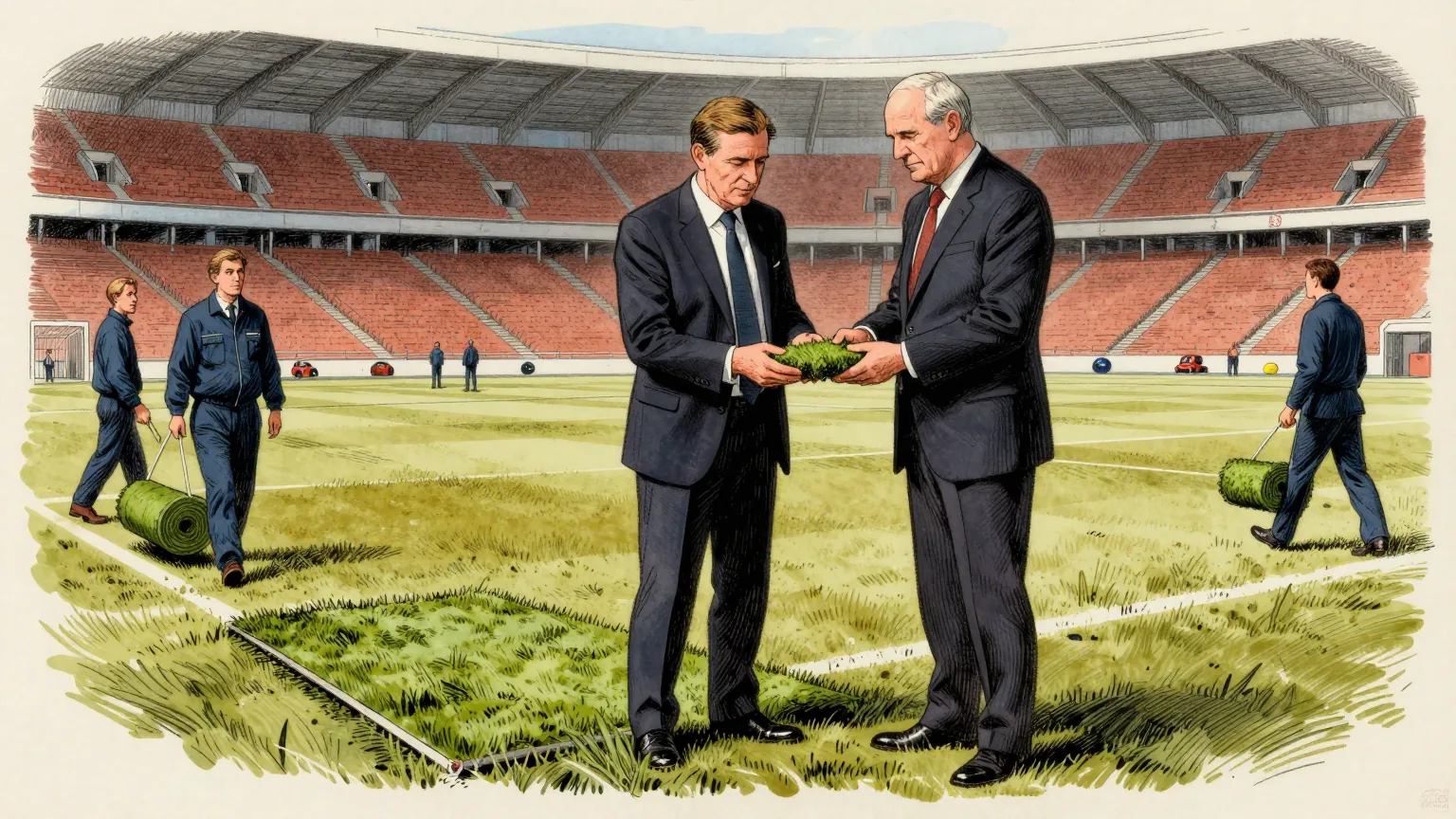
The financial results emerged on the same day as a second revenue initiative. United relaid the Old Trafford playing surface this summer for the first time in 14 years, and an email to supporters has offered them the chance to buy 7cm by 7cm clumps of the old turf for £125.
It is worth pausing on that figure, because it is the only unit price the club has published this week. A 7cm square is 49 square centimetres. At £125 a piece, the retired Old Trafford surface is being sold at £25,510.20 per square metre.
This newspaper notes, without comment on the football, that the club has therefore identified the most valuable asset on its balance sheet, and has been walking on it.
The arithmetic from there is straightforward. Clearing the £43m loss for 2025-26 requires 344,000 clumps, or 1,685.6 square metres of pitch. Clearing the accumulated £444m requires 3,552,000 clumps, or 1.74 hectares of turf.
Against a net debt of £577.6m the requirement rises to 4.6 million clumps. Against the £2bn stadium it rises further still, and the Department of Unnecessary Research accepts that at this point the model begins to strain, because the stadium is where the grass is kept.
The constraint is not demand but yield. United relaid the surface once in 14 years, which sets the harvest cycle at 14 years and fixes the sustainable annual take at one fourteenth of a pitch. A club losing money every year is therefore working against a crop that arrives roughly twice a generation.
Our analysts note one remaining variable. The published accounts disclose the wage bill, the net debt, the finance costs and the forecast revenue.
They do not disclose how many pitches the club has.