
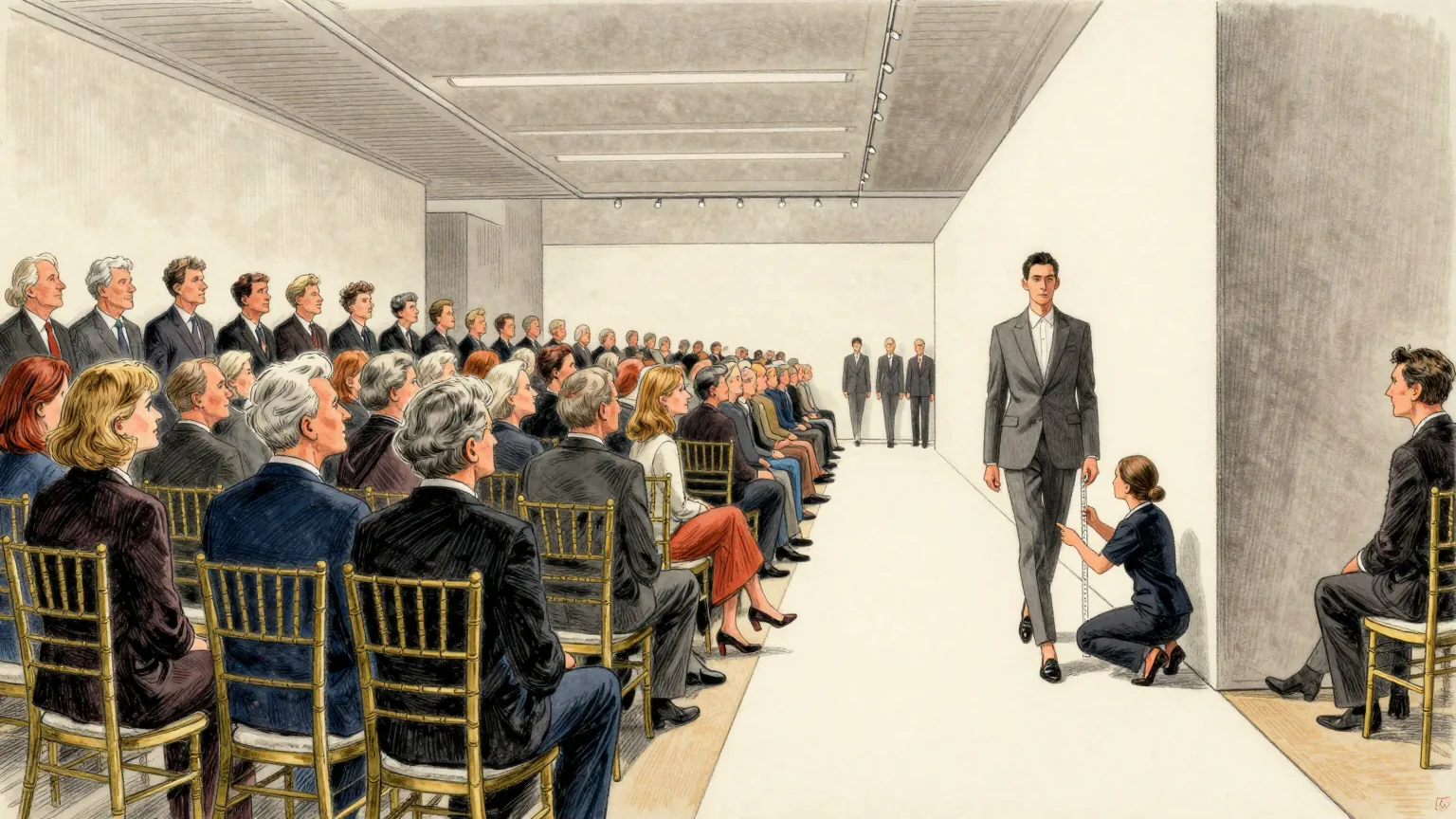
Marks & Spencer held its first London fashion week catwalk show on Friday, staging a collection at the Design Museum for 310 guests and putting every piece on sale at the moment the models began to walk.
The show was a gamble in both directions: whether the fashion industry would accept elasticated waistbands and practical rainwear, and whether the retailer's own customers would recognise themselves in a week better known for £2,000 handbags.
The pricing was the most striking part of the collection. Half of the pieces are priced under £50, and the most expensive item, a leather coat, will retail at £450. That places a full catwalk collection within reach of the high street at a time when London fashion week has struggled to feel relevant to ordinary wardrobes as designer prices have risen.
The company's womenswear director, Maddy Evans, described the intention precisely. The style message, she said, was "fashion with a small f, not a capital F".
In practice that meant clothes new enough to register as current without startling anybody: sharp kilts in place of flouncy tiered skirts, low-rise slouchy denim replacing mom jeans, a palette of neutrals with pops of red for men as well as women, and a shift towards outfits built from separates rather than dresses. Menswear ran to a classic grey office suit and chore jackets.
Several pieces nodded to the company's archives to mark the centenary of fashion being sold at Marks & Spencer, among them a twinset reworked as a cardigan over a knitted camisole, and a sage-green lace two-piece drawing on the retailer's lingerie history.
Models of a broad range of ages and body sizes "were chosen to reflect our 23 million customers", Evans said.
The company is now ranked second in style perception, behind Zara. Evans was untroubled by the position. "That's exactly where we want to be," she said. "Zara are the cutting edge of fashion, and we are fashion for everybody."
It is worth taking the company's stated objective literally, because it was stated with unusual care. The difference between fashion and Fashion, on Marks & Spencer's own account, is the case of a single letter. Everything else about the word is identical.
It is also the most exactly quantified ambition available to the industry. Rival houses announce directions, visions and vibe shifts, none of which can be measured by anybody. Marks & Spencer has announced a reduction of one letter case, applied once, to a single noun.
The target position is specified with the same precision. Second, behind a named competitor, is not a shortfall the company intends to close; it is the objective. Our analysts observe that under this arrangement the only outcome that would constitute failure is overtaking Zara, which makes first place the one result the strategy is designed to avoid.
The Department of Unnecessary Research has begun typesetting the full range of intermediate positions, on the grounds that a company aiming between fashion and Fashion will eventually require a letter that is neither.
Everything in the collection was measured: the prices, the hemlines, the guest list, the hundred years of archive. Only the f was reduced.