
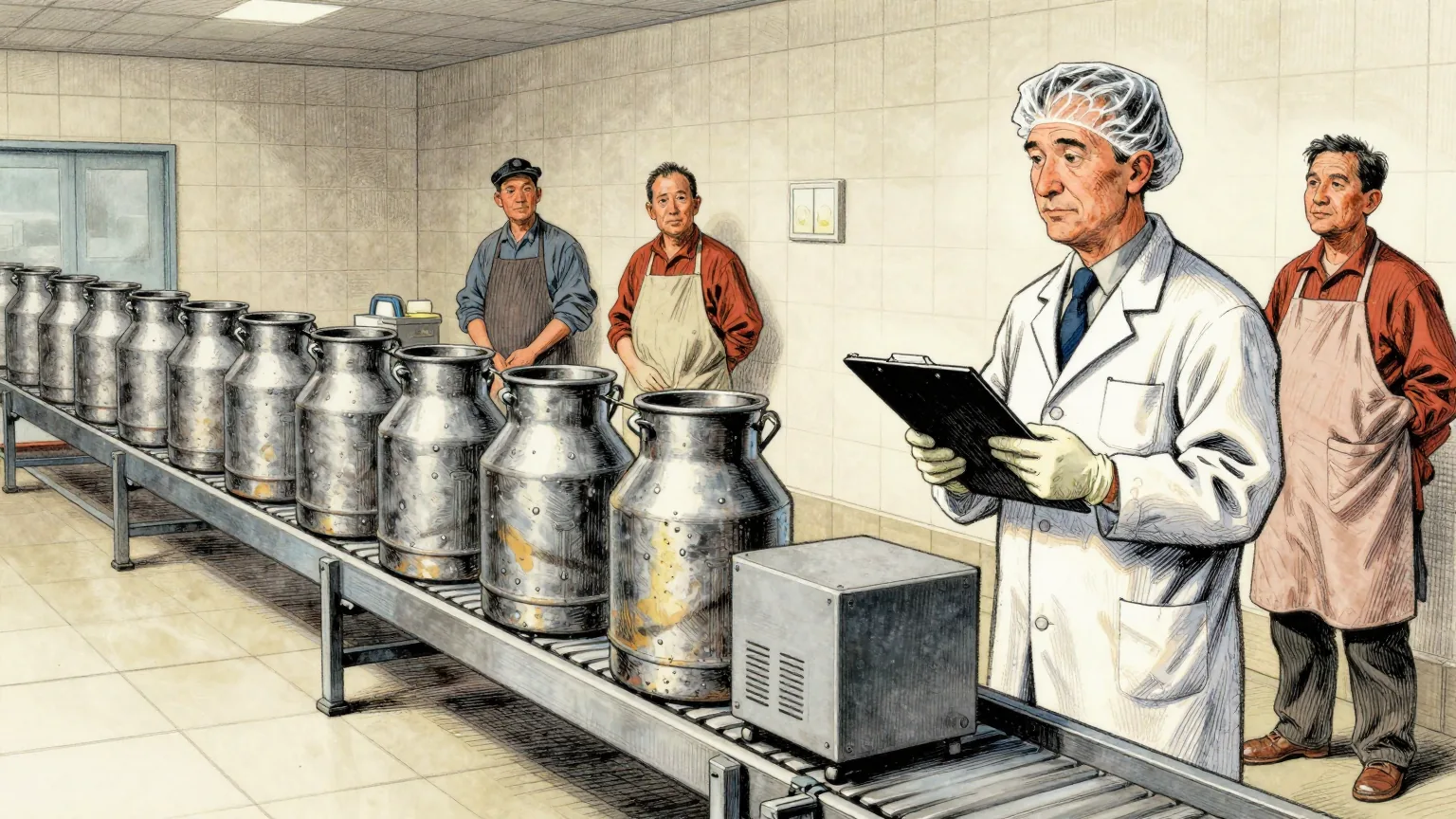
The president of Microsoft has said that artificial intelligence is subject to fewer safety rules than milk, and has called for global regulation of the technology.
“Right now, your washing machine is subject to more safety rules than AI,” Brad Smith told the BBC's Big Boss Interview. “Every carton of milk that you see in the grocery store is subject to safety rules and inspection.”
Mr Smith described artificial intelligence as both a “tool and a weapon” and set out several specific measures. Companies should be required to build “emergency brakes”, known in the industry as kill switches, to pause or slow a system that gets out of control. They should face a legal duty to write incident reports and to tell a victim if their system has been breached by a rogue agent. Independent government evaluators, he suggested, should vet new technology before release.
“We know how to do this for other products,” he said. “We should build on that knowledge and think about how to apply it to AI.”
He named the United Kingdom as the country best placed to drive such rules forward, pointing to its AI Security Institute, launched under Rishi Sunak's government as the AI Safety Institute. “In Washington DC, people don't look at the UK and they don't look at London the way they look at Brussels - that's a strength,” he said.
His position differs from that of President Donald Trump, who has said the sector should regulate itself so that American firms are not overtaken by Chinese rivals, and who has repeatedly said that “whoever wins AI, wins”. The heads of Anthropic, OpenAI and Google DeepMind have all backed the idea of slowing AI development.
At the end of last month the White House hosted the leaders of six American technology companies, who signed a document described as “morally binding”, agreeing to work with “independent auditors” and to ensure their systems do not “hack or access technical systems in unintended ways”. Mr Smith said Microsoft was “happy to sign it” and called it “a good step, it's a necessary step... But I don't think it's sufficient any longer”, noting that the difficulty with self-regulation is that “the good companies will do what you want”.
The argument is a comparison, and comparisons can be run in either direction. Mr Smith's own framing names three products, and one of them already possesses, in full working order, the regime he would like to spend several years negotiating.
The Department of Unnecessary Research therefore proposes the shorter route, which is reclassification. Rather than draft global rules for artificial intelligence, legislators would need only to define a large language model as a dairy product, at which point the inspectors, the batch records and the recall powers arrive at no additional cost.
The fit is better than it sounds. Milk is produced in batches from a live and somewhat unpredictable source, degrades in ways the customer cannot see, carries a date beyond which it must not be served, and is pasteurised before release by a process nobody expects the consumer to perform themselves.
Mr Smith's emergency brake is already standard: a failed batch is withdrawn from every shop that received it. His incident reports exist as batch traceability. His independent evaluator is the dairy inspector, who does not negotiate.
The one provision with no obvious equivalent is the duty to inform a victim that a rogue agent has breached their system, although the industry does have a convention for this, which is that the carton swells.
Under the dairy regime, a model would also carry a best-before date, after which it could not lawfully be served to the public. On present evidence, that is the clause the sector would fight hardest.