
The New South Wales parliament has passed the Music Bill 2026, placing support for the state's contemporary music industry on a legislative footing and introducing new measures covering live music venues, event regulation, noise assessment and government decision-making.
The legislation establishes the Sound NSW Advisory Board and sets principles for government agencies and local councils making decisions that affect the contemporary music industry. It also introduces a three-tier Music Venue Recognition Scheme, under which venues are recognised as dedicated, significant or live music venues.
The scheme is intended to tailor government support to different kinds of venue, including access to extended trading hours and grants, while encouraging venues to programme new and original live music regularly. The government expects it to launch later this year.
The legislation also requires certain disputes involving dedicated and significant live music venues to go to mediation before court proceedings can begin. A registrar of disputes will oversee the process, and the NSW Small Business Commission will provide free mediation support.
"This legislation provides vital protections for our music industry, an industry which was smashed by lockouts, lockdowns, and overregulation, and it demonstrates the importance of live music to the economy and the cultural fabric of this state," said the Minister for Music and the Night-time Economy, John Graham.
Two of the Bill's provisions concern measurement rather than money, and they are the ones that will decide how the rest of it works.
The first changes the definition of a concert, so that an event will not automatically be classified as a large-scale music festival simply because it features more than four acts. The government says the change will let organisers expand line-ups without triggering additional festival regulation, potentially making it easier to include local artists.
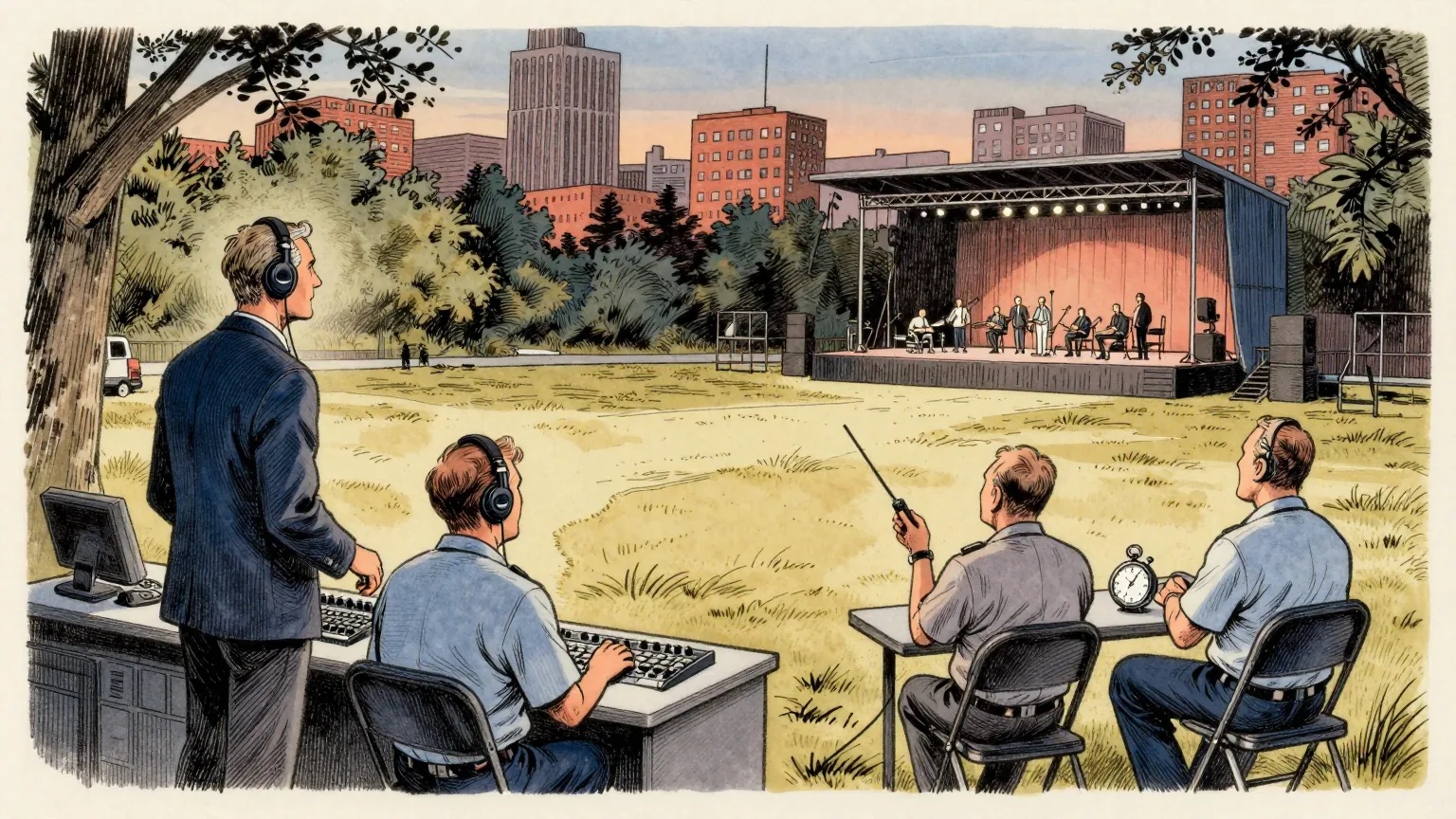
The second introduces a new methodology for assessing noise from outdoor entertainment. At music festivals and major events at government sites including Centennial Park, the Domain and the Sydney Opera House, sound will be assessed using an average level over time rather than relying on peak readings. The government says this will reduce breaches caused by short bursts of sound or by factors such as wind.
The legislation also prohibits state agencies and councils from making decisions about live music events solely on the basis of genre, and amends the Entertainment Industry Act 2013 to include DJs, music producers and songwriters within the definition of performer.
"The Bill is the third major stage in rebuilding music in NSW," said the APRA AMCOS chief executive, Dean Ormston, welcoming the legislation. The head of Sound NSW, Emily Collins, said it would provide "greater certainty for industry, government and event organisers".
Taken together, the two measurement provisions retire the only two numbers the old system offered. A festival used to begin at the fifth act. Loudness used to be established at the moment it occurred. Neither is now the case, and the state has replaced both counts with quantities that depend on duration.
The consequences follow without difficulty. If loudness is the average of a sound over the time it is measured across, then any given volume can be brought within any given limit by continuing for longer. Silence is not required; patience is.
This newspaper therefore identifies the compliant festival of the future, and notes that it is already legal. It has more than four acts, which no longer makes it a festival. It plays at whatever volume it likes, and then keeps the microphones open until the average falls back inside the assessment.
The Department of Unnecessary Research has modelled the limiting case. As the measurement period lengthens, the average approaches the level of an empty park, so a sufficiently long event is not merely compliant but quieter than the site it is held on. A gust of wind, which the reforms were designed to exclude, becomes the loudest thing in the data.
Councils are separately forbidden from deciding on the basis of genre, which removes the last question a regulator could have asked about what is being played. What remains assessable is how many acts there are, which no longer counts, and how loud it is on average, which depends on when you stop.
The legislation does not say when an event ends.