
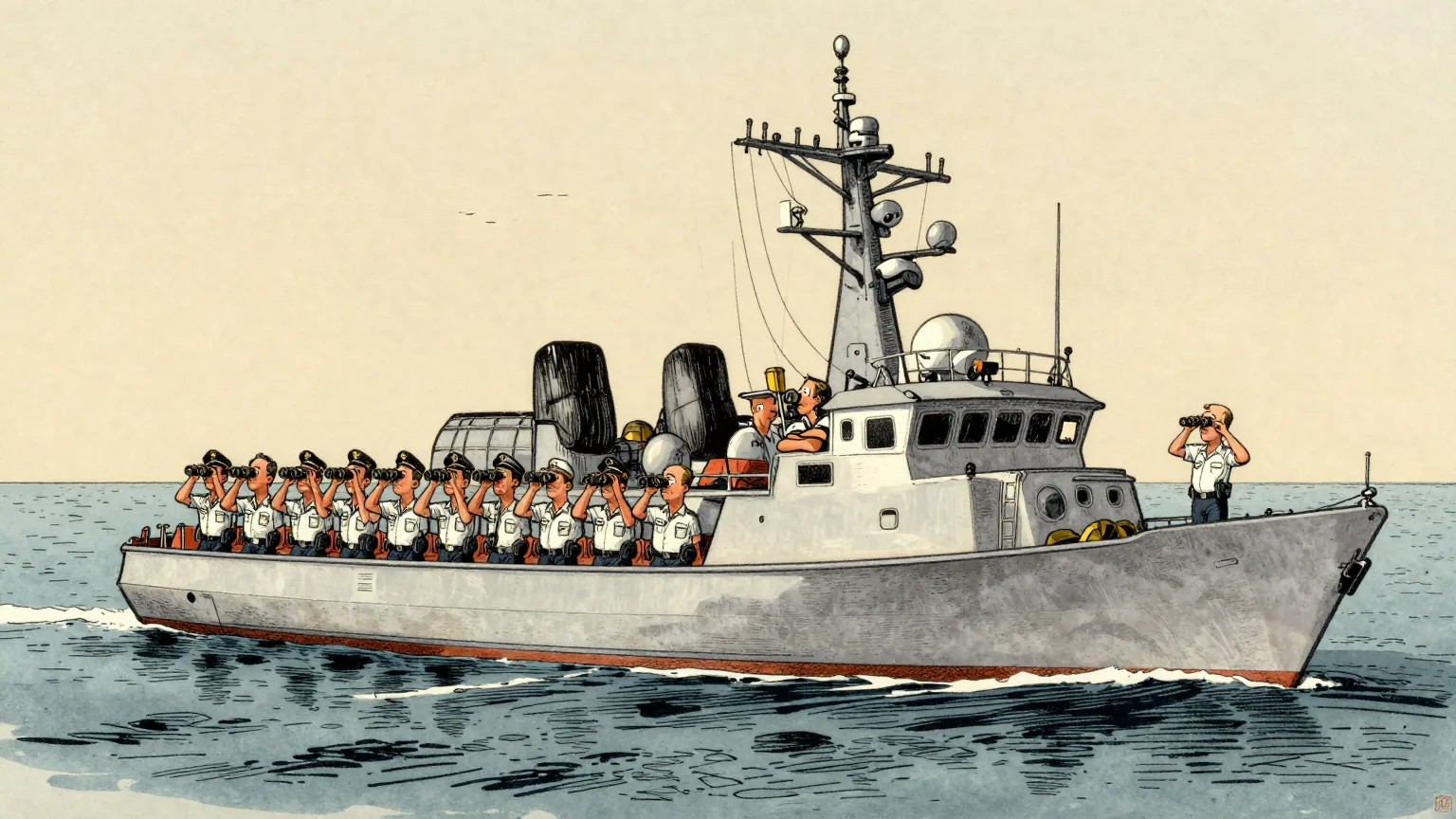
The Nigerian Navy has vowed to sustain the country's four-year record of zero reported piracy incidents in its territorial waters, while strengthening operations against emerging threats in the maritime domain.
The Chief of Naval Staff, Vice Admiral Idi Abbas, said so on Tuesday in Calabar, at the graduation ceremony of participants of the Naval Warfare Course 10 at the Naval War College Nigeria.
"Encouragingly, Nigeria has maintained zero reported piracy incidents in our waters for four consecutive years, while incidents across the wider Gulf of Guinea have declined significantly," he said. "These gains must be sustained through persistent maritime domain awareness, credible presence at sea, regional cooperation and timely response."
Abbas said maritime security remained inseparable from Nigeria's economic security, given the importance of the country's offshore resources, ports, shipping routes and energy infrastructure.
"Nigeria's crude oil production reached about 1.56 million barrels per day in June 2026, so sustained security of the maritime environment remains critical to protecting the country's economic interests," he said.
He urged the graduating officers to build on the gains recorded in maritime security by deploying emerging technologies and innovative operational strategies, telling them that "the rapidly changing security environment requires commanders capable of integrating technology, intelligence and operational capabilities across maritime, land, cyber and other domains".
He cited a research project presented by one of the participants, titled "Adopting Emerging Technology for Operational Effectiveness in the Nigerian Navy: The Way Forward for Naval Engineering", as an indication of the importance of technology to future naval operations.
The commandant of the Naval War College Nigeria, Rear Admiral Muhammed Muye, said the course was designed to prepare senior officers for higher responsibilities in command, staff and strategic leadership, and that the contemporary maritime security environment required commanders with strategic adaptability. A total of 34 participants completed the course, including officers from Cameroon, Ghana and Liberia.
The figure deserves attention for its shape as much as its size. Zero is the only result in maritime security that cannot be improved upon.
A service that has reached it can, at its very best, draw with itself. Every subsequent year is either a tie or a defeat, and the performance target for the fifth year is the same number as the target for the first four.
The measure is also a measure of reports. It records what was filed, and what was filed was nothing. Four consecutive years of nothing have now been filed in sequence, which is a considerable administrative achievement in its own right.
This gives the graduating class an unusual brief. They have been told to adopt emerging technology for operational effectiveness, and operational effectiveness in this domain has one published output, which is an absence. The task is to produce more of it, with better equipment.
The Department of Unnecessary Research notes that a navy which succeeds perfectly generates no evidence of having done anything at all, and that the only way to demonstrate the record is genuine would be to stop it.