
Norway has become the first major country to propose a temporary ban on the use of AI glasses in selected public places, amid growing privacy concerns about wearable technology.
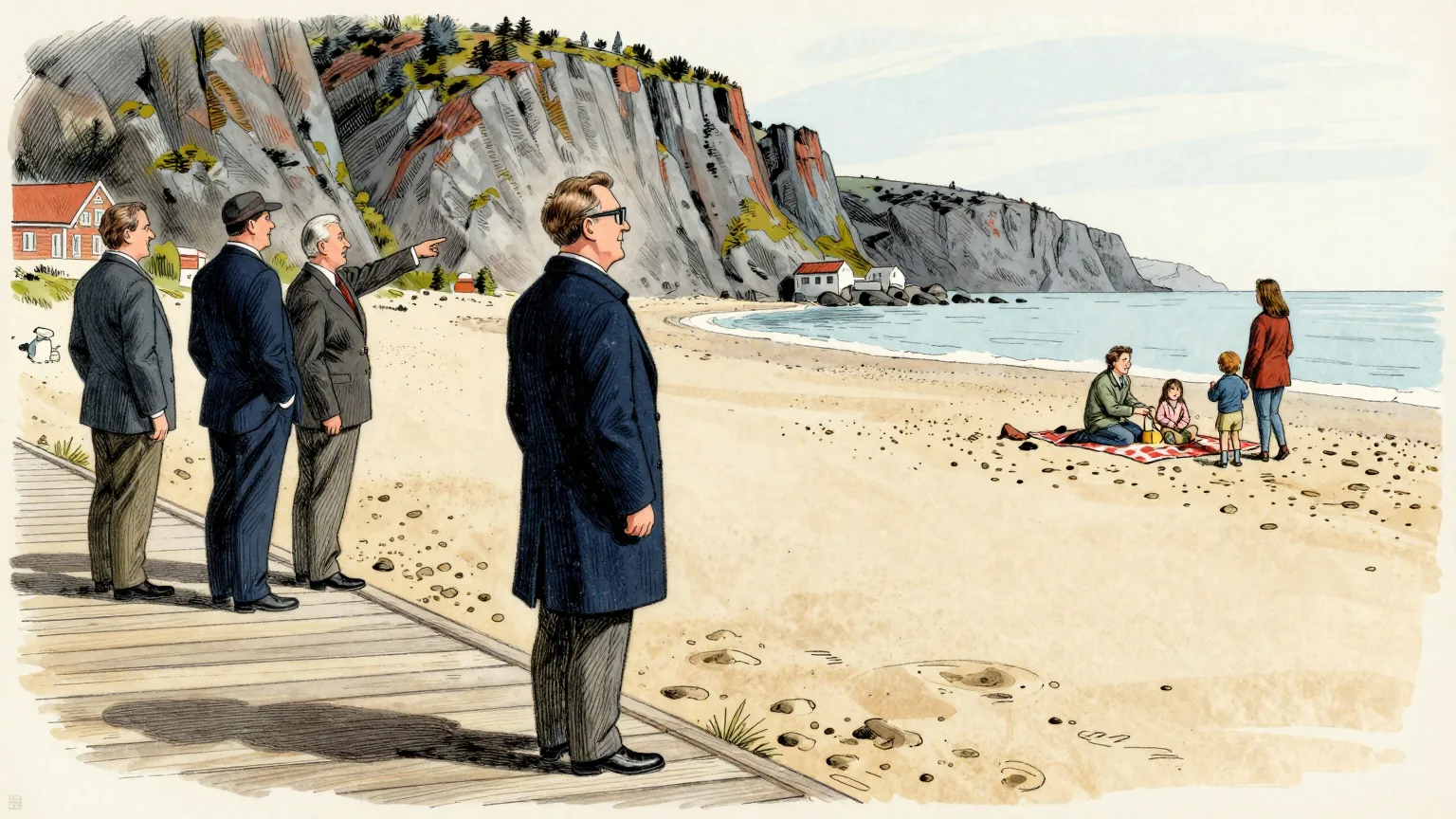
The country's centre-left government said on Monday that it would shortly introduce a law to parliament covering places such as parks, beaches, schools and kindergartens. It will also set up an expert group to propose permanent national rules.
"I am concerned about the introduction of powerful new technology where people risk being photographed, filmed, or recorded without their knowledge," said Torgeir Micaelsen, Norway's digitalisation minister. A temporary ban "will give us time to conduct a thorough assessment and hold an informed debate that can lay the foundation for permanent regulation," he said.
"We do not want a society where people are concerned about hidden audio recordings, photography, and filming in places and situations where they are used to being without being monitored," Micaelsen said. "Such a society can be experienced as unsafe and cause us to withdraw."
Parts of Norwegian society have already acted on their own account. Schools in Oslo have banned the glasses, as has Equinor, the country's biggest company, which has barred them from its offices and offshore facilities.
Other jurisdictions are moving in the same direction. Australia is considering a ban on smart glasses in certain public spaces, and courtrooms in several countries have issued bans as the use of wearable technology spreads.
Norway's government was explicit that it does not want a total ban. It said appropriate use could be where there was no risk of filming people without their consent. It described the proposed ban as a "high priority" and said a draft law would be presented to parliament soon.
The commercial stakes are considerable. US technology companies including Meta, Google and OpenAI believe wearables such as smart glasses could replace mobile phones as the main gateway to artificial intelligence, on the view that talking to a system which listens to daily life is easier than opening an app and typing. Analysts at Counterpoint Research estimate that consumers will spend more than $1 trillion on wearable devices between 2026 and 2032.
It is the exemption, rather than the ban, that repays close reading. The restriction is not on owning the glasses but on using them in the places where people are. Appropriate use, the government says, is use that carries no risk of filming anyone without consent. Taken together, those two sentences describe a device that is lawful in exact proportion to the absence of other human beings.
This newspaper regards it as the first workable definition of a privacy-respecting camera. A camera pointed at nobody cannot record anybody. On that reading the permitted operating environment is the empty field, the closed road, the unvisited stretch of coast outside the bathing season.
The policy is therefore not a restriction on the technology so much as a specification for it, and it arrives with its own acceptance test. The expert group's task is not to decide what the glasses may film. It is to produce a national register of locations containing no one.
The exclusions narrow that register efficiently. Parks and beaches are out, which removes the outdoors on a pleasant day. Schools and kindergartens are out, which removes the outdoors on a weekday morning. What remains is not small, but it is strictly defined: it is wherever the wearer happens to be alone, and it ceases to exist the moment anybody joins them.
The Department of Unnecessary Research has asked the ministry to confirm the one point still outstanding. If the glasses may be worn wherever there is nobody to film, then the wearer is the only remaining subject, and consent was obtained at the point of sale.