
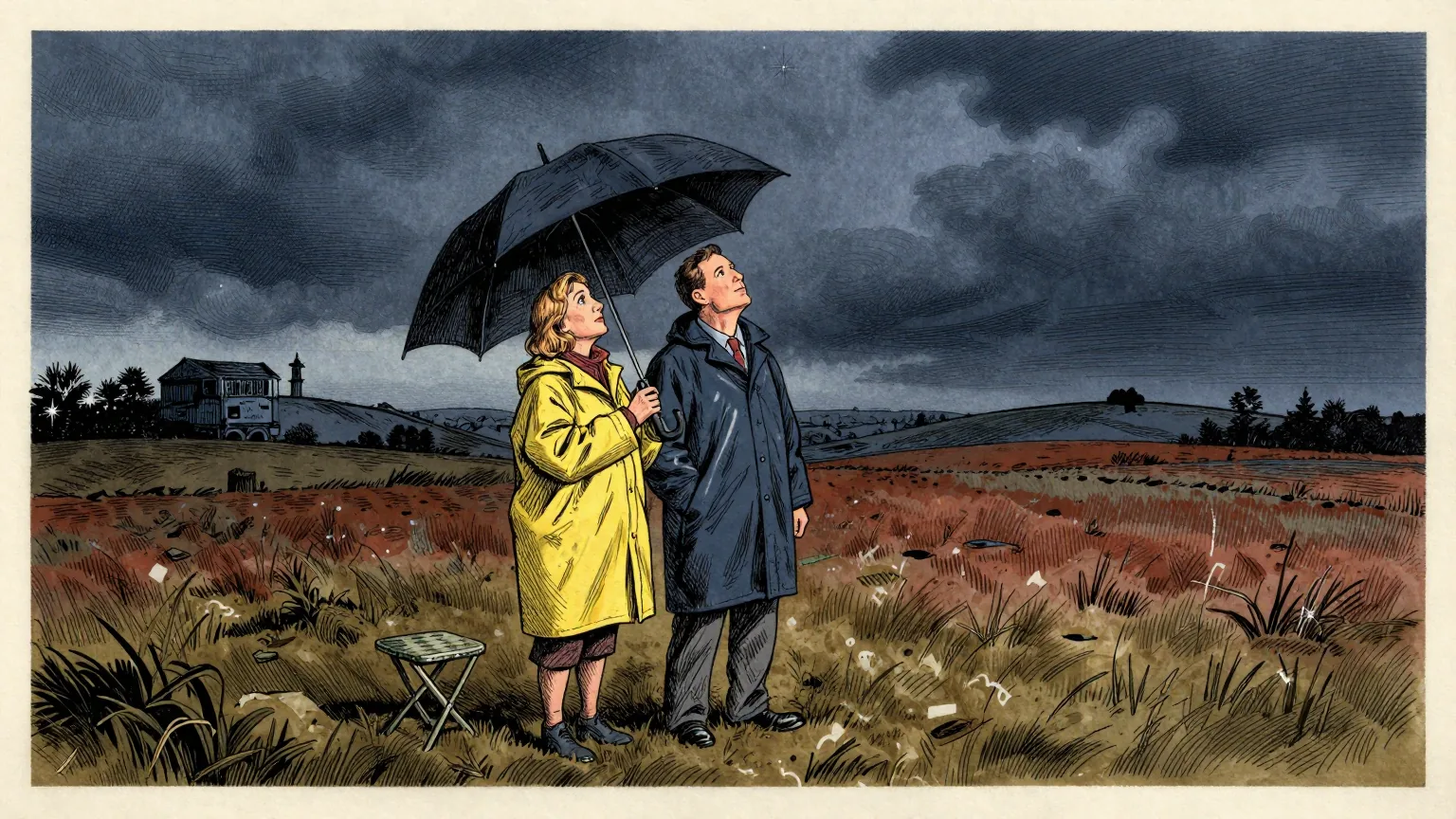
The Orionid meteor shower, which is capable of producing bright fireball meteors, is set to peak in UK skies this week, in what forecasters say is shaping up to be the wettest and windiest week of the autumn so far.
The shower has been active for most of October but will be at its best in the early hours of 22 October. Clear skies permitting, skygazers could spot as many as 10 to 20 meteors an hour. Where the weather is less cooperative there will still be chances to catch a glimpse until 7 November.
The Orionids are an annual shower caused by debris left by Halley's comet on its journey around the Sun. Every year the Earth passes through the comet dust, and the debris burns with the friction caused by the atmosphere, creating a bright streak of light through the sky.
They are fast as well as bright, entering the atmosphere at around 41 miles per second, and can often produce long glowing trails and fireballs.
The viewing instructions are straightforward. Observers should find a dark spot with wide open skies, away from city light pollution, and let their eyes adjust to the night sky for 20 minutes. The meteors are visible to the naked eye, so no binoculars or telescope are needed.
They appear to originate from the constellation of Orion, near the red supergiant star Betelgeuse, a point known as the radiant. Between midnight and dawn the constellation climbs higher in the sky to the south and then the south-west. It is best to look slightly away from the radiant, where the meteors are more visible.
The Moon is a complication. It will be in its waxing gibbous phase on the night of 21 October, throwing extra light into the night sky and reducing visibility, though conditions improve once it sets at around 03:00 BST on Thursday morning.
The forecast is the larger one. Writing for BBC Weather, lead weather presenter Elizabeth Rizzini said this week looks to be the wettest and windiest so far this autumn, with a strengthening jet stream propelling low pressure systems across the UK. Wednesday is expected to be wet and windy for many parts of the country.
There is some hope in the detail. A brief ridge of high pressure could mean a chance of clear spells for many parts of England, Wales and Northern Ireland for the second half of the night into Thursday morning, and some clear skies for a time in western Scotland. Eastern Scotland looks cloudy and wet with a lingering front, and the far south coast of England could see outbreaks of rain.
The figure that rewards attention is the conditional one: as many as 20 meteors an hour, clear skies permitting.
The meteors themselves are not conditional. Halley's comet left the debris, the Earth's orbit will carry it through the dust at the appointed hour, and it will burn on arrival whether or not there is a ridge of high pressure sitting over the country at the time. The hourly rate is therefore not an astronomical quantity at all. It is a statement about British cloud.
On that reading, the strength of this year's Orionids over the United Kingdom is being set by the North Atlantic jet stream, which this week acquires a measure of authority over the output of a comet.
The official guidance compounds the effect. Observers are advised to look slightly away from the shower, because that is where it can be seen; to allow 20 minutes for their eyes to adapt; and to wait for the Moon, which is making its own unhelpful contribution, to set at three in the morning.
The Department of Unnecessary Research has accordingly reclassified the Orionids as a domestic weather event with an extraterrestrial supply chain, peaking in the single hour of the week when nothing is in the way.
The best time to watch Britain's meteor shower is after the Moon has gone, in the direction the meteors are not, during a gap in the rain.