
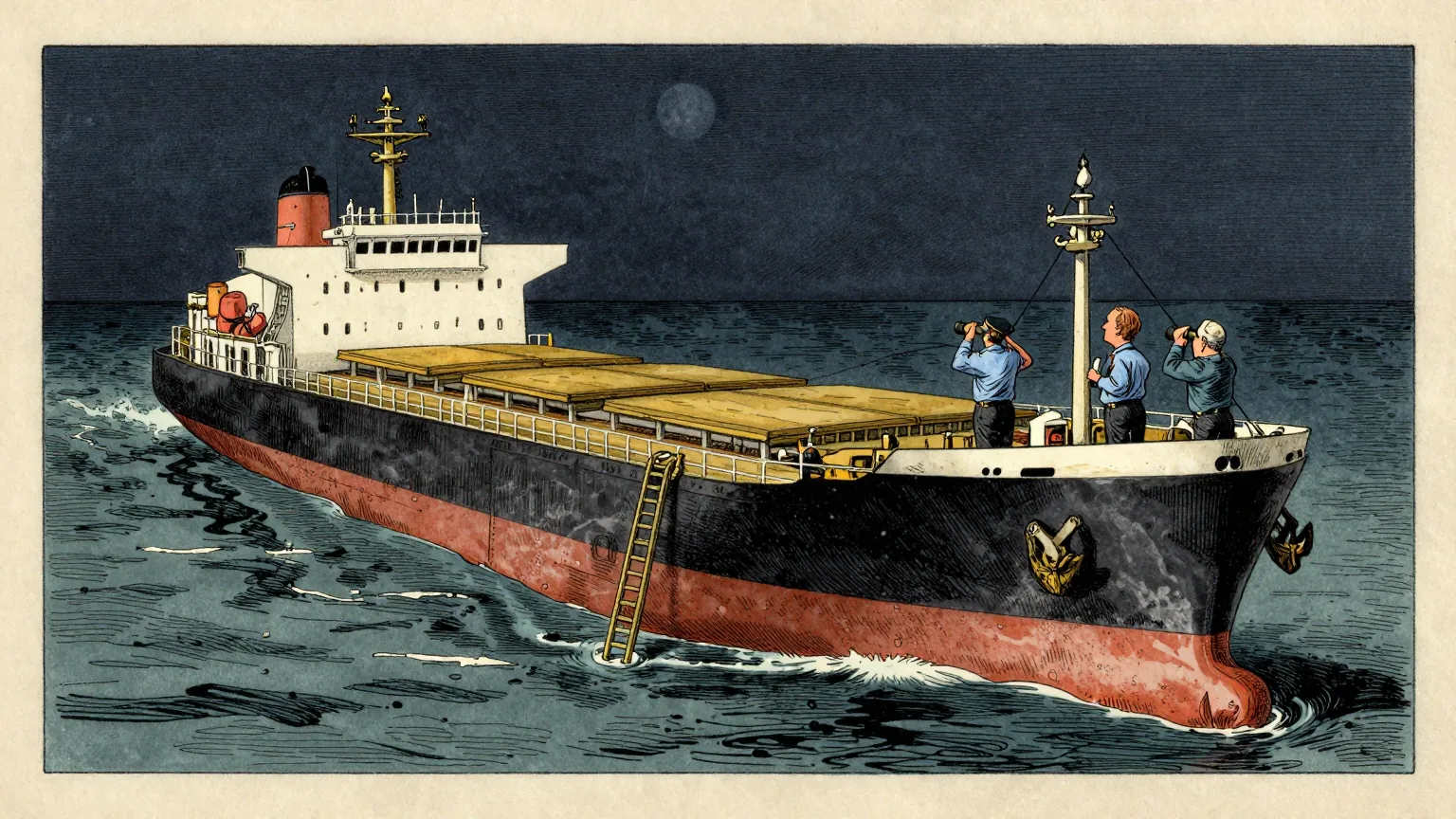
Reported piracy and armed robbery against ships fell to 51 incidents in the first nine months of 2026, down from 116 in the same period last year, according to the ICC International Maritime Bureau.
It is the lowest nine-month figure the bureau has recorded since 1992.
Of the 51 incidents, 36 vessels were boarded, eight were hijacked, four were fired upon and three boardings were attempted. Weapons were identified in 53 per cent of cases, and most boardings happened at night.
The bureau reports that 105 crew were directly affected, up from 72 a year earlier, with the increase driven by Somali hijackings. Somali pirates carried out all eight of the hijackings and accounted for 94 per cent of crew taken hostage worldwide. Most hijacked vessels have been released, with crew reported safe.
The bureau is careful about scale, saying these incidents are not comparable in reach or size to the deep-sea Somali piracy of 2008 to 2013.
The regional picture moved sharply. The Singapore Strait recorded 13 incidents against 73 a year earlier. The Gulf of Guinea recorded two, with none at all in the last quarter. Indonesian archipelagic waters recorded six, down from nine.
The Philippines went the other way, with nine anchored vessels boarded, six at Manila and three at Batangas, against no reported incidents in 2025.
Michael Howlett, the bureau's director, said: "Continued vigilance is essential to safeguarding seafarers and the vital trade routes on which the global economy depends." The bureau adds that ships following the latest best management practices have continued to prevent hijacking attempts even where perpetrators managed to board.
One figure in the report has not been given the attention it deserves. Across the 51 incidents, perpetrators gained access to the vessel in 86 per cent of cases, whether the ship was at anchor or under way.
In the Singapore Strait the figure is tidier still. The bureau records that perpetrators boarded every vessel they targeted there, which is a completion rate of 100 per cent across 13 attempts.
Read as a performance measure rather than a count, the thirty-four-year low therefore describes an activity that has never been more efficient. Volumes are down 56 per cent year on year, conversion is holding at 86 per cent, and one region is running at full. Any trade body would publish those numbers.
Our analysts stress that the bureau counts incidents and not intentions, which is exactly the difficulty with the reading above. A ship that is approached and never boarded may never become an incident at all. The Department of Unnecessary Research therefore records the finding in its plainest available form. Fewer vessels are being boarded than at any time since 1992. Almost every vessel in the figures was.