
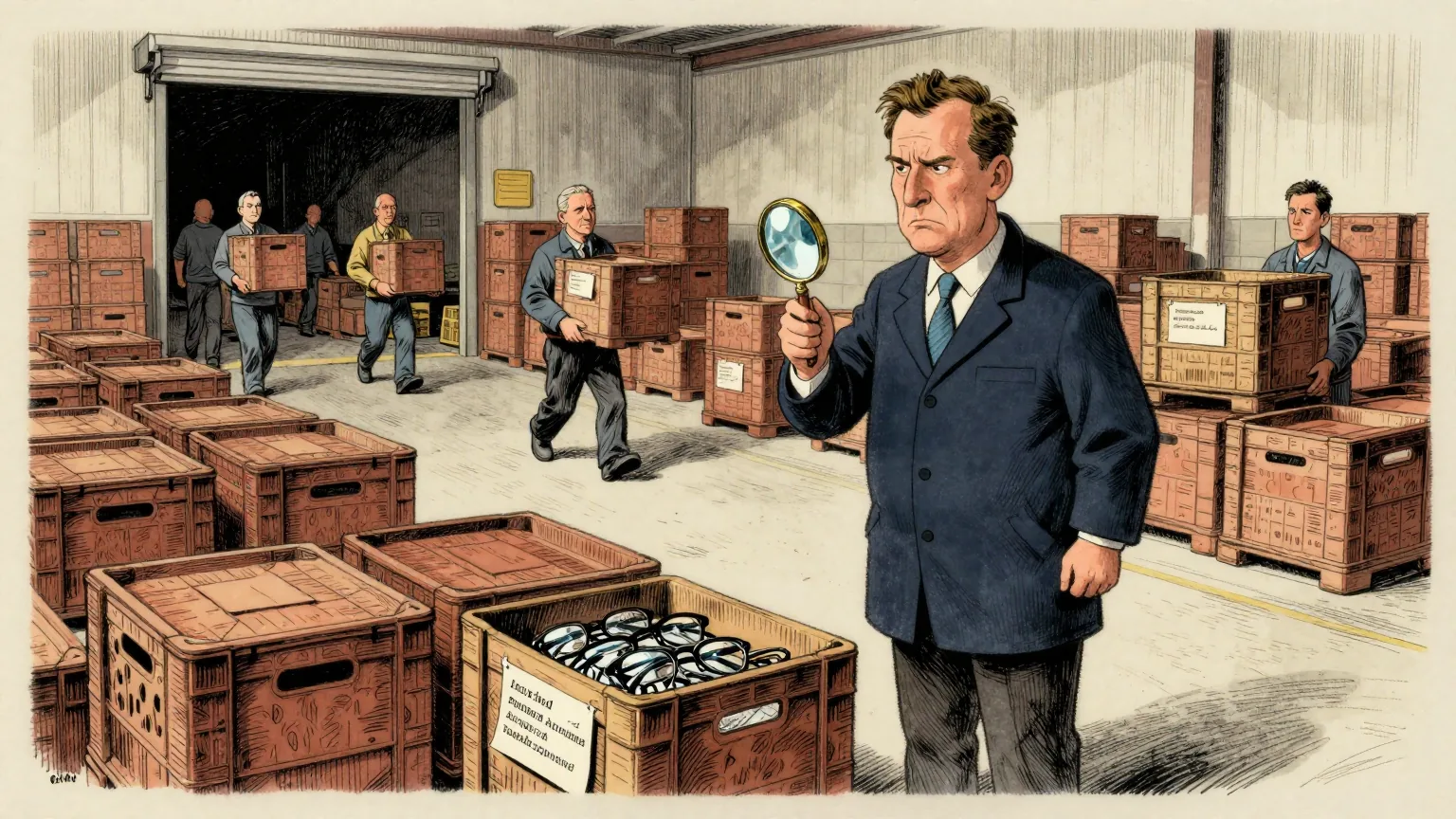
A torrent search engine that was largely built and is largely run with artificial intelligence has published the results of inspecting the contents of 687,057 of the files it indexes, and has concluded that the most widespread defect in pirated film and television is inaccurate labelling.
TorrentClaw launched in February and has since grown into an index of more than six million torrents, assembled from its own distributed hash table crawler and from dozens of external torrent sites and aggregators. TorrentFreak, which reported the findings on Sunday, spoke to the site's developers, who all use the name Deivid Soto.
“Basically, the core framework is Claude Code combined with local LLMs for specific execution and ingestion tasks,” Soto told the site. Artificial intelligence matches torrents to film and television titles so that they can be organised, and it also built the feature at the centre of the exercise.
That feature is TrueSpec. On most torrent indexes the release name is the only description a user gets: resolution, codec, audio and release group, with nothing guaranteeing that any of it is true. Well-run sites have moderators to catch mislabelled files. Automated indexes generally have nobody.
TrueSpec joins a torrent's swarm, reads the file listing and downloads enough of the video to examine it with the analysis tool ffprobe, which the site and its developers put at between 10 and 20 MB per torrent. Suspicious files are checked by hash against VirusTotal, and uploaded for scanning if they are small enough. TorrentClaw runs no scanner of its own; the malware verdicts come from VirusTotal.
Where malware is confirmed the torrent stays listed, but it is labelled and the download button is disabled. An earlier dataset in July counted 6,450 malware cases, a figure heavily inflated by false positives including a harmless file left behind by the defunct RARBG and fansub scripts that switch audio languages. Counting only cases VirusTotal confirms leaves 34 torrents.
Thirty-one of those 34 follow an identical pattern: an executable named after a new film or episode, a file called libvlc.dll, and a playable video in a subfolder. The executable is a renamed copy of the genuine VLC media player, carrying VideoLAN's own code signature. The malicious component is the library that VLC loads when it starts.
The torrents carried the names of recent releases and of known release and distribution groups. Twenty-two of the 31 arrived through TorrentClaw's own crawler, the rest through three other sites, and 15 were still live in early October. The count is almost certainly an undercount: TrueSpec does not download large executables, favours well-seeded torrents, cannot inspect dead swarms at all, and the site concentrates on film and television rather than software or games.
Set against the whole sample, deception is rare. In total 1,265 of the 687,057 probed torrents were flagged as deceptive, including programs disguised as videos and overstated resolutions. That is less than 0.2 per cent.
The commonest discrepancy is something else entirely. More than half of all probed torrents, 55 per cent, were found to contain subtitle tracks that their release names do not mention. TorrentClaw records this as a missing label. Subtitles are not normally listed in a title unless they are burned into the picture, and scene rules do not require it.
It is worth pausing on what has been established here. An index of more than six million unlicensed films has conducted a quality audit of its own stock and identified, as its single most prevalent failing, a shortfall in the accuracy of product descriptions.
The Questionable Times regards this as the first consumer-protection regime to be built on top of a distribution network that has no legal right to the products in it. The goods are not the site's to sell. The descriptions, however, are its own, and those have been brought up to standard.
The hierarchy of offences is now clear. Copying a film is outside TrueSpec's remit. Misstating the resolution of the copy is a flag. Including an undeclared subtitle track is the most common fault in the catalogue, affecting an estimated 377,000 of the torrents examined.
The remedy is proportionate to the complaint. A mislabelled torrent is annotated. A malicious one is annotated and its download button is switched off. Takedown notices from rightsholders, meanwhile, are handled by a separate artificial intelligence introduced in late September, which has processed 23 of them.
Soto notes that the whole verification system ran in July on three nodes costing well under $50 a month combined. “The implicit point: if verification is this cheap, any indexer could be doing it, and none are,” he said.
He is right that nobody else is doing it, and the position that leaves is worth stating plainly. The only party in this distribution chain willing to guarantee the customer an accurate description of a film is the one with no right to distribute it.