
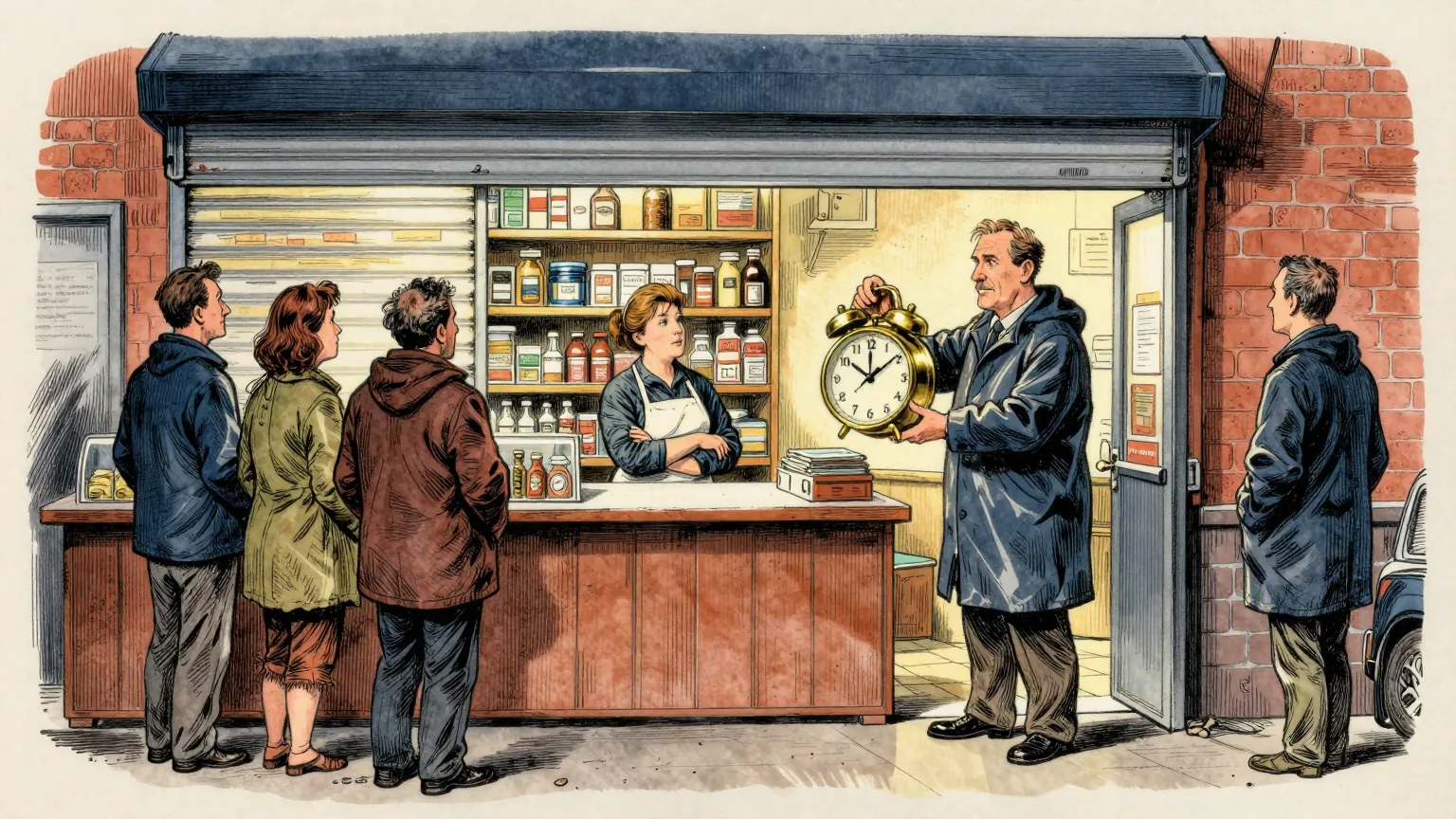
The lower house of Poland's parliament has approved a bill introducing a nationwide ban on the sale of alcohol in shops during night-time hours, together with a complete ban on alcohol advertising.
Under the legislation, alcohol may not be sold for consumption off the premises between 10pm and 6am. Local authorities may extend that window, up to a maximum of 9pm until 9am, if they wish. Bars, clubs and restaurants would continue to sell alcohol for consumption on the premises exactly as they do now.
In a vote on Thursday night the bill was supported by 400 of the 433 MPs present in the Sejm. The measures were originally proposed in two separate bills, submitted by The Left and the centrist Poland 2050, both junior members of the governing coalition, and were later combined into a single package.
The bill now goes to the Senate, the upper house, which can suggest amendments and delay a bill but cannot block its passage. It then reaches President Karol Nawrocki, who can sign it, veto it, or refer it to the constitutional court for assessment.
Night-time restrictions are not new in Poland. Almost 200 municipalities, Warsaw and Krakow among them, have already introduced their own. In the first six months after Krakow's restrictions took effect in 2023, the city recorded a nearly 50 per cent fall in night-time police interventions, and other cities reported similar improvements.
The bill also bans all advertising and promotion of alcoholic drinks, with fines of up to 1 million zloty (228,400 euros) for breaches. Packaging will have to carry warnings about the harmful effects of alcohol on pregnant women and minors, and the requirements on shop staff to check the age of buyers they suspect may be underage are tightened.
Licence fees rise as well: from 525 to 1,050 zloty for drinks of up to 18 per cent alcohol content, and from 2,100 to 4,200 zloty for stronger drinks.
Surveys suggest the measure has public support. An IBRiS poll for the daily Rzeczpospolita in June found 55 per cent of Poles in favour of some form of ban on night-time sales and 43 per cent opposed; a later IBP survey for Super Express put support at 67 per cent against 26 per cent.
Consumption has in any case been falling. Figures from Statistics Poland, the state agency, show the average Pole drank 81.7 litres of beer in 2025, down 4.9 per cent on the previous year and 18.7 per cent below the 2018 peak of 100.5 litres. Spirits and liqueurs fell 5.9 per cent year on year to 3.2 litres a head, 13.5 per cent below the 2019 peak of 3.7 litres. Both remain above their 2005 levels.
Read closely, what the bill legislates is the night. The statutory night begins at 10pm and ends at 6am, and runs for eight hours. A municipal resolution may begin it at 9pm and end it at 9am, at which point it runs for twelve.
This makes the length of the night in Poland a matter for local government. Two shops on opposite sides of a municipal boundary may stand in nights of different duration, and a customer who crosses the road at half past eight in the morning passes out of night and into morning without the sun being involved.
The Krakow figures invite the obvious extension. If declaring the night longer cuts night-time police interventions by nearly half, then the interventions were never a property of the hours. They were a property of the declaration.
Our analysts have followed that through. A council exercising its full statutory power would hold the longest and therefore the quietest night available under Polish law, and whatever incidents remained would be confined to the twelve hours it had declined to classify.
The Department of Unnecessary Research notes a gap in the drafting. Parliament has set the earliest hour at which a council may begin the night and the latest at which it must end it, but it has not said what the twelve hours in between are called.
No council has yet applied to abolish the afternoon.