Qantas says travellers will be able to fly between Sydney and New York in just 18 hours from mid-2028, when the airline launches its second ultra long-haul route, cutting at least three hours from the travel time.
The route is the second in the carrier's Project Sunrise expansion, after Sydney to London direct flights planned for October 2027, which have already been delayed.
It would be the first commercial direct flight from Kingsford Smith airport to New York's JFK. Qantas currently offers Sydney to New York with a stopover in Los Angeles, a journey that takes 21 hours and typically costs more than $1,400 one way or more than $1,900 return.
Prices for the Project Sunrise routes have not been disclosed. The company has previously suggested direct fares could cost 20% more than stopover fares, and has said ticket prices are facing upward pressure. Tickets for the New York route are due to go on sale in August 2027, with the launch month still unspecified.
The aircraft is the point of the exercise. Qantas has ordered 12 Airbus A350-1000ULRs fitted with extra fuel tanks, capable of flying over 16,000km and up to 22 hours non-stop. The first is expected to arrive in Australia in April 2027.
A test model completed a 24-hour, 24-minute flight from Melbourne to Airbus's manufacturing facility in Toulouse in July, believed to be the longest-ever commercial flight.
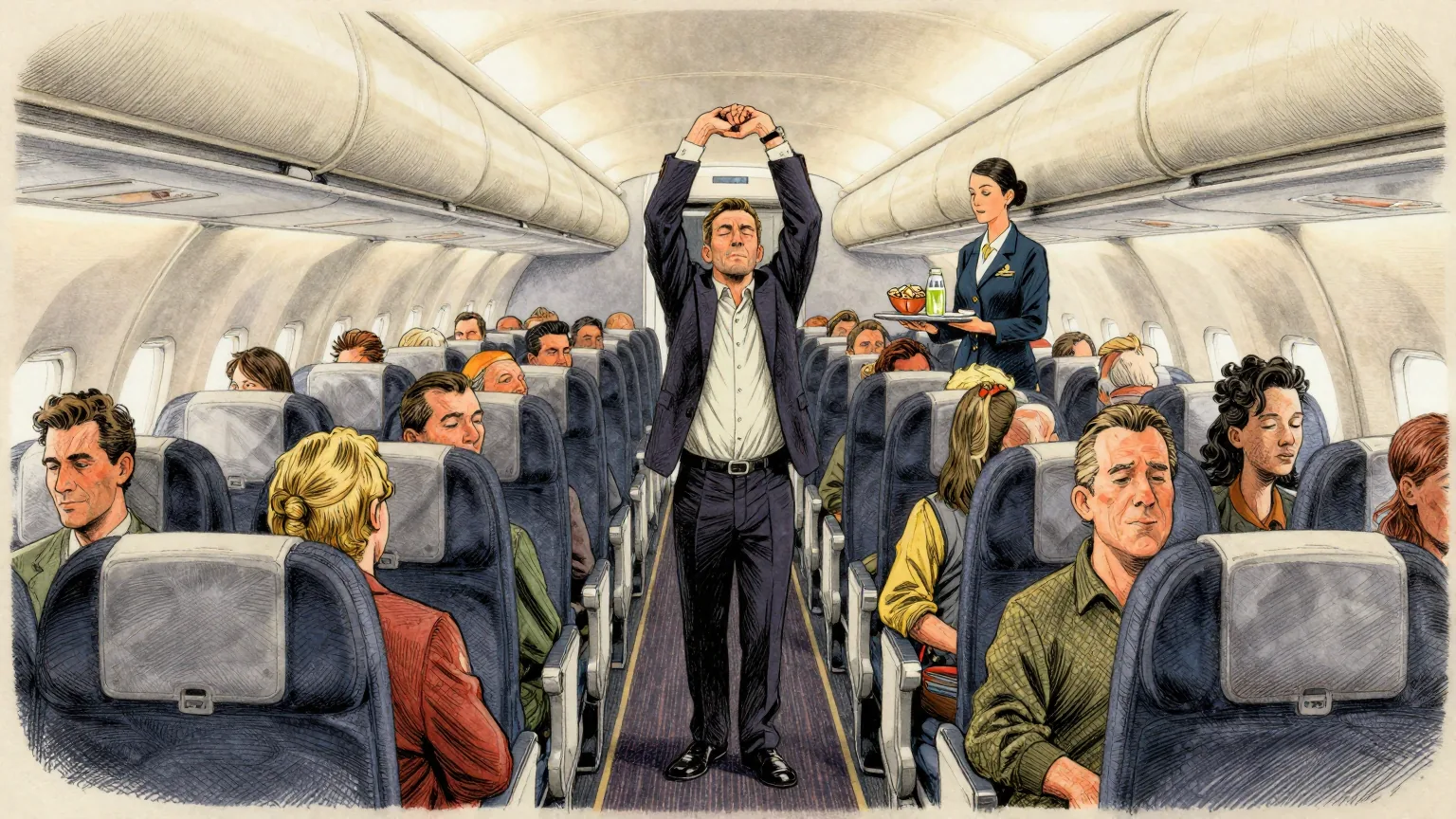
The cabin has been laid out accordingly. Only 140 of the A350-1000ULR's 238 seats are standard economy; there are also six first-class suites, 52 business suites and 40 premium economy seats. Between the economy and premium economy cabins sits a dedicated wellbeing zone, where passengers will be able to stretch, watch guided exercise videos and help themselves to snacks and drinks.
Qantas expects the Project Sunrise flights and sustained premium demand to increase its earnings by $400m over the next five years, with profit margins rising from today's rate of 4% to 10%. It says demand for its flights in and out of New York has doubled since 2023. Short-term US arrivals to Australia picked up 4% in the year to July 2026, according to the Australian Bureau of Statistics, while Australians travelling and returning from the US dropped 9% over the same period.
More than 360 pilots and 1,200 cabin crew will be trained to operate the aircraft by the time the fleet has arrived. "Reaching New York non-stop completes a vision we set out many years ago, and it's a moment of enormous pride for the thousands of our people who have been working hard to make Project Sunrise a reality," the Qantas chief executive, Vanessa Hudson, said.
It is worth being precise about the geography. Wellbeing on the A350-1000ULR is not a policy, a programme or a service standard. It is a location. It has a floor, two neighbours and a position in the cabin plan, which is more than can be said for most abstract nouns.
Every other part of the aircraft is sold by the seat. Six passengers will hold a first-class suite, 52 a business suite, 40 a premium economy seat and 140 an economy seat. The wellbeing zone is sold to nobody. It is the only classless space on board, and all 238 passengers hold equal title to it.
This produces what is believed to be the industry's first published figure for wellbeing per passenger: one two-hundred-and-thirty-eighth of a room, available for 18 hours, with snacks.
The six first-class passengers present a further complication. Each has a suite, and each is also entitled to the zone. Their wellbeing is therefore both private and shared, a combination the cabin plan has not previously had to accommodate.
The route itself completes the arithmetic. Qantas has removed at least three hours from the journey to New York and installed a room in which to spend the eighteen that remain.
The Department of Unnecessary Research has asked the airline to publish the rate at which hours are converted into floor space, and to confirm whether the conversion works in both directions.