
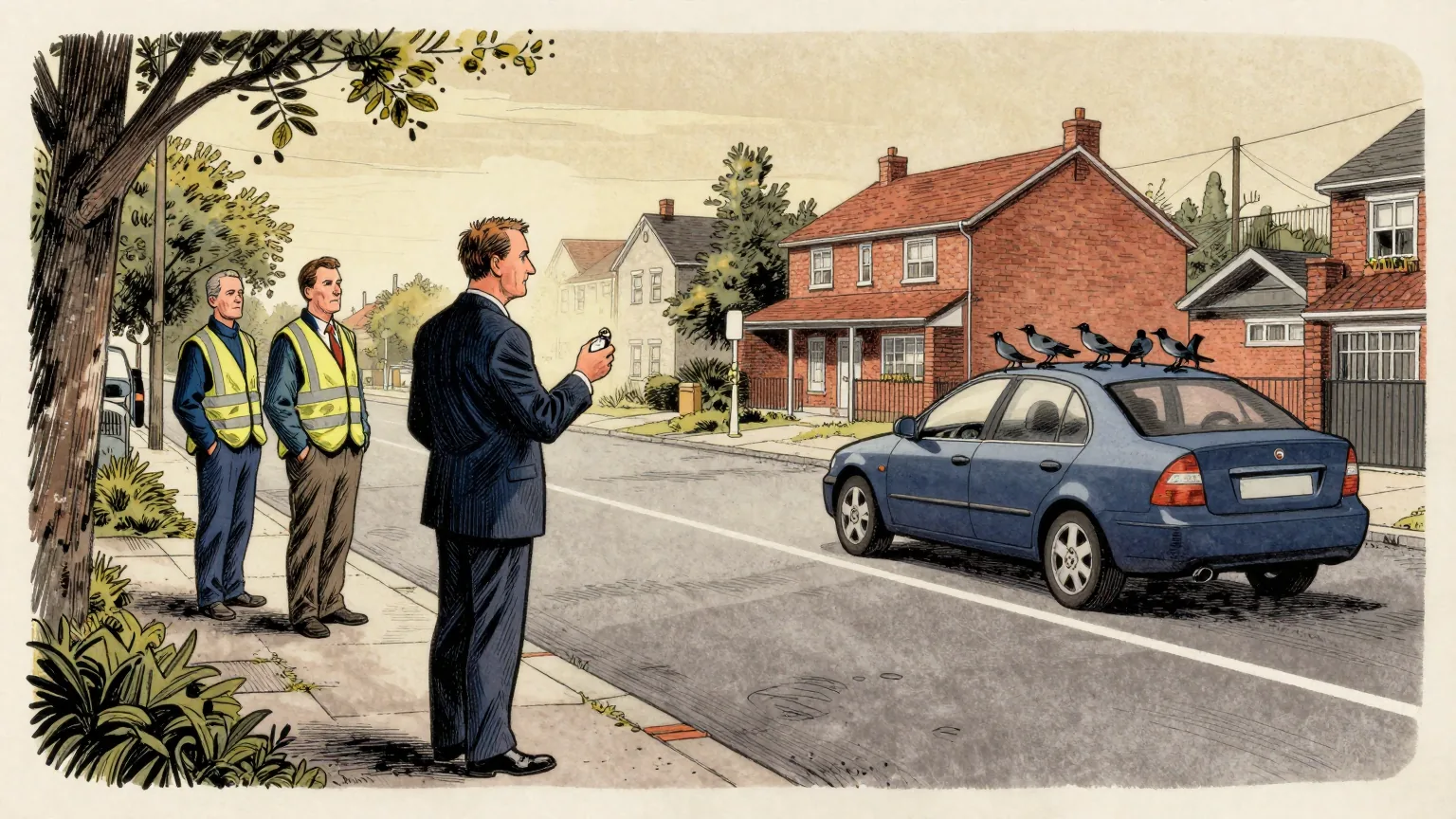
The Queensland government has rejected a petition asking it to replace every stop sign in the state with a give way sign, telling the 391 residents who signed it that the two signs are not substitutes for one another.
The petition, tabled in late August, argued that "requiring vehicles to come to a complete stop is almost always of no safety significance". It said complete stops waste fuel or electrical energy in petrol, diesel and LPG vehicles, and that stop signs may increase rear-end collisions.
Transport Minister Brent Mickelberg declined the request. "Stop and give-way signs are not interchangeable traffic controls," he said, adding that the two serve different functions under the relevant engineering standards.
He accepted part of the petitioners' case. Stopping, he said, "may result in some additional fuel or energy consumption", but wrote that the safety benefits outweigh any operational impacts associated with stopping.
The minister also set out how the signs are allocated. Stop signs are installed according to "site-specific conditions, including sight distance, intersection geometry, traffic volumes and safety performance", and "are not installed as a matter of routine". Residents concerned about the signage at a particular intersection were advised to contact their local council.
The distinction being defended is narrow and long established. At a give way sign a driver must yield to other traffic and may continue without stopping if the way is clear. At a stop sign a driver must come to a complete halt whether or not anything is coming.
That is the whole of the difference between the two instruments, and it is the difference the petition proposed to remove.
It follows that the department's position, stated plainly, is that stopping is safer than not stopping. This newspaper accepts the finding and notes its scope.
A give way sign already produces a complete stop whenever traffic is present, because a driver who yields to a vehicle has stopped. The two signs therefore behave identically at every busy moment and diverge only when the road is empty. The petition's proposal would have abolished, exclusively, the stops that occur when there is nothing to stop for.
The minister's reasoning handles this without difficulty. The safety benefit of stopping is not stated to be conditional on anything being there. A halt performed at three in the morning at a junction with no other vehicle within a kilometre carries the same benefit as one performed in traffic, and arguably a purer version of it, since nothing interfered with it.
On that reading Queensland's stop signs are at their most effective when least used, and the fuel the minister concedes is the price of a safety outcome delivered in full, with no other road user present to dilute it.
The engineering criteria confirm the ranking. Sight distance, intersection geometry and traffic volumes determine where the signs go, and a junction with no traffic volume scores lowest on the one variable that could be used to argue for taking a sign away.
The Department of Unnecessary Research has written to the minister with the question that remains. If a stop sign at an empty intersection is performing its function, and a give way sign at a busy one produces the same halt, the state is maintaining two separate signs to achieve one outcome at different times of day. It wishes to know which of the two is the control and which is the experiment.