
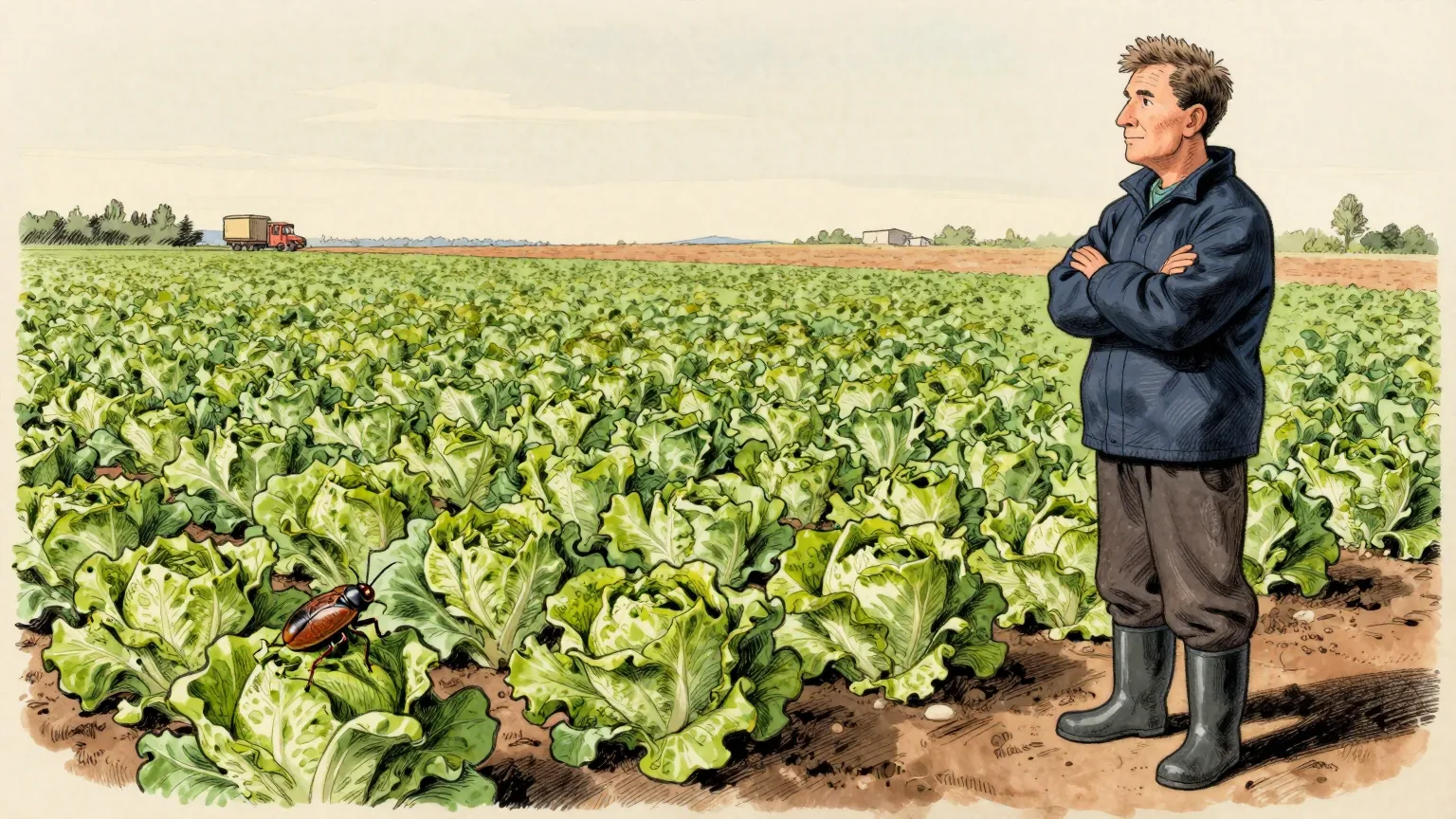
Millions of lettuces are set to be wasted as farmers grapple with a record outbreak of aphids that has devastated the end of their growing season.
Growers are facing losses of £10m, with 30 million heads of lettuce rendered unusable, according to the British Leafy Salads Association. The organisation says warm and dry weather produced "ideal conditions" for the bugs, with as much as 30% of the UK crop between now and the end of October set to be wasted.
Farms across much of England have been affected, including in the Midlands, East Anglia, the south-east, the south and the north-west. Over the course of a season, UK growers produce around half a billion heads of lettuce.
Homegrown lettuce dominates the market in the summer and early autumn weeks before a transition that sees more imports filling shop shelves. Imported lettuces are now likely to appear in UK shops a couple of weeks earlier than usual.
Speaking to BBC Radio 5 Live, the association's spokesman Dieter Lloyd described the issue as "serious" while noting that it does not affect the whole of the UK crop.
"What we're talking about here is the loss of the crop over the course of the last couple of weeks and the couple of weeks ahead," he said. He added that producers are "looking at not using 30 million heads of lettuce at the cost of £10m to the growers".
Asked whether weather was a factor, Lloyd said short-term weather patterns and regional variations do have an impact. "We had a problem with aphids last year, we've had a mild winter which traditionally might affect the aphid populations and then they do like warm weather."
The National Farmers' Union said it is supporting growers and researchers. Its horticulture chairman, Martin Emmett, said: "This summer's warm and dry weather created a number of challenges for growers and the effects are still being felt, with rising levels of pests and disease now adding further pressure to farming businesses following an already difficult period."
The meteorological account of the year is not in dispute. A mild winter that failed to thin the population, followed by a warm, dry summer, followed by blooms in June and again across August and September. Every stage of it performed as forecast.
What is in dispute is the verdict, and this newspaper suggests the verdict has been filed against the wrong crop.
Thirty million heads of lettuce were not lost. They were grown, to full size, in ideal conditions, and then harvested on schedule by a workforce that arrived without notice, worked through the night and submitted no invoice. The £10m is not a shortfall. It is a change of recipient.
The Department of Unnecessary Research has applied the standard agricultural measures and finds the season exceptional. Yield was high. Losses to frost were negligible. The labour supply expanded to meet demand across the Midlands, East Anglia, the south-east, the south and the north-west, and did so without recruitment.
Our analysts note that the trade body has already conceded the substantive point and has it on the record. The conditions were ideal. Nobody has disputed that they were ideal. The only question ever in contention was ideal for whom, and that question was answered in June and answered again in August.
A growing season is assessed by what grew. Thirty per cent of the English lettuce crop grew, reached maturity and was entirely consumed within the United Kingdom, which is a food-security outcome the sector has been pursuing for decades.
By the only measure the weather itself recognises, this was the best English summer in years.