
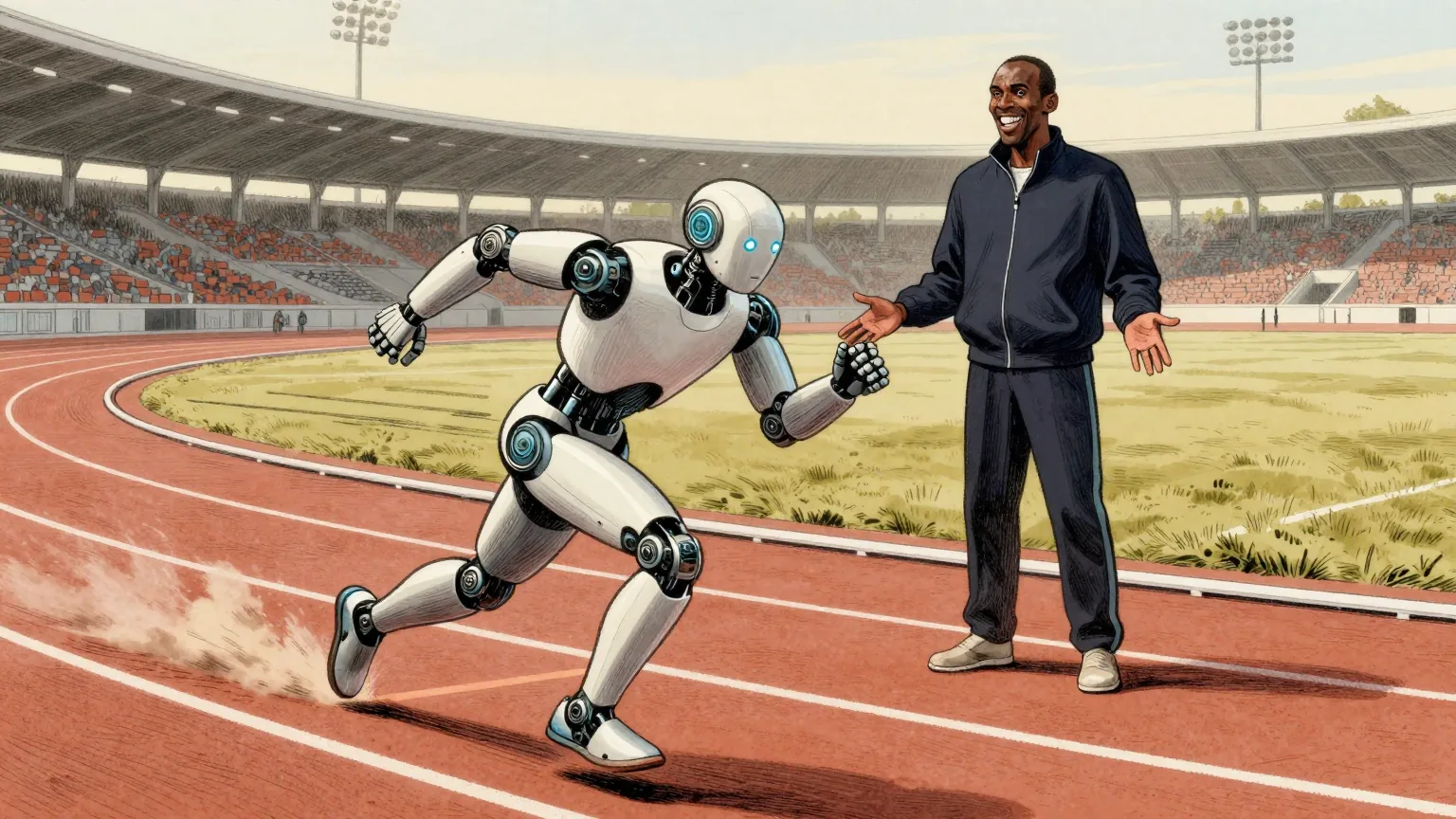
Usain Bolt spent much of his career making the world's fastest humans look inconveniently slow. A humanoid robot has now made the comparison even less comfortable by covering 100 metres in 8.64 seconds.
Tiangong Ultra posted the time while winning the 100m final at China's World Humanoid Robot Games. Bolt's official human world record remains 9.58 seconds, set in Berlin in 2009, because international athletics has so far maintained the controversial requirement that competitors be people.
Bolt did not appear threatened by the development. Speaking in Budapest at the World Athletics Ultimate Championship, the eight-time Olympic champion laughed about the robot's performance and said the result simply reflected where the world was heading.
His attention was also divided by a matter of greater immediate importance: Manchester United were playing Manchester City. Bolt, a lifelong United supporter, appeared more concerned with the derby than with a machine removing almost a second from his most famous time.
The comparison nevertheless illustrates how quickly humanoid robotics is moving from careful laboratory demonstrations toward machines capable of dynamic physical tasks. Running at speed requires balance, rapid control adjustments and mechanical durability as well as raw power.
None of that changes the athletics record book. Bolt's 9.58 remains the men's 100m world record, because robot competitions and human track events are separate categories with radically different rules, bodies and engineering constraints.
This distinction has failed to reassure our performance desk, which notes that humans have been competing on essentially the same biological platform for thousands of years while robotics teams are allowed to arrive with new motors, batteries, control software and replacement parts.
The only equitable response is therefore obvious. Human sprinters should receive one firmware update per Olympic cycle, access to a pit lane at 50 metres and a limited allowance of replacement knees. Until World Athletics addresses this hardware imbalance, the 100 metres can no longer be regarded as a technologically neutral event.