
Rocket Lab has confirmed that its Neutron launch vehicle will not fly until 2027, citing a problem found during manufacture of the rocket's carbon composite structures.
The announcement, made on Wednesday, concerns the dome sections at the ends of the propellant tanks in Neutron's reusable first stage. Peter Beck, the company's founder and chief executive, identified a manufacturing defect as the cause of the latest slip.
"Recently, we identified an issue with the manufacturing process for the propellant domes specifically, and this caused us to delay production and investigate further," Beck said in a video released by the company.
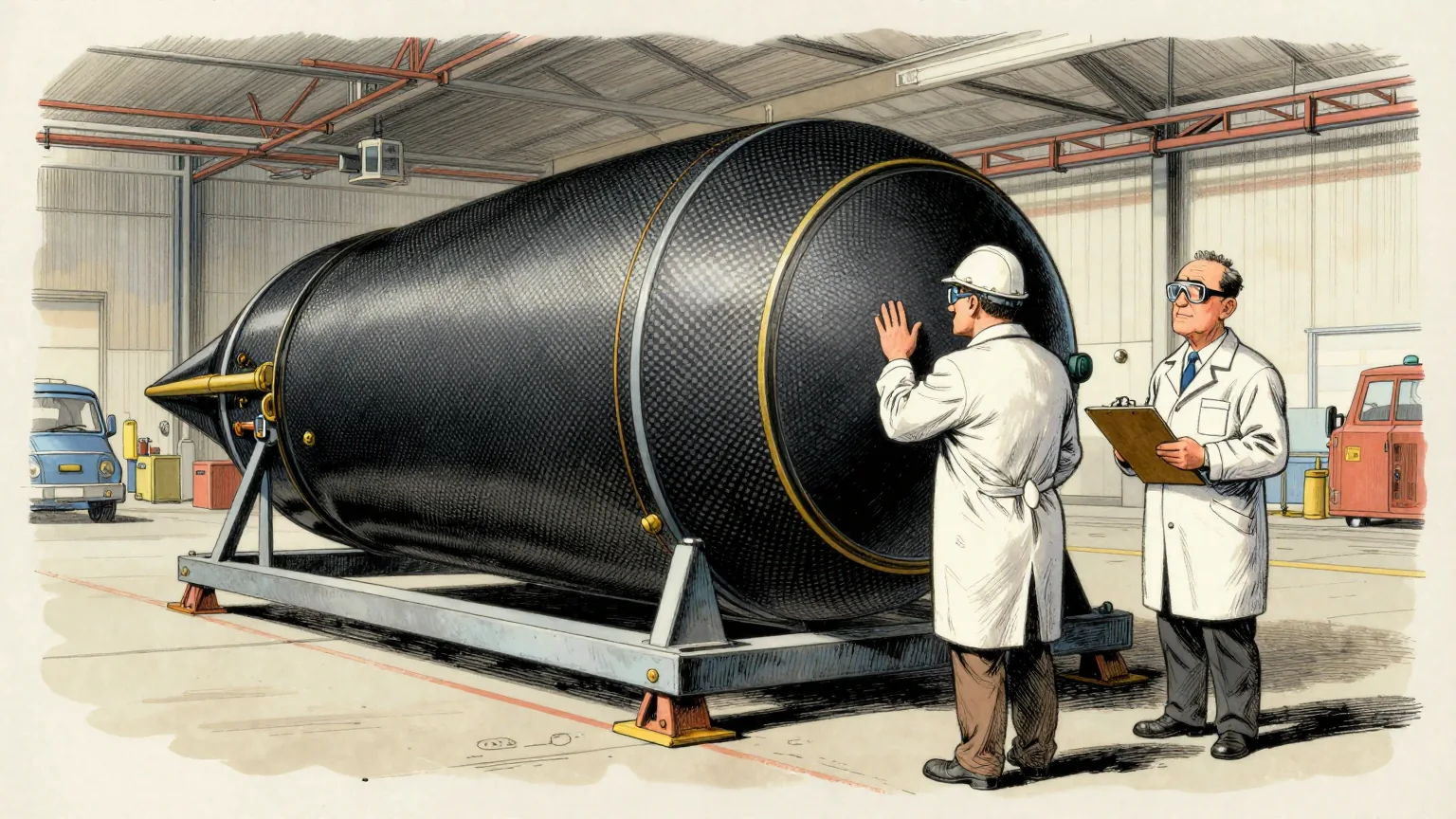
Engineers found voids, or air pockets, between the layers of carbon fibre that make up the domes' composite structure. Carbon composite manufacturing involves laying fibre into a mould and then curing it under heat to bind the layers together, a process that is difficult at large scale.
Neutron's first stage is, in Beck's words, the "largest pressurized structure ever made out of carbon composite". "Because of its scale, we've had to develop new out-of-autoclave processes to build Neutron, and this includes custom cure cycles for the very large pieces, like the forward and aft domes for the propellant tanks on Stage One," he said.
Inspections of a newly cured forward dome revealed voids that could affect the structure's strength, durability and reliability. "They don't necessarily mean that the dome would fail in flight, but our practice is to proceed only when we believe the system has the appropriate margins," Beck said.
The origin of the defect is the part of the account that repays attention. Engineers traced the voids to a recent design change intended to strengthen the rocket's structure.
That change followed a failure in January, when a Neutron propellant tank unexpectedly ruptured during a hydrostatic pressure test. Officials blamed a manufacturing defect at a "critical join" in a tank built by a "third-party contractor using a manual hand-lay process", an arrangement adopted so that testing could proceed while an automated fibre placement machine was brought online. That machine is now operational.
In response, Rocket Lab deleted joints in the first stage tank structure and increased the thickness of some sections of carbon composite.
"Those thicker sections are where the voids formed," Beck said.
The company says the problem now appears to be solved after a further change to the manufacturing process, and that an aft dome made by the updated procedure passed inspection. "We've solved the problem," Beck said.
This newspaper wishes to set out the sequence as the company has described it. A join failed. The joins were removed and the material around them made thicker. The additional thickness is where the material is now missing.
Our analysts observe that the rocket is at its emptiest in precisely the places chosen for being the strongest. The reinforcement did not fail to work. It worked, and the voids are where it was applied.
Neutron was announced in 2021 with a first flight planned for 2024. The development timeline has now doubled. Beck said on Wednesday that the programme remains "on an ambitious timeline".
The Department of Unnecessary Research notes that the governing standard here is margins, and that margins are the amount by which a structure exceeds what is required. A void is an absence of structure. The Department therefore records that Neutron's margins and its voids have been produced by the same decision, and are currently located in the same place.
The Department has one question outstanding for the qualification programme. Thickening the composite created the voids, and the voids were found because the section was thickened. It wishes to know what the inspection would have found had nothing been reinforced, and whether that counts as a pass.