
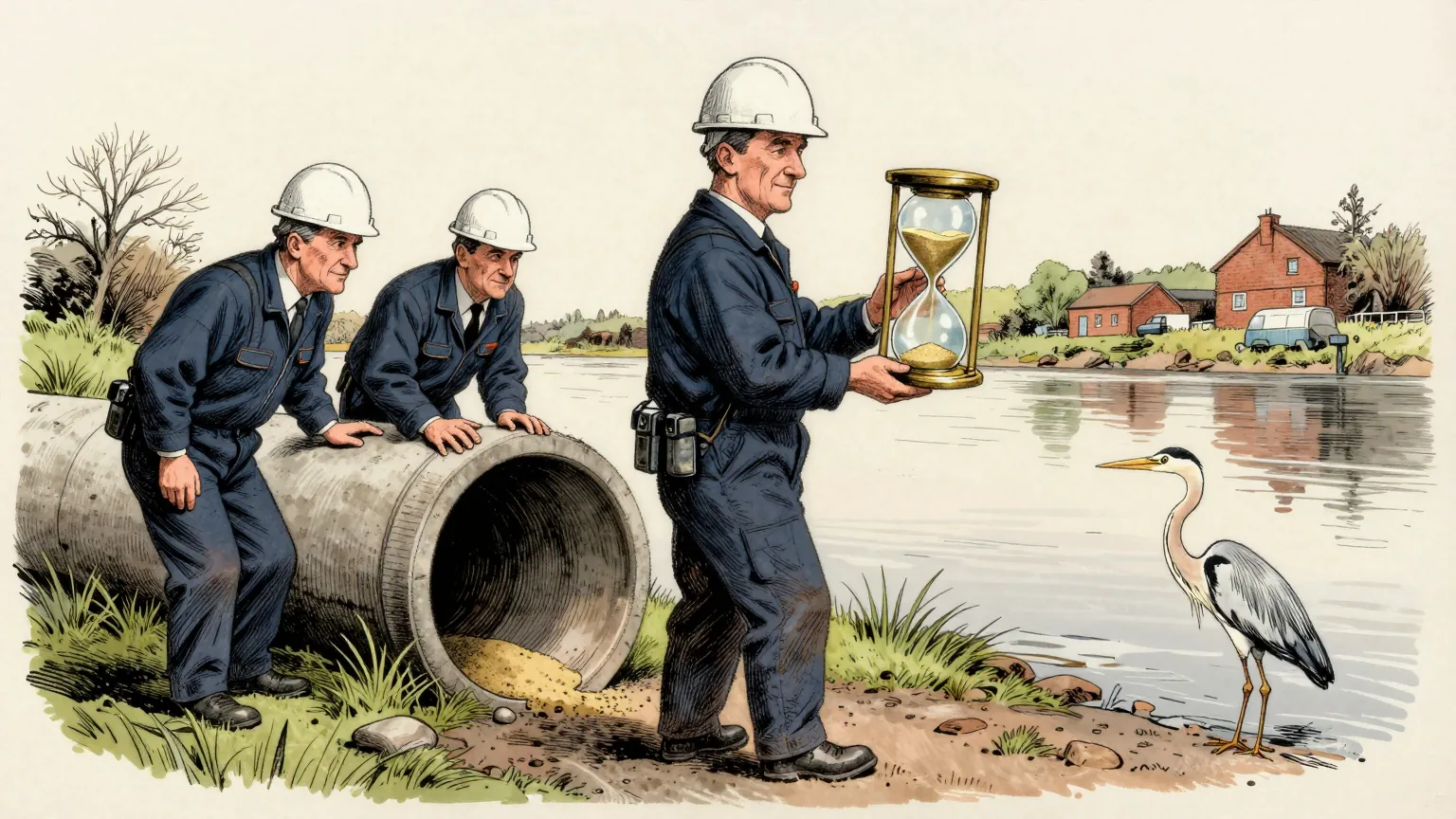
New figures show sewage was released into rivers, lakes and the sea around Wales for more than 800,000 hours last year.
The charity Surfers Against Sewage, which has analysed data from Wales' water companies, said there were more than 100,000 sewage discharges in 2025, or one every five minutes.
The figures are down on the year before, when sewage was discharged for more than 970,000 hours.
In its annual assessment the charity said part of the reason for the drop was the dry weather seen during the summer last year, but that underinvestment and a lack of enforcement remained an issue.
Sewage was discharged into Wales' designated bathing waters for a total of 35,669 hours over the year, according to the charity. At Llyn Padarn in Gwynedd, where the designated bathing water is classified as “excellent” for water quality, discharges lasted 1,614 hours.
Giles Bristow, chief executive of Surfers Against Sewage, said last year's figures equated to a discharge every five minutes, which he called a “shocking statistic”. He pointed to 90 places that authorities have said are good places to swim, and said they had “been impacted by over 4,000 hours of sewage pollution”.
Natural Resources Wales said it had strengthened its approach as regulators through increased monitoring and tighter guidance, and had overseen “significant programmes of environmental investment” by water companies.
Welsh Water said it would invest a record £2.5bn over the next four years and understood the concerns about sewage discharge. “We take our responsibility to protect these waters seriously and recognise that we need to improve,” it said, adding that in line with Welsh government policy it was “prioritising the overflows causing the greatest environmental harm”.
Hafren Dyfrdwy, which operates in mid and north-east Wales, said it was “working tirelessly” to reduce the average number of spills but that “we know more needs to be done”, and that it was investing £11m at its storm overflows to reduce spills to fewer than 20 a year by 2030.
Rules allow a limited discharge of sewage in periods of excess rain. Environmental groups remain concerned that the levels pose a threat to wildlife.
It is worth pausing on the unit. The figure is given in hours, and the year in which those hours were recorded contained 8,760 of them.
Wales therefore discharged sewage for roughly ninety-one years during a period of twelve months. The arithmetic is not in dispute: 800,000 divided by 8,760 is 91.3. The remaining 791,240 hours were supplied by the overflows themselves, each of which keeps its own clock.
This newspaper regards the result as a quiet triumph of productivity. A country with one year available has delivered nine decades of output, and has done so in a summer that was unusually dry.
The implications for the regulatory timetable are considerable. Hafren Dyfrdwy's undertaking to reduce spills to fewer than 20 a year by 2030 looks conservative against a national performance of ninety-one years per year. At one discharge every five minutes, the twentieth arrives one hundred minutes into the year, at twenty minutes to two on the morning of 1 January.
The Department of Unnecessary Research notes that the 970,000 hours logged the previous year amount to 110 years, and that the fall to 800,000 is therefore a reduction of nineteen years achieved inside one. Progress of that kind compounds.
On the hours as recorded, Wales has already discharged its allocation to the year 2117. Nobody has yet suggested that it is entitled to a rest.