
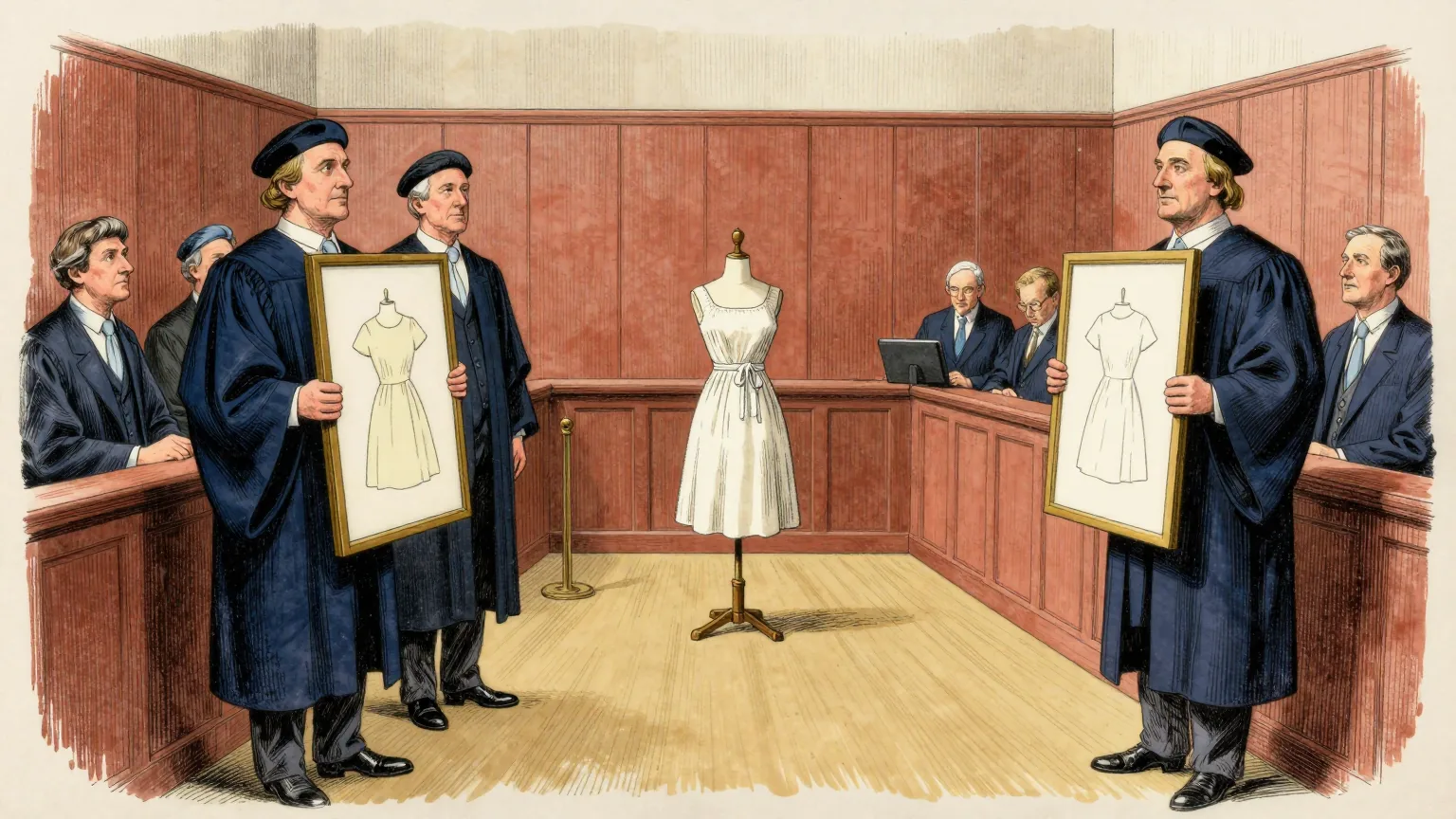
Shein has been granted permission to appeal against the High Court judgment in its copyright fight with Temu, in a case that will now put the hosting defence for online marketplaces before the Court of Appeal for the first time in the United Kingdom.
The dispute concerns 2,559 photographs. Shein filed its claim in the High Court in 2023, after sending Temu a letter in June that year asking for the images to be removed.
The photographs are product shots of the kind that fill fast-fashion listings. Shein says they were taken by its own employees, by freelancers, by agencies or by suppliers, and that Temu used them without permission in what it described as infringements of its copyright on a substantial scale.
Shein also argued that Temu presented the images as its own, without making clear that they had been posted by sellers using the marketplace.
Temu's answer was that it cannot be held responsible for content uploaded by third-party sellers on its platform. That is the hosting defence, and whether it is available to a marketplace of this kind is the question the Court of Appeal has agreed to examine.
The judgment handed down last month did not turn on either of those arguments. Mrs Justice Bacon found that Shein UK did not own the copyright in the employee photographs at the time the cease-and-desist letter was sent, because the employees who took them worked for the Chinese parent company, Guangzhou Shein.
Temu, the court heard, suffered losses when it was required to take down thousands of product listings. Shein was ordered to publish the judgment on its supplier portal for six months.
Permission to appeal was granted on Monday on the footing that this is the first UK case to consider the application of a hosting defence to an online marketplace, which the court regarded as a compelling reason for the appeal to be heard.
It is worth pausing on what three years of litigation between two of the largest clothing retailers on earth has established so far, because it is not what either of them set out to prove.
It has not been established who copied the photographs. It has been established who did not own them. The images were taken by employees of a company in Guangzhou, by freelancers, by agencies or by suppliers, and the entity that wrote the letter demanding their removal was none of those.
The marketplace's position is the mirror image. Temu says it did not post the images; its sellers did. Shein says the images are its property; its parent's employees took them. Between the two of them, nobody in this case has yet admitted to being the party holding a photograph.
The garment has a simpler provenance than the picture of it. A dress is made somewhere by someone and sold. The photograph of the dress has passed through a Chinese parent, a UK subsidiary, an agency, a freelancer, a supplier, a marketplace seller and a marketplace, and the Court of Appeal is now being asked which of those seven was holding it when the music stopped.
The Department of Unnecessary Research has followed the chain to its end and reports that in fast fashion the photograph, not the garment, is the asset, and that the asset is owned by whichever entity is least able to prove it took the picture. It has asked the court to rule on the only remaining question of principle: whether it is now possible for a photograph to exist without anyone owning it, and whether that is what the industry wanted all along.