
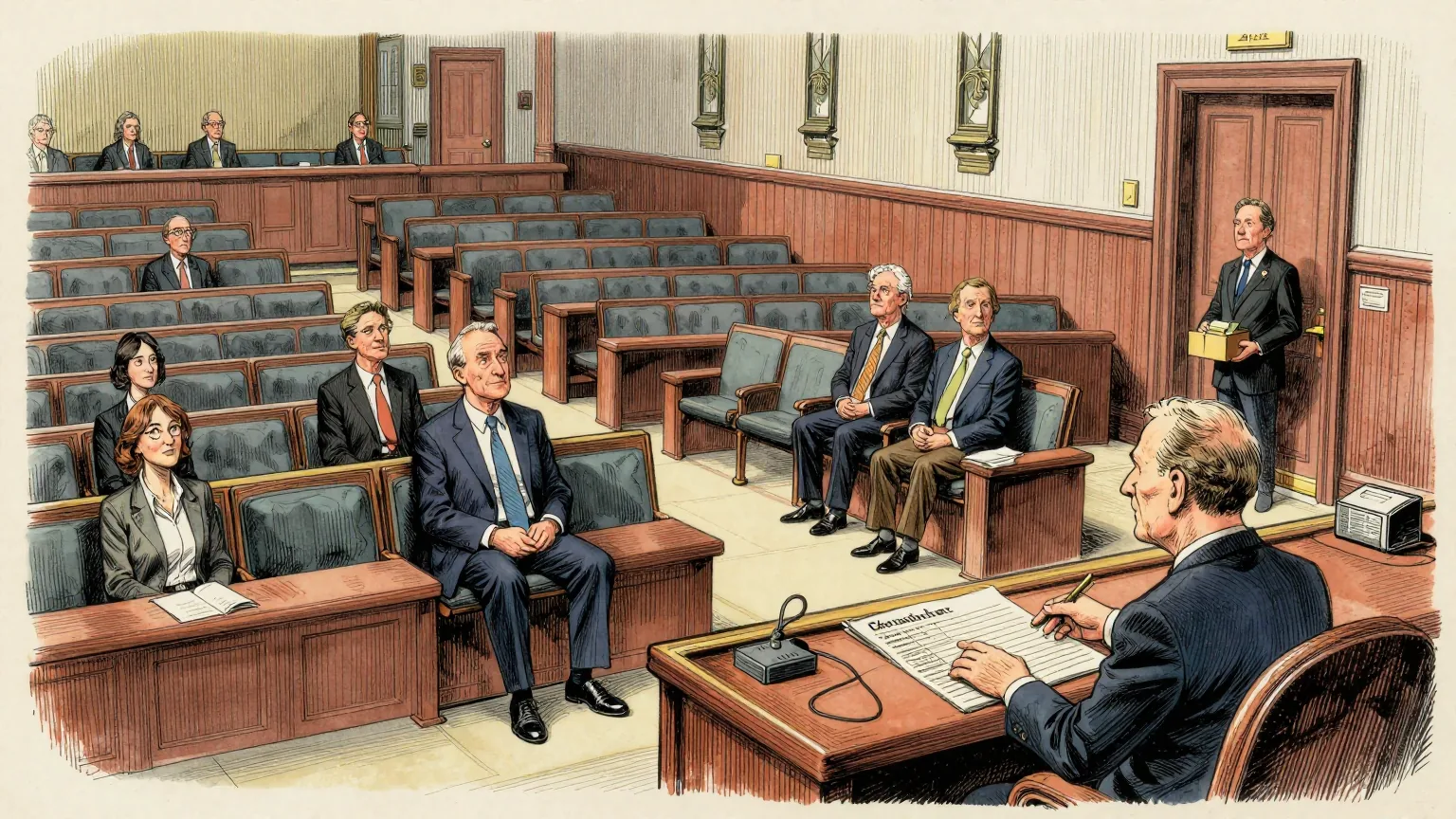
Somalia's House of the People has started deducting pay from members who miss sittings, enforcing for the first time a rule that has been in its procedures for nearly four years.
This week members complained about the deductions. Between eight and 13 MPs who missed seven sittings within a month reportedly had more than $1,000 taken from their pay, Dawan Africa reported on Sunday.
The rule is not new. It entered the House's rules of procedure at the end of 2022, when the chamber approved amendments to Article 23. For nearly four years it was not seriously enforced; at most, the names of absent members were occasionally read out to inform the public.
The mechanism is graduated. The House sits three times a week. Three late arrivals count as one day of absence. Three days of absence without leave bring a written warning. Seven days of absence in a month trigger referral to the Ethics Committee and the deduction of one fifth of that month's salary.
Each member earns $5,240 a month, so one fifth is $1,048, the sum now being withheld from some of them. The rule also closes a familiar gap: a member who arrives, signs in and then leaves while the sitting is still going on is recorded as absent.
The Speaker, Abdulkadir Mohamed Nur, told members he would not accept a situation in which some lawmakers attend even when ill while others stay at home, and both receive the same salary. “Even if only two MPs show up, only those two will be paid,” he said.
The context is quorum. Many sittings have been cancelled because the number of members present fell short of the threshold. A sitting requires more than 140 members to open, and the rules permit only 30 members to be on leave at any one time, which means that a failed sitting implies more than 100 absences without leave.
Members who dispute a deduction may appeal within 15 days, or bring the matter before the full House for debate.
That last provision is where the arithmetic becomes interesting. The remedy for a deduction imposed for not attending the House is a debate in the House, which cannot be opened unless 141 members attend it.
The Department of Unnecessary Research notes that this makes the payroll and the quorum register the same document. Attendance is simultaneously the condition of being paid, the condition of the sitting, and the condition of the hearing at which a member may argue that the condition was unfairly applied.
The exchange rates are firm. Three late arrivals equal one absence, so lateness is convertible into absence at three to one. Seven absences equal $1,048, so an absence is worth $149.71 and a late arrival $49.90. A member running the numbers would conclude that punctuality has a published price and that it is payable in minutes.
The Speaker's principle is harder to argue with. If only those present are paid, then the cheapest possible sitting of the House of the People is two members and $10,480 a month, and the most expensive is a full chamber.
It is also, under the rules as written, the only sitting that cannot be held. A chamber of two is 139 short of opening, which means the least costly configuration of the House is one in which nothing can be decided, including whether to pay anybody.
The House sits three times a week and requires 141 members each time. Nothing in Article 23 obliges those to be the same 141.